
Acatapaustus
Acatapaustus
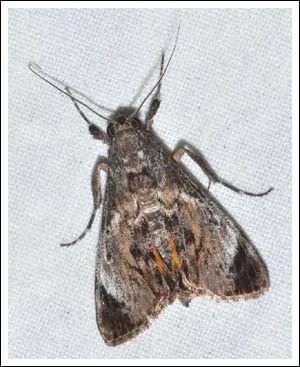
Description
How to identify
The genus Acatapaustus belongs to the order Lepidoptera, family Pyralidae. These small insects possess specific wing characteristics typical for the snout moth family, requiring careful examination for accurate species identification.
Identification often relies on microscopic analysis of the genitalia and specific wing color patterns. Field identification is challenging, as the insects are often nocturnal and display cryptic coloration that blends with their host plants.
The larvae are typically cylindrical, featuring well-developed thoracic legs and prolegs. Their coloration varies from pale to brownish tones, providing effective camouflage while they feed on the host vegetation.
The life cycle undergoes complete metamorphosis, consisting of egg, larva, pupa, and adult stages. The larval stage is the most destructive, as they are actively feeding and growing throughout their development.
Entomological studies focus on the morphology of these moths to distinguish them from related pyralid species. Understanding their specific biology is essential for developing effective monitoring and control programs in agriculture.
What it damages
This pest affects various plant species, showing a preference for nutrient-rich tissues. It can be found on both ornamental plants and several important agricultural crops, where it disrupts normal growth.
Larvae damage leaf blades, buds, and generative organs. By consuming internal tissues, they often stunt plant growth and hinder the development of fruit, leading to significant yield losses if not managed.
In cases of high infestation, the pest severely compromises the marketability of the produce. Damaged plant parts become highly susceptible to secondary infections like fungal or bacterial rots, which further degrade the harvest quality.
Serious damage occurs when the pest attacks the growth points of a plant. This leads to severe deformation and weakens the plant, making it less resilient to environmental stressors and other biological threats.
The total economic impact is calculated based on yield reduction and the increased costs associated with applying control measures to prevent further spread within the field or greenhouse.
When it appears
The activity of Acatapaustus is closely tied to climatic conditions. Adult emergence usually coincides with the return of stable, warm spring temperatures, which align with the onset of the active growing season for plants.
The pest's development is synchronized with the host plant's phenology. Multiple generations can occur within a single season, allowing the population to expand rapidly if conditions are favorable and control is absent.
The highest level of damage is typically observed in mid-summer. During this time, the larvae are in their most voracious feeding stages, making it a critical period for monitoring and protective interventions.
Pupation generally occurs in the soil or within protected areas like rolled leaves. This stage is crucial for surviving harsh weather, allowing the pest to remain dormant until conditions are suitable for emergence.
As autumn arrives, the population declines as individuals seek protected sites for hibernation. Depending on the species, they overwinter as pupae or adults in the root zone or under debris.
Signs of infestation
Early detection is possible by identifying frass (larval excrement) on leaves and near plant crevices. This is a clear indicator that larvae are actively feeding on the plant tissue.
- Presence of fine silk webbing used by larvae to roll or tie leaves together.
- Small, irregular holes in the leaves, which often turn brown at the margins.
- Wilting or premature yellowing of terminal shoots or individual leaf sections.
- Deformed growth patterns where leaves remain stuck together by larval silk.
- Internal boring signs or exit holes on fruits or buds caused by feeding larvae.
Visual inspection often reveals "window-paning" on the leaf surface, where the larvae have consumed the soft tissue while leaving the epidermis intact, creating translucent patches.
If the plant is disturbed, larvae may descend on silk threads. This is a defensive behavior used to quickly escape predators or environmental disturbances, allowing them to drop into the lower foliage.
The presence of adult moths near light sources in the evening is a strong indicator of an active population, signaling the start of the egg-laying period and the need for immediate action.
Control measures
Agricultural management should prioritize the removal of weeds and crop residues that serve as overwintering sites. Good sanitation practices significantly reduce the initial population for the next season.
Biological controls include the use of pheromone traps for population monitoring and mating disruption. Biological insecticides, particularly those containing specialized bacteria, are effective against young larvae while preserving beneficial insects.
Chemical control should be implemented only when infestation exceeds the economic threshold. Applying systemic or contact-stomach insecticides is effective, provided the coverage reaches the hidden locations of the larvae.
Uniform coverage is vital during application. Special attention must be given to the underside of leaves and plant crevices where larvae hide to ensure the chemical comes into direct contact with the pest.
Rotating insecticide modes of action is necessary to prevent the development of resistance. An integrated approach, combining sanitation, monitoring, and precise treatment, remains the most sustainable way to manage this pest.
Taxonomy
- Latin name
- Acatapaustus
- Order
- Lepidoptera (butterflies)
- Family
- Nolidae
- EPPO code
- ACTASP
Discussion
No discussions yet — be the first.