
Spiny bollworm
Earias biplaga
Description
How to identify
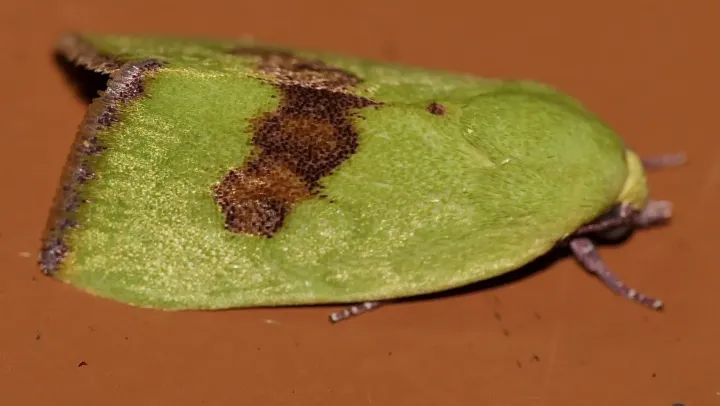
The spiny bollworm (Earias biplaga) is a moth belonging to the family Noctuidae, order Lepidoptera. Adult moths typically have a wingspan ranging from 20 to 25 mm.
The forewings exhibit a characteristic coloration, often blending shades of green and olive, occasionally featuring darker spots or bands that aid in camouflage.
The hindwings are generally lighter, showing a greyish-white or translucent appearance. The body is densely covered with scales, typical of the Noctuidae family.
Eggs are small and spherical, usually deposited singly or in small batches on the terminal shoots or the undersides of leaves of host plants.
Larvae are characterized by a series of fleshy, spine-like tubercles on their backs, which provides the common name and serves as a primary identifying feature.
What it damages
The primary hosts of the spiny bollworm include Malvaceae family plants, such as cotton, as well as cocoa trees, where it causes significant economic losses.
Larvae feed initially on tender apical shoots, leading to stunted growth, leaf deformation, and the eventual death of the growing point of the plant.
As the larvae mature, they shift their feeding behavior to the reproductive organs, including flower buds, squares, and developing fruit or bolls.
In cotton, the destruction of squares results in premature shedding, directly reducing the potential yield and affecting fiber quality.
Furthermore, feeding damage creates entry points for secondary pathogens, such as fungi and bacteria, which can cause rotting of fruit and pods.
When it appears
In tropical and subtropical regions, the spiny bollworm can reproduce continuously throughout the year, provided that host plant material is available.
The entire life cycle from egg to adult takes approximately three to four weeks, depending heavily on ambient temperatures and humidity levels.
Adult moths are primarily nocturnal and demonstrate high mobility, allowing them to disperse and colonize new crop fields effectively.
Under optimal conditions, multiple generations can occur per year, which significantly complicates management efforts and necessitates a robust monitoring program.
In areas with seasonal climates, the species may undergo a resting stage (diapause) as a pupa, protected within a tough silk cocoon in the soil or crop debris.
Signs of infestation
The most prominent sign of infestation is the presence of "wilted tops," where apical shoots droop and die due to larval boring into the stem.
Accumulation of larval frass (excrement) around buds, leaf axils, or on the surface of bolls indicates the presence of active feeding by the caterpillars.
Unexpected shedding of squares and flower buds in cotton fields is a strong indicator of early-stage larval activity that requires immediate attention.
The presence of small, oval-shaped, silk-spun cocoons on the leaves or stems confirms that the pest has successfully reached the pupal stage in the field.
Holes in the leaves or hollowed-out reproductive organs are clear diagnostic indicators when inspecting the crop canopy during regular field scouting.
Control measures
Integrated pest management (IPM) is essential, relying on a combination of cultural practices, biological control, and targeted insecticide applications.
Effective monitoring involves the use of pheromone traps to track adult moth population levels and determine the precise timing for intervention.
Cultural methods, such as the rapid destruction of crop residues post-harvest, are critical for eliminating pupae that remain in the soil or plant debris.
Conservation of natural enemies, including parasitoid wasps and predatory bugs, helps keep the population of larvae in check within the ecosystem.
- Application of selective insecticides at the early larval stage.
- Crop rotation to disrupt the life cycle of the bollworm.
- Installation of physical barriers or spatial isolation of high-risk plots.
Taxonomy
- Latin name
- Earias biplaga
- Order
- Lepidoptera (butterflies)
- Family
- Nolidae
- EPPO code
- EARIBI
Discussion
No discussions yet — be the first.