
Minotaur beetle
Typhaeus typhoeus
Description
How to identify
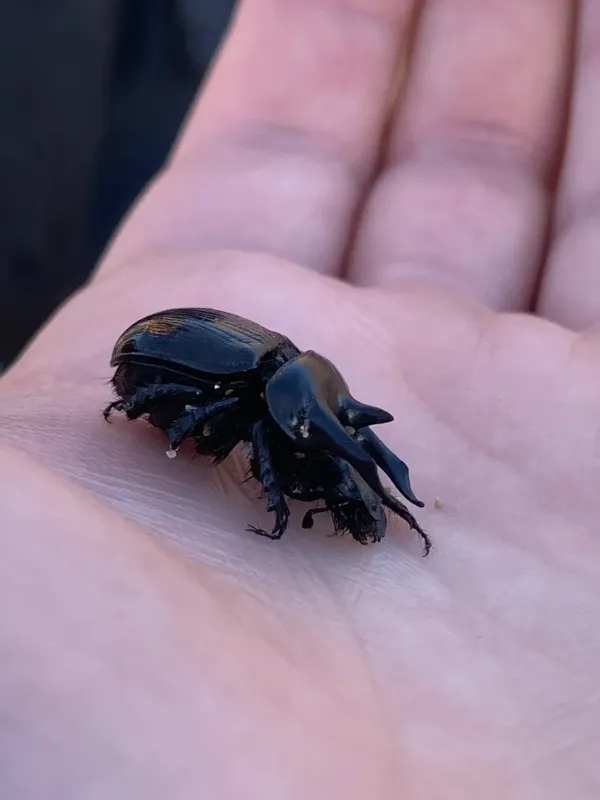
The Minotaur beetle (Typhaeus typhoeus) is a member of the Geotrupidae family within the order Coleoptera. This beetle is easily recognized by its size, typically measuring between 12 and 25 mm in length, and its robust, glossy black appearance.
The male of the species is characterized by three distinct, long, horn-like projections extending from the pronotum. These structures give the beetle a unique appearance and are used primarily for defensive purposes and competition among males.
Female Minotaur beetles lack these prominent horns but share the same dark, heavily chitinized body, which is marked by distinct longitudinal striae (grooves) running along the elytra.
The larval stage features the classic C-shaped, fleshy white body common to scarabaeiform larvae, equipped with a hardened dark head capsule for digging through the soil and consuming organic matter.
These insects are primarily found in sandy soils near forests, heaths, and grasslands, where they dedicate most of their life cycle to excavating deep vertical tunnels to store dung for their offspring.
What it damages
The primary agricultural concern regarding the Minotaur beetle is not direct herbivory, but the physical destruction of soil structure and grass root systems caused by their intensive burrowing behavior.
By excavating complex tunnels that can reach depths of up to 1.5 meters, these beetles create air pockets and unstable patches in the turf, which leads to the weakening of grass roots and subsequent crop loss in pastures.
The resulting disturbance to the soil profile can cause localized patches of grass to wither, particularly during dry seasons, as the severed roots fail to draw sufficient moisture from deeper soil layers.
In high-density infestations, the presence of numerous entrance holes can render grazing land uneven, potentially increasing the risk of injury to livestock moving across the affected surface.
While their role in decomposing manure is beneficial, their tendency to colonize agricultural areas makes them an nuisance pest that requires active management to protect the integrity of fodder crops.
When it appears
The Minotaur beetle is most active during the spring and autumn months, which serve as the primary windows for mating, egg-laying, and establishing new subterranean nesting sites.
During the winter months, adult beetles retreat deep into their tunnels, often several feet below the surface, to escape freezing temperatures and remain in a state of reduced metabolic activity.
Spring emergence is closely tied to soil temperature; as the ground warms, beetles emerge to locate fresh dung and commence the process of provisioning their underground chambers.
The summer period is dominated by the development of the larval stage, which feeds on the stored dung within the safety of their deep vertical burrows before eventually pupating.
A new generation of adults typically appears in late autumn, marking a second peak of surface activity where they actively seek out resources to prepare for their first winter.
Signs of infestation
The most visible sign of infestation is the presence of neat, circular holes in the ground, approximately 10–15 mm in diameter, often accompanied by small piles of excavated soil at the entrance.
The discovery of fecal matter or organic debris dragged into the tunnel openings is a reliable indicator that the burrow is currently being utilized as a nesting or feeding site.
On affected pastures, patches of yellowed, stunted, or withered grass indicate damage to the underlying root structure, identifying zones where beetle activity has been most concentrated.
Digging near the damaged areas will reveal deep vertical tunnels leading to chambers, which serves as a definitive method for confirming the presence of Typhaeus typhoeus.
Increased foraging activity by insectivorous birds, such as crows or magpies, on specific areas of the pasture can signal an unusually high population density of these beetles.
Control measures
Effective control primarily relies on cultural methods, such as deep tillage or plowing, which physically disrupts the deep nesting tunnels and kills larvae before they can complete their life cycle.
Proper pasture management, specifically the timely removal or spreading of manure, helps reduce the available food supply, making the area less attractive for colonization by the beetles.
Crop rotation in mixed farming systems can help suppress beetle populations by removing stable habitat conditions and ensuring that their preferred food sources are not permanently localized.
Where necessary, biological controls using entomopathogenic fungi have shown some promise in reducing beetle populations while maintaining the safety of the grazing environment.
Regular monitoring and patch maintenance in pastures are recommended to prevent small, isolated infestations from escalating into large-scale disruptions of the soil and turf layer.
Taxonomy
- Latin name
- Typhaeus typhoeus
- Order
- Coleoptera (beetles)
- Family
- Geotrupidae
- EPPO code
- TYHSTY
Discussion
No discussions yet — be the first.