
Spiniger dung beetle
Geotrupes spiniger
Description
How to identify
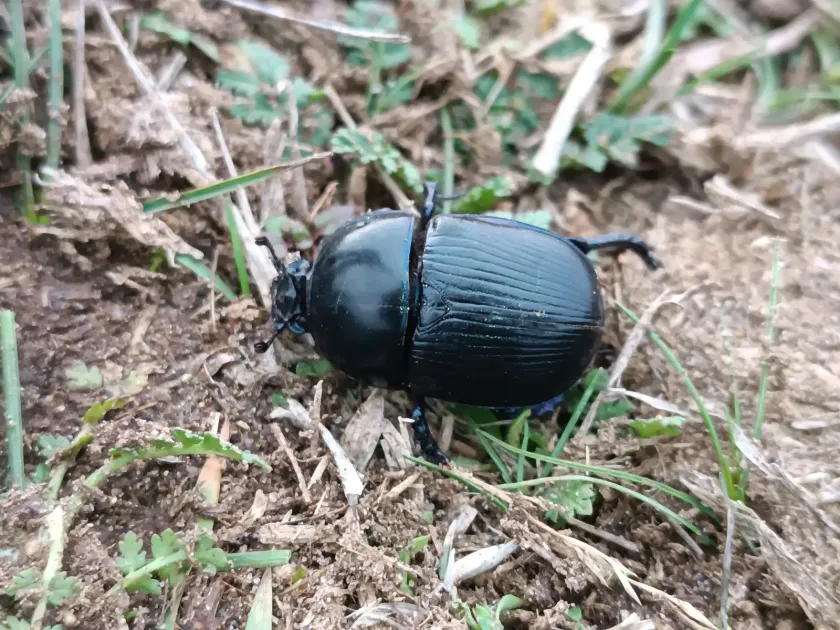
The Spiniger dung beetle, Geotrupes spiniger, is a large beetle belonging to the family Geotrupidae. Adults typically measure between 16 and 25 mm in length and are distinguished by a shiny, black body with a metallic blue or green sheen on the underside.
This species is specifically identified by the presence of a distinct tooth on the hind tibiae, which serves as a key morphological feature for field identification.
The larvae are white, C-shaped grubs with a well-developed, brown head capsule, residing in deep subterranean tunnels constructed by the adults for brood rearing.
Adults are primarily nocturnal, spending their days hidden in their tunnels or underneath organic debris, which makes them less visible during daylight hours.
The species is widespread throughout Europe and Western Asia, occupying pastures and agricultural fields where animal waste is readily available for reproduction.
What it damages
The damage caused by Geotrupes spiniger is largely incidental rather than nutritional. While the beetles feed on dung, their burrowing behavior frequently compromises the integrity of plant root systems.
As the beetles excavate complex tunnels, they disrupt the soil structure, leading to increased aeration and water loss, which can cause severe dehydration in young seedlings and nursery plants.
In intensive agricultural settings, the larvae and adults can cause significant root pruning, preventing plants from absorbing necessary nutrients and water, resulting in stunted growth.
If fresh manure is used as fertilizer, the concentration of beetles in the field increases dramatically, leading to widespread damage to vegetable crops and ornamental plants.
The tunnels also serve as entry points for soil-borne pathogens, potentially increasing the risk of root rot diseases in weakened or damaged crops.
When it appears
The activity cycle of the Spiniger dung beetle begins in early spring, as temperatures rise and soil moisture conditions become optimal for the emergence of overwintered adults.
Peak activity and mating typically occur during late spring and early summer, which often coincides with the critical establishment phase of spring-planted crops.
The larval stage is prolonged, lasting throughout the growing season, during which grubs consume stored organic material and grow steadily within the soil profile.
As autumn approaches and temperatures drop, adult activity decreases significantly as they retreat deeper into the soil for diapause and overwintering.
The complete life cycle usually spans one full year, though variations in local climate can influence the timing and success of each developmental stage.
Signs of infestation
One of the primary indicators of an infestation is the appearance of small mounds of loose soil on the surface, which are created by the beetles as they burrow.
Vertical circular holes in the ground, approximately 5–8 mm in diameter, are a hallmark of adult activity and nesting sites within the garden.
Plants affected by tunnel excavation often show signs of wilt and yellowing, as their roots are unable to anchor the plant effectively or provide adequate moisture.
When investigating a struggling plant, gardeners may find loose soil at the base and clear evidence of root trimming or disturbance caused by the beetle’s path.
- Small soil mounds on the surface
- Unexpected plant wilting
- Vertical soil tunnels
- Beetle presence under mulch or manure
Control measures
The most effective strategy is the exclusive use of fully composted organic matter, as fresh manure acts as a powerful attractant for breeding females.
Deep cultivation or plowing in the autumn is recommended to disrupt nesting sites and bring larvae to the surface, where they become vulnerable to predators.
Regular cultivation of the soil between crop rows destroys the fragile tunnels, discouraging the beetles from establishing nests in highly managed areas.
For high-value crops, the use of physical barriers or protective mesh can prevent adult beetles from reaching the soil around the base of the plant.
In cases of severe infestation, targeted applications of soil-based biocontrol agents, such as specific nematodes or fungi, can help reduce population densities.
Taxonomy
- Latin name
- Geotrupes spiniger
- Order
- Coleoptera (beetles)
- Family
- Geotrupidae
- EPPO code
- GEOUSI
Discussion
No discussions yet — be the first.