
Lethrus apterus
Lethrus
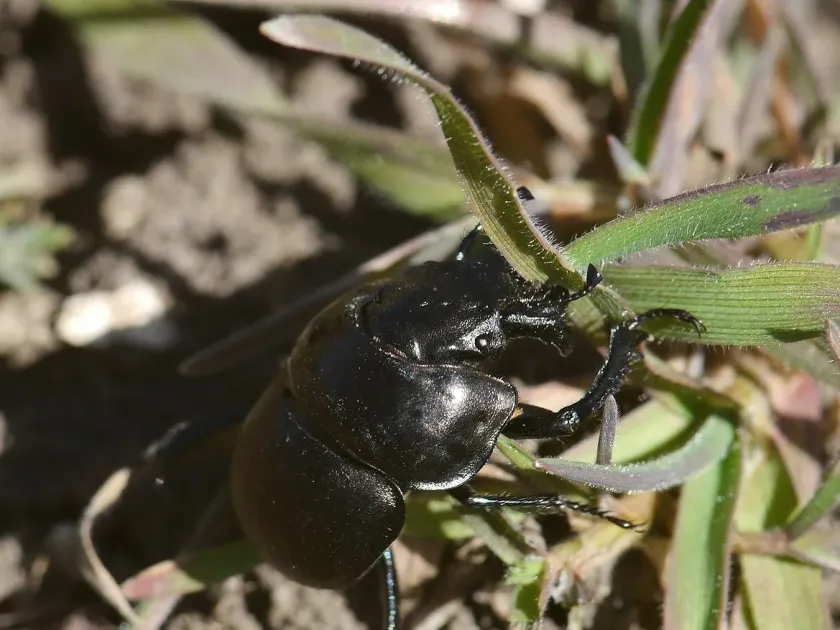
Description
How to identify
Lethrus apterus, commonly known as the crane beetle or head-rolling beetle, belongs to the Geotrupidae family. It is a robust, black beetle characterized by large mandibles, which are significantly more pronounced in males, used for digging and cutting vegetation.
These insects are flightless and spend most of their lives in complex burrow systems built in firm soil. They prefer undisturbed land, such as road verges, pastures, and fallow fields, from where they migrate to adjacent agricultural crops in early spring.
What it damages
The beetle poses a severe threat to cereal crops, including winter wheat, barley, and various legumes. By cutting down young stems and foliage, they can cause total crop failure in specific areas of the field, especially near the borders.
The larvae are fed with a mass of fresh vegetation stored by the parents in deep underground chambers. This behavior turns the pest into a highly efficient harvester of green biomass, which they drag into their burrows to ferment.
When it appears
Adult beetles become active in early spring when soil temperatures reach 10-12 degrees Celsius. This emergence coincides with the sprouting of winter and spring crops, making these young plants vulnerable to rapid consumption.
The peak period of damage occurs during May, as the insects work intensively to stock their nests for offspring. By mid-summer, the activity of the adult population declines significantly as their reproductive cycle comes to an end.
Signs of infestation
The most distinctive signs of infestation are circular holes in the ground and patches of missing plants. These patches often start from the edges of the fields and expand inward as the beetle population continues to forage.
- Neatly cut stalks at the base of young plants, resembling mechanical trimming.
- Freshly excavated soil mounds around burrow entrances.
- Localized bare patches within the field where seedlings have been entirely removed.
Control measures
Deep tillage and plowing are the most effective cultural methods for controlling Lethrus apterus. By turning over the soil, farmers can destroy the larval chambers and disrupt the adults' burrow systems, preventing further development.
Chemical control is often limited to edge treatments. Applying appropriate contact insecticides along the borders of the field helps to intercept the migration of beetles from wild vegetation into the crops, thereby protecting the core of the field.
Taxonomy
- Latin name
- Lethrus
- Order
- Coleoptera (beetles)
- Family
- Geotrupidae
- EPPO code
- LETRSP
Discussion
No discussions yet — be the first.