
Spring dung beetle
Geotrupes vernalis
Description
How to identify
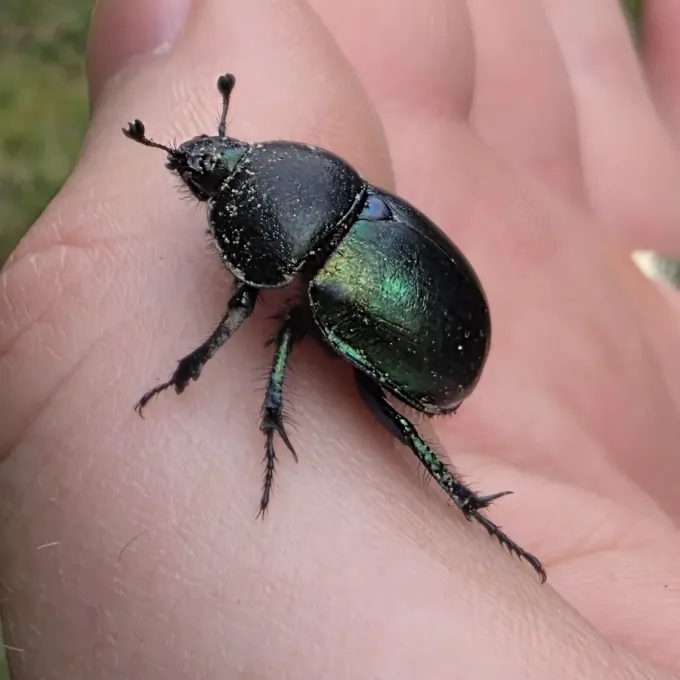
The Spring dung beetle (Geotrupes vernalis) belongs to the Geotrupidae family within the order Coleoptera. This species is easily recognizable by its compact, oval-shaped, and strongly convex body.
Adult beetles typically measure between 12 and 20 mm in length. Their dorsal surface is smooth, lacking the distinct longitudinal striae found in related species, which helps in field identification.
The coloration of the Spring dung beetle is metallic, ranging from deep blue to vibrant green, which serves as a protective shimmer in their natural habitat.
The legs of the beetle are specifically adapted for digging, with strong serrated tibiae that allow them to create complex burrow systems in the soil.
Larvae are C-shaped, fleshy, and white, possessing a specialized gut microbiome that allows them to efficiently process decaying animal matter into humus.
What it damages
The Spring dung beetle is not an agricultural pest. Its primary food source is the dung of herbivorous animals, making it an essential part of the ecosystem.
Unlike larvae of Scarabaeidae species that feed on roots, the larvae of Geotrupes vernalis strictly consume organic waste provided by the parent beetles.
There is no evidence of this insect causing damage to crops, fruit trees, or vegetable gardens, as they do not interact with living plant tissues.
In agricultural settings, their presence is actually beneficial because they accelerate the mineralization of manure, returning nitrogen and other nutrients to the soil.
They are considered beneficial insects that contribute to pasture sanitation by rapidly burying animal feces, which reduces the breeding ground for flies and parasites.
When it appears
Adult beetles become active in early spring, typically starting in April as soil temperatures rise, and remain active through the late summer months.
These insects are primarily nocturnal or crepuscular, meaning they perform most of their foraging and burrowing activities under the cover of dusk or night.
The reproduction cycle is closely tied to the availability of livestock waste, where the beetles create food caches in underground chambers to support their brood.
Larval development takes place deep within the soil, where they remain protected until they undergo pupation and emerge as the next generation of adults.
The species survives winter as an adult, burrowing deeper into the soil profile to avoid freezing temperatures, which ensures their survival until the following spring.
Control measures
No pest control measures are required for the Spring dung beetle, as they provide valuable ecosystem services rather than posing a threat to agricultural productivity.
The use of pesticides or insecticides to target this species is strongly discouraged, as it disrupts beneficial soil biology and natural nutrient cycling processes.
If insect numbers are high in pastures, simple mechanical management, such as harrowing or rotating grazing lands, is the most effective and eco-friendly approach.
Maintaining a healthy, pesticide-free soil environment encourages these beetles to thrive, which in turn improves soil structure and fertility over time.
Farmers should view the presence of these beetles as a positive indicator of soil biodiversity and successful natural waste management on their property.
Taxonomy
- Latin name
- Geotrupes vernalis
- Order
- Coleoptera (beetles)
- Family
- Geotrupidae
- EPPO code
- GEOUVE
Discussion
No discussions yet — be the first.