
Lethrus cephalotes
Lethrus cephalotes
Description
How to identify
Lethrus cephalotes is a member of the Geotrupidae family, commonly known as a destructive ground beetle that inhabits agricultural lands across parts of Europe and Asia.
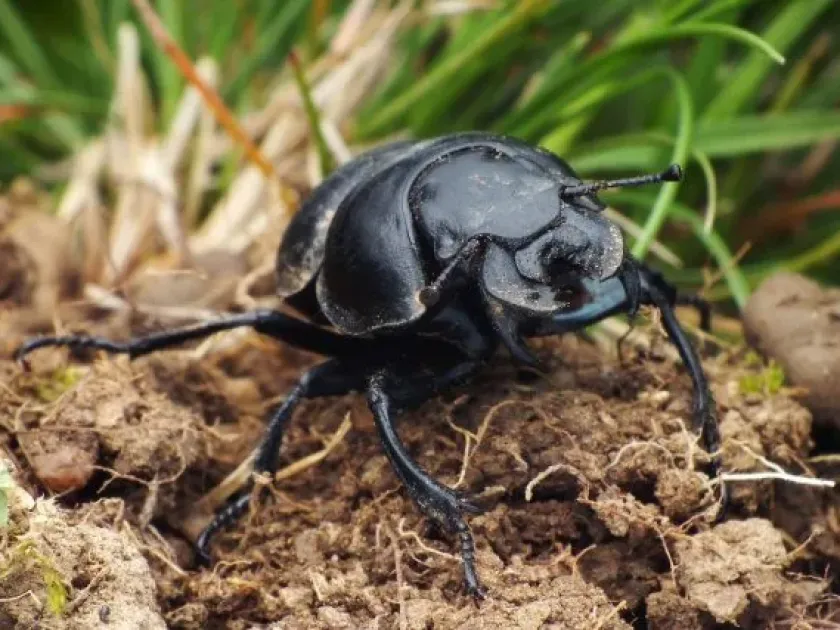
The adult beetle is characterized by its robust, black, matte body, typically measuring between 12 and 20 millimeters in length, with a distinct, massive head in males.
The life cycle is largely subterranean. Adult beetles live in deep burrows, which serve as protection, mating sites, and food storage areas for their larvae during the spring and summer months.
The development of the species is strictly annual. Beetles hibernate as adults deep underground, emerging from the soil in early spring as soon as the soil temperatures begin to rise.
Female beetles are responsible for provisioning the nest, collecting various plant parts and packing them into underground chambers where the larvae develop until they reach maturity.
What it damages
Lethrus cephalotes primarily affects young cereal crops, including wheat, barley, rye, and sometimes corn and sunflower, causing severe damage during the germination phase.
The adults act as pests by cutting off young shoots and seedlings, causing immediate destruction of the crop's ability to develop a healthy root system or canopy.
This beetle is considered a high-threat polyphage in regions with dense populations, as it can clear large patches of crops within a very short timeframe during the early growing season.
The damage is often localized initially, but as the population grows, it can expand to cover entire fields, leading to total crop failure and the necessity for reseeding operations.
In addition to physical clipping of plants, the beetle's activity can disturb the soil structure near the plant base, further stressing the already vulnerable seedlings.
Signs of infestation
A primary indicator of infestation is the presence of neatly cut-off plant stems near the soil surface, which often lie scattered around the entrance to beetle burrows.
The burrows themselves are easily identifiable as small, round, clean-cut holes in the ground, often surrounded by small mounds of excavated soil from the beetle's digging activity.
Observing adult beetles during warm, sunny spring mornings reveals them dragging foliage into their underground nests, which is a definitive sign of active infestation.
Field maps showing sporadic bare patches where seedlings have disappeared suddenly are typical indicators that this specific pest is at work within the field boundaries.
The presence of beetle carcasses or abandoned, partially filled burrows can also signal the historical presence or current activity levels of the species in the area.
Control measures
The most effective agronomic control strategy is deep autumn or late-summer plowing, which effectively destroys the underground nest structures and kills the developing larvae.
Chemical control involving systemic or contact insecticides is recommended when population thresholds are exceeded, often applied to field edges to create protective barriers.
Maintaining clean field margins and controlling weeds around the perimeter reduces the available food source for the beetles, limiting their success during the early stages of the season.
Strategic crop rotation helps in interrupting the life cycle of the beetle by removing the preferred host crops from the affected field for several seasons.
Seed treatments with specific insecticides can provide a localized protection for the newly emerging seedlings, reducing the immediate impact of beetle grazing.
Taxonomy
- Latin name
- Lethrus cephalotes
- Order
- Coleoptera (beetles)
- Family
- Geotrupidae
- EPPO code
- LETRCE
Discussion
No discussions yet — be the first.