
Tylopsis
Tylopsis
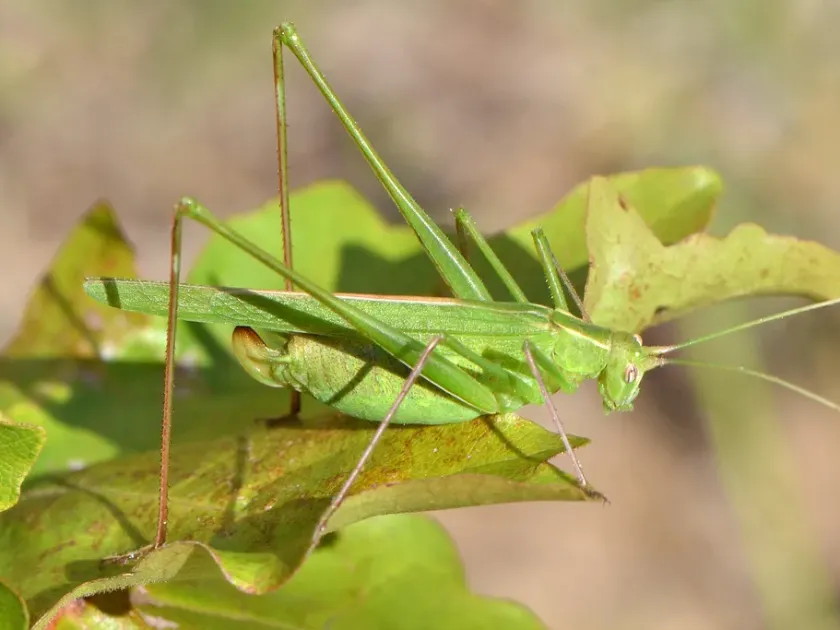
Description
How to identify
Tylopsis is a genus of bush-crickets belonging to the Tettigoniidae family within the order Orthoptera, characterized by slender bodies and green coloration.
These insects are well-adapted to life in tall grasses, where their morphology provides excellent camouflage against predators and human observation during the day.
The life cycle consists of incomplete metamorphosis, moving from egg to several nymphal instars before reaching the adult stage with fully developed wings.
Females are equipped with a specialized ovipositor designed for inserting eggs into plant stems or soil, which ensures the protection of the next generation.
As primarily nocturnal creatures, they remain inactive or hidden within the canopy during daylight hours, making them elusive for scouts and farmers.
What it damages
Tylopsis species are herbivorous insects that feed on various plant tissues, showing a preference for grasses and tender foliage of agricultural crops.
Damage typically manifests as ragged leaf margins and holes in leaves, as they utilize their strong mandibles to consume large sections of the plant tissue.
In high population densities, they can cause significant defoliation, which reduces the plant's photosynthetic capacity and weakens overall vitality.
They may also damage reproductive structures such as flower buds and young seeds, directly impacting the final yield quantity of the harvest.
Secondary damage can occur when the wounds inflicted by their feeding act as entry points for various pathogens, leading to fungal or bacterial infections.
Signs of infestation
Visual identification of infestation involves spotting irregular, notched patterns on the leaves that signify the presence of large chewing insects.
Acoustic monitoring is highly effective, as the distinct nocturnal stridulation of males reveals their activity and location within the crop canopy.
Using a flashlight at night, one can observe adults sitting on stems or leaves, as they are most active and visible during the cool evening hours.
Look for small, dark excrement pellets on the leaves or the ground beneath the plants, which are characteristic signs of feeding activity.
Focusing on the edges of fields near non-cultivated vegetation is essential, as these areas often serve as the primary source of initial infestation.
Control measures
Integrated pest management (IPM) for Tylopsis focuses on physical, cultural, and chemical methods to maintain populations below the economic damage threshold.
Cultural control practices, such as controlling weeds around field borders and employing deep soil cultivation, help destroy egg deposits and larval habitats.
Chemical control should only be implemented when damage is widespread, utilizing approved insecticides applied during the evening to target active stages.
Biological control involves preserving habitats for natural predators like birds and predatory arthropods that help suppress bush-cricket population spikes.
Regular field scouting, especially during the peak emergence season, is crucial to detecting localized infestations before they spread throughout the entire crop.
Taxonomy
- Latin name
- Tylopsis
- Order
- Orthoptera (locusts)
- Family
- Phaneropteridae
- EPPO code
- TYLSSS
Discussion
No discussions yet — be the first.