
Barbitistes constrictus
Barbitistes constrictus
Description
How to identify
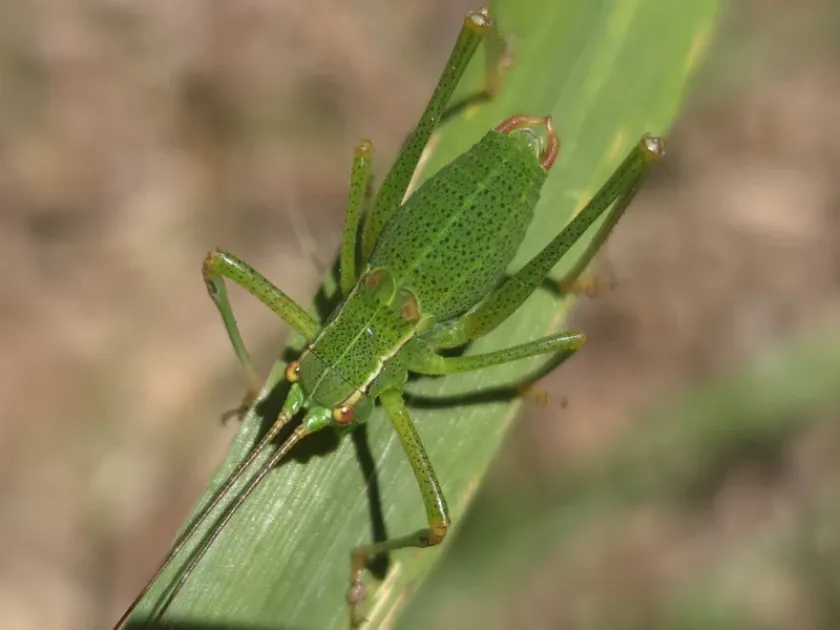
Barbitistes constrictus, commonly known as a type of bush-cricket, belongs to the Tettigoniidae family. Adult specimens typically measure between 15 and 22 mm, characterized by a green or brownish body often mottled with darker spots.
The most distinctive feature of this species is the shape of the male elytra, which are short and curved upwards, resembling a small sickle. Females possess a visible, slightly curved ovipositor used for laying eggs into plant tissues.
These insects have large heads and antennae that are significantly longer than their bodies. Their legs are well-developed for jumping, but they generally exhibit a sedentary behavior, remaining camouflaged among leaves during the day.
Nymphs resemble the adults but are smaller in size and lack fully developed wings. Their coloration varies to match their environment, providing excellent camouflage against predators and human observation.
They prefer habitats such as forest edges, brushwood, and shrubby areas. From these natural environments, they often migrate into orchards and vegetable gardens to feed on cultivated vegetation.
What it damages
Both adults and nymphs of Barbitistes constrictus are active phytophages. They feed on a wide variety of deciduous trees, shrubs, and fruit-bearing plants, causing significant stress to the host.
Early in the season, they often attack developing buds, which can lead to stunted growth or total failure of the buds to develop into leaves or flowers. This is particularly harmful to young orchard trees.
As the season progresses, they feed on leaves, creating irregular holes. In cases of high infestation, the leaves may be skeletonized, significantly reducing the plant's ability to photosynthesize effectively.
Although fruit damage is less frequent, large populations may occasionally graze on the skin of young fruits like apples or pears. This damage weakens the fruit and invites secondary infections and fungal rot.
The damage caused by this species is usually localized but intense. If left unchecked, the accumulation of feeding damage over several weeks can lead to significant economic losses for commercial growers.
When it appears
The life cycle of this bush-cricket is strictly seasonal. Overwintering occurs in the egg stage, with eggs carefully deposited into bark crevices, dry plant stems, or soil debris by the females.
Nymphs emerge in the spring, coinciding with the opening of buds on most host plants. This period is critical for crop protection as the young nymphs are particularly hungry and cause immediate damage.
Development involves several nymphal stages over the course of a few weeks. The adult stage is reached by mid-summer, with populations typically peaking in activity during July and August.
Adults are primarily nocturnal, spending daylight hours hiding deep within the foliage of trees and shrubs. They become active at night, when males produce distinctive stridulatory sounds to attract females.
Egg-laying takes place in the autumn, marking the end of the adult life cycle. These eggs remain dormant through the winter months, ensuring the emergence of the next generation in the following spring.
Control measures
Effective management begins with routine inspections of orchards and gardens, especially during the spring bud-burst phase. Early detection allows for the removal of pests before they spread extensively.
Cultural control practices include keeping the area clean of debris and weeds, which serves to remove potential egg-laying sites. Pruning overgrown bushes also reduces the number of hiding spots available.
If population levels exceed economic thresholds, insecticides may be necessary. It is best to apply these treatments in the evening, when the insects are most active and likely to come into contact with the product.
Biological control is highly encouraged, particularly by fostering a bird-friendly environment. Many insectivorous birds feed on bush-crickets and can significantly suppress their population in a balanced garden.
For gardens adjacent to forests or wild brush, setting up physical or chemical barriers along the perimeter is a recommended strategy to prevent the immigration of adult bush-crickets into the cultivated zone.
Taxonomy
- Latin name
- Barbitistes constrictus
- Order
- Orthoptera (locusts)
- Family
- Phaneropteridae
- EPPO code
- BARTCO
Discussion
No discussions yet — be the first.