
Fischer's bush cricket
Barbitistes fischeri
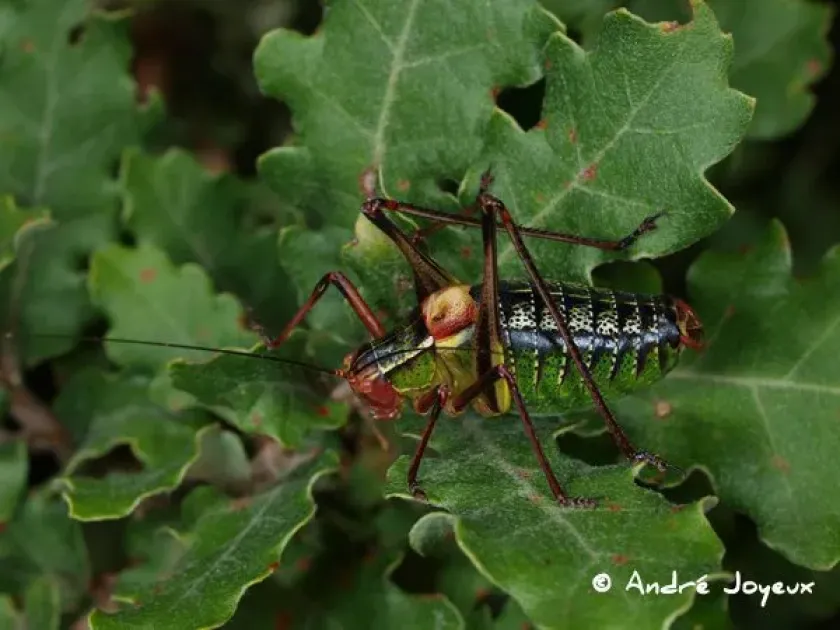
Description
How to identify
Fischer's bush cricket (Barbitistes fischeri) is a member of the Tettigoniidae family, belonging to the Orthoptera order. It is known for its distinct shape and ability to thrive in dense foliage.
The adult insect features a body length typical for bush crickets, often characterized by a dark longitudinal stripe along the back, which provides excellent camouflage.
Female specimens are easily recognized by their slightly curved ovipositors, a feature used for laying eggs in plant tissues or soil, ensuring the safety of the next generation.
Like many species in its family, it remains well-hidden during the day, using its green or brown coloration to blend into the leaves and twigs of shrubs and trees.
Though they are active jumpers, they often remain motionless when threatened, which is a common behavior pattern used to avoid detection by potential predators and humans.
What it damages
Fischer's bush cricket is a polyphagous pest, meaning it feeds on a wide range of plants, including various fruit trees like apple, pear, and stone fruits.
The damage caused is primarily leaf consumption, where the insect gnaws large, irregular holes or consumes the entire leaf margin, leaving only the primary veins.
Heavy infestations can lead to significant defoliation, which hampers the tree's photosynthetic capacity and weakens its overall vigor throughout the growing season.
Young twigs and developing fruits can also be targeted, leading to scarring, fruit drop, or increased vulnerability to secondary fungal and bacterial infections.
In nursery environments, this pest can be particularly destructive, as the loss of foliage on young seedlings can stunt growth and compromise their survival rate.
When it appears
The life cycle of this species includes an overwintering egg stage, where eggs remain dormant in the soil or protected crevices of tree bark during winter.
Nymphs typically emerge in late spring, coinciding with the first flush of new leaves, providing them with a steady supply of nutrients for rapid development.
As the season progresses through summer, the nymphs undergo several molts, gradually increasing in size and feeding intensity until they reach the adult stage.
Adults are most active during the peak of summer, from July to August, which is the period when they mate and lay eggs for the subsequent season.
By autumn, the population density declines naturally as adults complete their life cycle, leaving the next generation of eggs to sustain the species through the winter.
Signs of infestation
Visible signs of infestation include ragged leaf edges and large holes in the foliage, often concentrated in the middle or upper parts of the tree canopy.
Small, pellet-like frass deposits on leaves or the ground beneath the canopy are clear indicators of active feeding by bush crickets in the immediate area.
The rhythmic chirping sounds coming from trees in the evening are a definitive auditory sign, helping to pinpoint high-density infestation zones within the garden.
Observing nibbled fruit surfaces or damaged young shoots serves as a late-stage indicator, suggesting that the pest has already reached a significant population size.
Close inspection of the underside of leaves or tree forks during the day might reveal the insects resting, confirming their identity as the primary cause of damage.
Control measures
Cultural control methods, such as autumn soil cultivation in orchard rows, can effectively disturb overwintering sites and reduce the number of viable eggs.
Placing physical barriers like sticky bands on trunks helps prevent nymphs from migrating into the canopy, thereby protecting the vulnerable new growth.
Monitoring using light traps during night hours can assist in evaluating the population levels and determining if chemical intervention is necessary.
If thresholds are exceeded, the use of environmentally safe, selective insecticides can be employed, following the guidelines for residential or agricultural use.
Encouraging natural predators, such as insectivorous birds and predatory beetles, creates a balanced ecosystem that naturally keeps cricket populations under control.
Taxonomy
- Latin name
- Barbitistes fischeri
- Order
- Orthoptera (locusts)
- Family
- Phaneropteridae
- EPPO code
- BARTBE
Discussion
No discussions yet — be the first.