
Acrometopa
Acrometopa
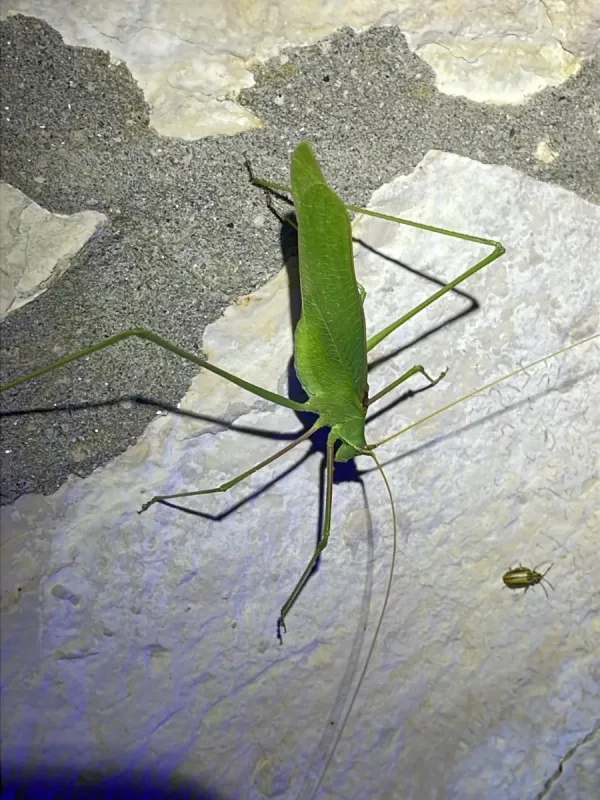
Description
How to identify
Acrometopa is a genus belonging to the family Tettigoniidae, known commonly as bush-crickets or katydids. These insects are characterized by their morphological traits that distinguish them from other orthopteran species.
Adult specimens typically display green or brownish coloration, providing excellent camouflage within vegetation, which allows them to hide effectively from predators.
They possess well-developed wings, enabling them to migrate over significant distances when searching for food sources or suitable habitats during the growing season.
The mouthparts are of the chewing type, highly adapted for consuming plant tissues, which makes them potential agricultural pests when population numbers increase.
The life cycle involves egg, nymph, and adult stages. Females lay eggs in the soil or plant debris, where they overwinter until the arrival of warmer temperatures triggers hatching.
What it damages
Acrometopa species feed on a wide variety of vegetation, including legumes, cereals, and various horticultural crops that are sensitive to leaf tissue loss.
During outbreaks, these insects can consume large portions of foliage, which directly impacts the photosynthetic capacity and overall health of the infested plants.
Stunted growth and secondary infections are common in crops that have suffered severe damage, leading to reduced vitality and poor development of the plants.
Damage is often most severe during hot and dry summers when natural food sources become limited, forcing the insects to move onto irrigated agricultural fields.
Beyond foliage, the insects may target reproductive structures such as flower buds, which negatively affects the final yields of the affected crops.
Signs of infestation
The primary sign of infestation is irregular, ragged feeding patterns on leaf margins, which are characteristic of the chewing action of bush-crickets.
Direct observation of the insects is possible during the early morning or evening hours when they are most active within the crop canopy.
The presence of insect droppings (frass) on leaves or the ground serves as a clear indicator of a feeding population currently active on the field.
A distinctive stridulation (chirping sound) produced by males during the mating season can alert farmers to a high density of the pest in the immediate area.
Damaged stems and skeletonized leaf patches are symptoms that necessitate an immediate inspection to quantify the extent of the pest population.
Control measures
Effective control strategies start with cultural practices such as deep autumn plowing, which disrupts the egg-laying sites and reduces the population for the next season.
Maintaining clean field borders by removing weeds and tall grasses is essential to eliminate refuges that support the survival of the pest population.
When infestation levels exceed the economic threshold, targeted insecticide applications are recommended to protect the crop from significant yield losses.
Applying treatments early in the morning, when the insects are less mobile and positioned on the plants, maximizes the efficacy of the chemical protection.
Encouraging biological control by protecting natural predators, such as insectivorous birds and parasitic wasps, can help manage populations in an integrated system.
Taxonomy
- Latin name
- Acrometopa
- Order
- Orthoptera (locusts)
- Family
- Phaneropteridae
- EPPO code
- AKMTSP
Discussion
No discussions yet — be the first.