
Velvet mite
Trombidium holosericeum
Description
How to identify
The velvet mite, scientifically known as Trombidium holosericeum, is a conspicuous soil-dwelling arachnid belonging to the family Trombidiidae.
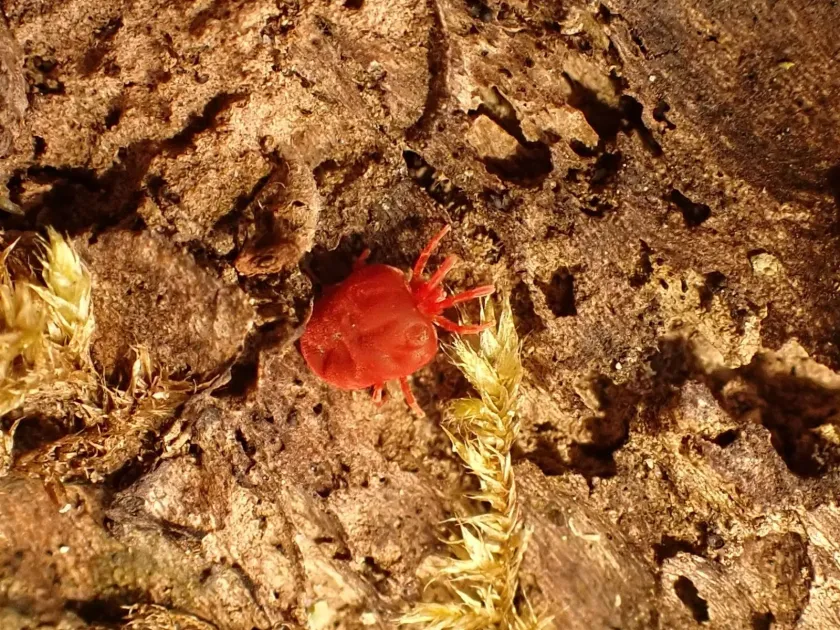
Adults are easily recognized by their bright red, velvety appearance and size, often reaching up to 4 millimeters in length, making them visible to the naked eye.
Their bodies are densely covered with short, fine hairs, which gives them the distinctive texture often referred to as "velvet" in common parlance.
The life cycle is complex and involves multiple stages: eggs, pre-larvae, larvae, nymphs, and finally adults, requiring specific environmental conditions.
They are generally found in moist soil environments, leaf litter, and garden beds, where they navigate actively during the early spring months.
What it damages
It is important to clarify that the velvet mite is not a typical plant pest; it does not feed on plant tissues or suck sap from leaves or stems.
Adult velvet mites are free-living predators that feed on eggs and larvae of various small insects, making them arguably beneficial for a garden ecosystem.
While the larvae are parasitic on other invertebrates, this behavior rarely negatively impacts crop yields or the overall health of garden plants.
In many cases, the misclassification of these mites as pests leads to unnecessary chemical applications that harm beneficial organisms in the soil.
Therefore, they should not be considered a primary threat to agriculture, and their presence is often a sign of a healthy, biodiverse soil environment.
When it appears
Velvet mites are most active in the spring, coinciding with the warming of the soil, which triggers the emergence of adults from their winter dormancy.
The larval stage typically appears slightly later in the season, often correlating with the onset of warmer, more humid weather in late spring or early summer.
Moisture is a critical limiting factor for their survival; they thrive in moist, cool conditions and tend to retreat deeper into the soil during dry spells.
By late summer and autumn, the mites begin to prepare for winter, burrowing deeper into the ground to survive the colder temperatures.
Gardeners are most likely to encounter them when turning over the soil or during spring planting, which perfectly aligns with their peak surface activity.
Control measures
Control measures specifically targeting the velvet mite are generally unnecessary, as they do not constitute an economic risk to agricultural or garden crops.
Avoid the use of broad-spectrum pesticides, as these chemicals are highly likely to kill beneficial predatory mites and other essential soil organisms.
Effective management involves maintaining good soil structure through regular weeding and minimal soil disruption, which helps balance the local population.
If you are concerned about mites, focus on promoting a balanced garden environment where natural predators can thrive and regulate populations naturally.
Instead of chemical control, observation and monitoring are recommended to ensure that you are not mistakenly targeting a species that is actually beneficial.
Taxonomy
- Latin name
- Trombidium holosericeum
- Order
- Mites
- Family
- Trombidiidae
- EPPO code
- TROMHO
Discussion
No discussions yet — be the first.