
Trombidium
Trombidium
Description
How to identify
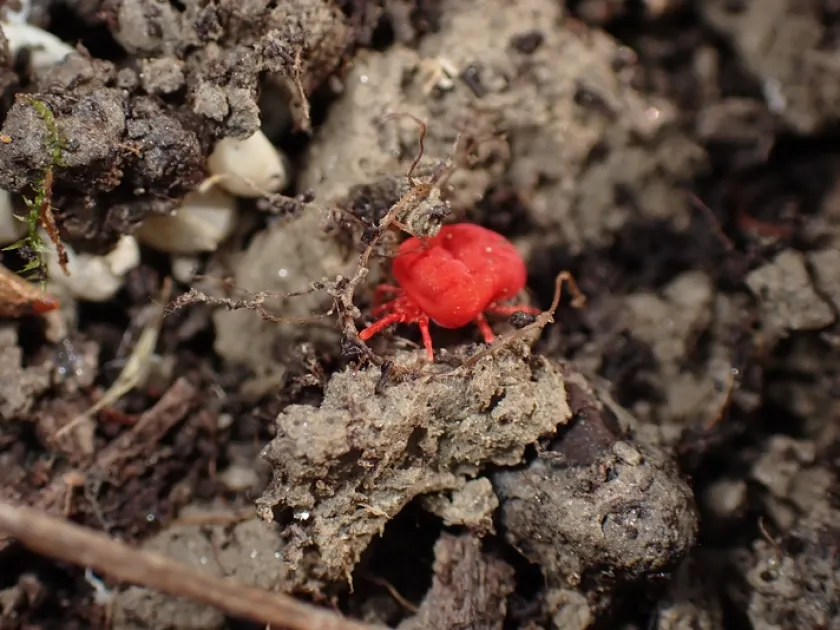
Trombidium is a genus of mites belonging to the family Trombidiidae, within the order Trombidiformes. These mites are known for their bright red, velvet-like appearance due to the dense covering of fine hairs on their bodies.
Adults are typically soil-dwelling organisms that move actively across the surface. They are quite large compared to most soil mites, making them easily visible to the naked eye during their period of activity.
The life cycle includes complex stages: egg, larva, protonymph, deutonymph, and adult. Each stage serves a specific biological purpose in the mite's development within the soil ecosystem.
While adults are predators of small invertebrates, larvae are known to be ectoparasitic on various insects. This specialized behavior classifies them as neutral or beneficial rather than pests.
Correct identification is crucial. Because of their vivid color and size, they are often wrongly identified as agricultural pests by farmers who are not familiar with soil arthropod diversity.
What it damages
Trombidium mites do not cause any direct damage to agricultural crops. They lack the mouthparts necessary for feeding on plant tissues and do not consume plant juices or sap.
There is no evidence of these mites causing economic injury to plants. In contrast, they help maintain soil balance by predating on various small soil-dwelling pests.
Misidentifying these mites as threats leads to unnecessary and harmful pesticide applications. This results in the loss of non-target beneficial species, which is detrimental to overall field health.
Their presence on a farm is a sign of a healthy, relatively undisturbed soil ecosystem. They thrive where chemical stress is low and organic matter is sufficient.
Agronomists should view these mites as biological control agents. They indirectly support plant health by regulating the populations of other small organisms in the soil.
When it appears
The peak activity of Trombidium occurs during the spring. When soil temperatures rise and moisture levels are adequate, adults emerge to the surface for mating and feeding.
As the summer heat increases and the soil surface dries out, these mites migrate deeper into the soil profile. This behavior allows them to avoid desiccation and survive through the dry season.
The seasonal pattern is highly dependent on local weather conditions. A wet spring will often prolong the period during which these mites are visible on the surface.
Autumn brings a decline in metabolic activity. As temperatures drop, the mites seek protective environments within the soil layers to undergo overwintering.
Monitoring for these mites is most effective during the early growth stages of crops in the spring, which coincides with their reproductive phase on the surface.
Signs of infestation
The primary sign of their presence is the visual observation of vibrant red, velvety mites moving rapidly on the soil surface. They are most active during sunny, warm spring days.
Unlike true plant pests like spider mites, Trombidium mites do not produce silk webbing on leaves or stems. Their activity is strictly confined to the soil and the base of plants.
No symptoms of feeding, such as leaf yellowing, tissue necrosis, or stunted growth, will be observed on the host plants in the presence of these mites.
If you observe small red clusters on the soil, take a moment to observe their behavior. If they are moving on the soil rather than clinging to plant foliage, they are almost certainly not pests.
- Bright red color and velvety texture.
- High activity levels during early spring.
- Total absence of damage to plant foliage.
- Ground-level movement pattern.
Control measures
No control measures are needed for Trombidium. In fact, active management or eradication attempts are discouraged as they are part of the beneficial soil fauna.
The best strategy is to avoid using non-selective pesticides. Protecting these mites preserves the biodiversity of the field and enhances natural pest suppression.
If the mites occur in high numbers, simply monitoring them is sufficient. Their presence is a natural indicator that does not require chemical intervention.
Agricultural practices that promote soil health and minimize chemical runoff create a stable environment for these mites, which in turn benefits the entire ecosystem.
Educating field staff on the difference between predators and pests is the most effective way to prevent unnecessary treatments and save costs while maintaining ecological balance.
Taxonomy
- Latin name
- Trombidium
- Order
- Mites
- Family
- Trombidiidae
- EPPO code
- TROMSP
Discussion
No discussions yet — be the first.