
Allothrombium fuliginosum
Allothrombium fuliginosum
Description
How to identify
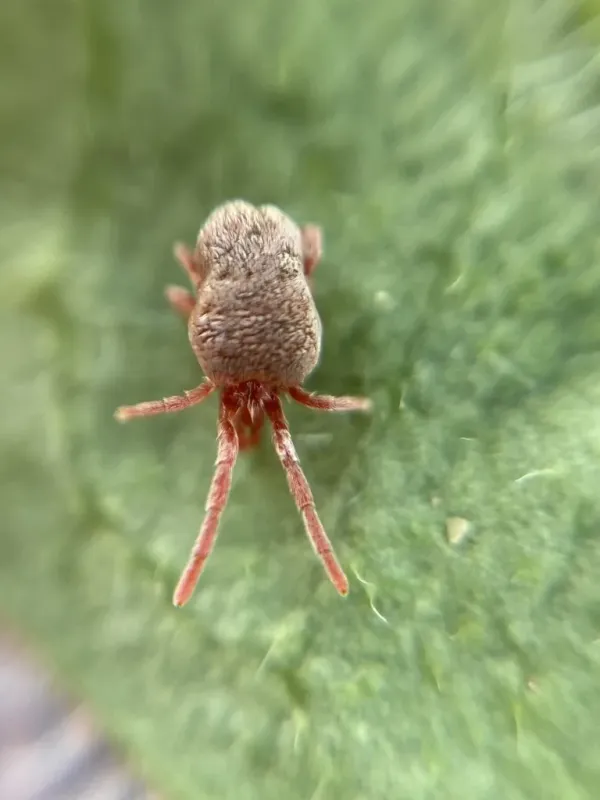
Allothrombium fuliginosum is a mite species belonging to the family Trombidiidae, recognized for its vibrant red color and velvet-like body texture.
Adult mites typically measure between 2 and 3 millimeters, making them highly visible when they traverse soil surfaces or plant foliage during the day.
These mites possess a unique life cycle where larvae often exhibit parasitic behavior on various insects, while adults serve as active predators within the soil ecosystem.
Their bodies are densely covered with specialized hairs that assist them in navigation and interaction with their environment.
Identification often relies on observing their characteristic color and rapid movement, which distinguishes them from many other soil-dwelling arthropods.
What it damages
While often categorized as predators, their presence on agricultural crops can be problematic, especially in high-density greenhouse environments.
Direct feeding damage is usually minor, but they can negatively impact plant health by mechanically carrying fungal spores and pathogens between plants.
Sensitive crops like strawberries, tomatoes, and various ornamental plants may suffer from increased stress levels when mite populations spike.
In some cases, large aggregations can lead to slight discoloration or tissue damage at the attachment sites on leaves and stems.
Economic impact is generally low but should be considered in integrated pest management (IPM) programs to ensure overall crop quality.
When it appears
The activity of Allothrombium fuliginosum commences in early spring as soil temperatures rise, allowing overwintering adults to emerge.
Populations tend to reach their maximum density during late spring and early summer when environmental conditions are optimal for development.
During the peak of summer heat, these mites often retreat deeper into the soil profile to escape excessive evaporation and drought conditions.
As autumn approaches, the mites prepare for dormancy by burrowing into the soil, where they survive the winter months.
The total duration of their life cycle is highly dependent on regional climate factors and soil moisture availability.
Signs of infestation
The most common sign of infestation is the appearance of small, fast-moving bright red dots on the leaf surface or soil debris.
Close inspection of the underside of leaves may reveal clusters of small eggs, which indicate a developing generation in the immediate area.
Symptoms of presence may also include localized spots of chlorosis or physical damage where mites have gathered in larger groups.
In greenhouse settings, their presence is often noted on damp substrates or pots where humidity levels remain consistent.
Plants may occasionally show stunted growth if heavy mite pressure coincides with other environmental stressors or nutrient deficiencies.
Control measures
Effective management begins with soil cultivation techniques, such as regular hoeing, which disrupts their habitat and limits their population growth.
Sanitation practices, including the removal of weeds and debris, significantly reduce the sites available for mite survival and reproduction.
Biological control using entomopathogenic fungi or encouraging natural predators is recommended for a sustainable and eco-friendly approach.
Chemical intervention should be reserved for severe infestations and must be applied selectively to protect non-target beneficial species.
- Maintain optimal soil moisture levels.
- Rotate crops to break the life cycle.
- Monitor leaf undersides frequently.
- Use mulching to regulate soil microclimate.
Taxonomy
- Latin name
- Allothrombium fuliginosum
- Order
- Mites
- Family
- Trombidiidae
- EPPO code
- ALLTFU
Discussion
No discussions yet — be the first.