
Giant red velvet mite
Dinothrombium giganteum
Description
How to identify
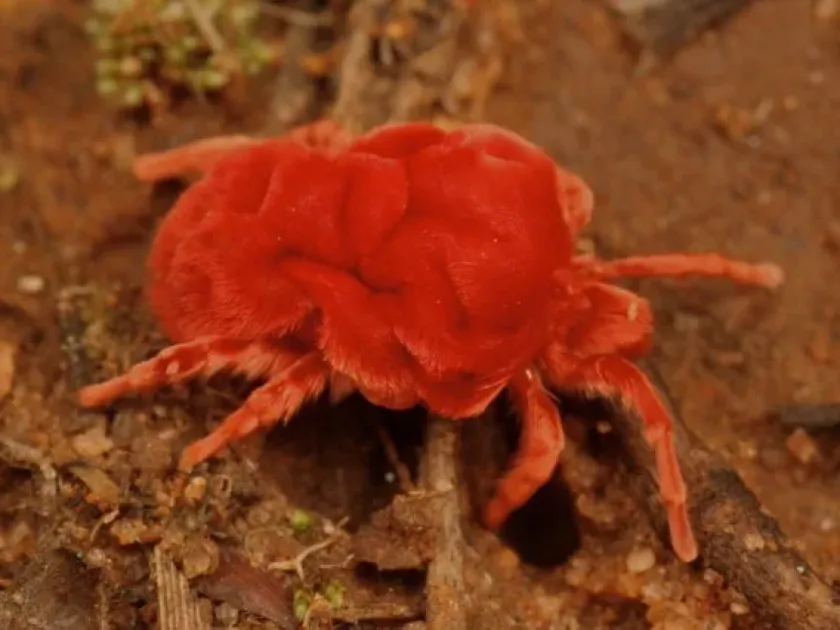
The Giant Red Velvet Mite (Dinothrombium giganteum) is a species of mite within the family Trombidiidae. It is widely recognized for its impressive size, which can reach up to 12 mm, making it one of the largest terrestrial mites.
These mites are characterized by a vibrant red color and a velvety appearance due to the dense covering of fine, sensory hairs on their exoskeleton.
As members of the order Prostigmata, they undergo complex metamorphosis. The larval stage is parasitic, while the nymphs and adults are free-living soil predators.
Their anatomy includes strong legs adapted for rapid movement across the soil surface, especially during the brief windows of activity after rainfall.
They are often mistaken for pests due to their dramatic appearance, but they are actually specialized organisms that thrive in specific environmental conditions.
What it damages
The larval stage of Dinothrombium giganteum is known to parasitize various insects, particularly orthopterans like grasshoppers, which are often significant crop pests.
Adult mites do not feed on plant tissues, phloem, or roots. They are predators that hunt other small invertebrates and soil organisms, posing no threat to agricultural crops.
Because they are not phytophagous, they cause no damage to leaves, stems, or fruits, meaning they do not require any form of pest control in agricultural settings.
In fact, their presence indicates a healthy, undisturbed soil environment that supports diverse populations of soil invertebrates, including other beneficial species.
Therefore, any chemical intervention intended to eliminate these mites is considered detrimental to the overall ecological health of the farmland.
When it appears
Giant Red Velvet Mites are famously ephemeral, typically appearing on the soil surface in large numbers only immediately following heavy seasonal rainfall.
During the remainder of the year, especially in hot or dry seasons, these mites remain deep within the soil profile in a dormant or resting state.
Their life cycle is highly adapted to arid and semi-arid environments where they rely on moisture to emerge for mating and egg-laying activities.
The period of surface activity is often limited to a few days, after which they disappear back into the subterranean layers to avoid desiccation.
Because their appearance is so brief and dictated by weather patterns, there is no standardized monitoring program for this species in agriculture.
Control measures
There is no requirement to implement control measures against the Giant Red Velvet Mite as it is not an agricultural pest.
Farmers are advised against the use of broad-spectrum soil insecticides, as these chemicals can harm beneficial predators that provide natural pest regulation services.
Maintaining good soil structure and balanced moisture levels is sufficient to manage any concerns related to their sudden, short-lived appearances.
It is important to educate agricultural staff that this organism is a harmless component of the soil ecosystem and should be protected rather than eradicated.
- Avoid unnecessary chemical soil treatments.
- Monitor soil health and biodiversity.
- Preserve natural habitats on farm boundaries.
- Promote Integrated Pest Management (IPM) practices.
Taxonomy
- Latin name
- Dinothrombium giganteum
- Order
- Mites
- Family
- Trombidiidae
- EPPO code
- DINTGI
Discussion
No discussions yet — be the first.