
Trombidium grandissimum
Trombidium grandissimum
Description
How to identify
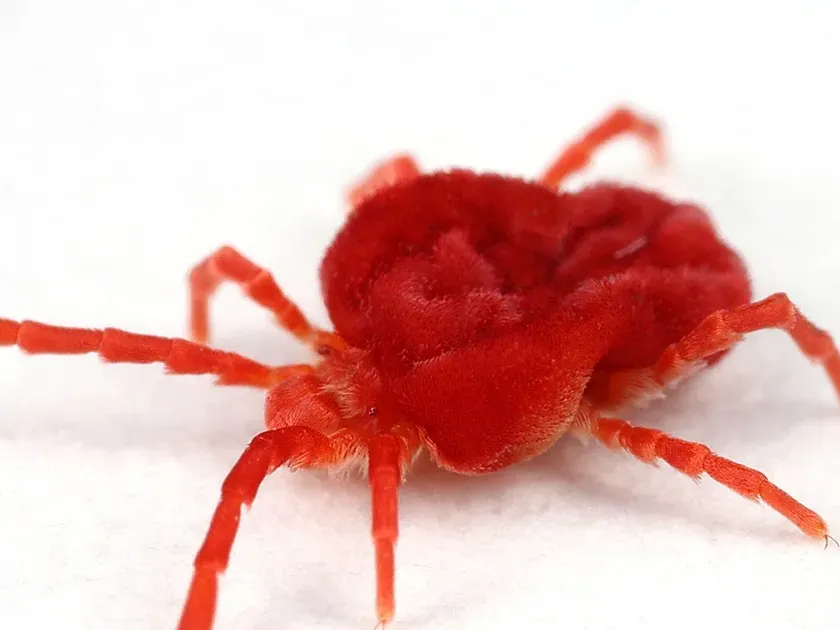
Trombidium grandissimum is a species of mite belonging to the Trombidiidae family. Adult mites are characterized by a vibrant red color and a dense velvety appearance, which makes them highly visible after rain when they emerge on the soil surface.
The life cycle is complex, involving larval, nymphal, and adult stages. Adults are predatory, spending most of their time in the topsoil and leaf litter, where they hunt for smaller invertebrates to sustain their population.
The larvae are temporary ectoparasites. They attach themselves to various host insects to feed on their hemolymph. This parasitic phase is crucial for their development but can negatively affect the vitality of the host insects.
Morphologically, they are adapted for moving through soil crevices. They possess large chelicerae, which are specialized for capturing and holding prey effectively within the subterranean environment.
While often considered neutral or beneficial due to their predatory adult phase, their presence in high densities in agricultural areas warrants close monitoring to assess the impact on local insect populations.
What it damages
Trombidium grandissimum does not directly consume plant tissues, so it is not a primary herbivore. However, its damage to the agroecosystem is significant due to its impact on beneficial insect populations.
The mite is frequently found in fields where moisture levels are high and organic matter is abundant. Its indirect damage relates to the parasitism of pollinators and natural predators, such as ladybugs or ground beetles.
By weakening beneficial insects, these mites can lead to an increase in secondary pest populations. This ecological imbalance often results in decreased overall crop health and reduced yield quality.
The presence of mite larvae on beneficial species can also act as a vector for secondary infections, further weakening the immunity of those insects and destabilizing the biological control mechanisms in the field.
Agricultural importance varies depending on the crop and local environment. Monitoring is essential to ensure that the density of these mites does not interfere with the natural pest control services provided by other insects.
When it appears
The activity of Trombidium grandissimum is highly dependent on environmental humidity and soil temperature. Adults typically emerge on the soil surface following heavy spring rains.
The optimal temperature range for their development and hunting activity is between 18 and 25 degrees Celsius. During periods of extreme heat or drought, they retreat deep into the soil to reach more stable moisture conditions.
Developmental stages occur throughout the growing season, but the highest peak of visible activity is observed during the transition from late spring to early summer.
In autumn, as temperatures drop, the mites prepare for overwintering. They seek refuge in sheltered areas, including the root zones of perennial crops or accumulated plant debris that provides insulation.
In irrigated farming systems, activity can be sustained for longer durations due to the consistent moisture levels provided, which prevents the mites from entering premature diapause.
Signs of infestation
The most reliable sign of a Trombidium grandissimum presence is the visual observation of bright red mites on the soil surface, particularly after irrigation or rainfall events.
Examining local insect populations often reveals the presence of larvae attached to the bodies of hosts. This is a clear indicator that the mites are in an active reproductive and parasitic phase.
A decline in the efficiency of natural pollinators or predators in the field can be a subtle sign of high mite pressure, as these insects become stressed and less productive when parasitized.
Soil sampling can reveal egg clusters, which look like small, spherical masses often hidden within the soil structure or near the surface organic layer, indicating a localized breeding site.
Fields with dense organic cover and high humidity are the most likely hotspots for these mites, and checking these areas specifically will improve the detection rate during agricultural surveys.
Control measures
Effective management focuses on mechanical and cultural practices rather than immediate chemical intervention. Tillage and regular soil cultivation disrupt the eggs and larvae, significantly reducing their survival rate.
Sanitation is key; removing excess plant debris from the field surface minimizes the available habitat for mites to hide and reproduce, forcing them to move elsewhere or succumb to environmental stressors.
Chemical control should be avoided or used with extreme caution. Broad-spectrum insecticides will inevitably kill the very beneficial insects that these mites might be parasitizing, potentially causing a pest outbreak.
- Implementing crop rotation systems.
- Regular mechanical cultivation of the topsoil.
- Managing irrigation to avoid prolonged excessive humidity.
- Encouraging natural predators that occupy the soil surface.
Biological control using entomopathogenic fungi is a promising, eco-friendly approach. These pathogens specifically target mite populations, maintaining the ecological balance of the field without harming non-target beneficial species.
Taxonomy
- Latin name
- Trombidium grandissimum
- Order
- Mites
- Family
- Trombidiidae
- EPPO code
- TROMGR
Discussion
No discussions yet — be the first.