
Trithemis stictica
Trithemis stictica
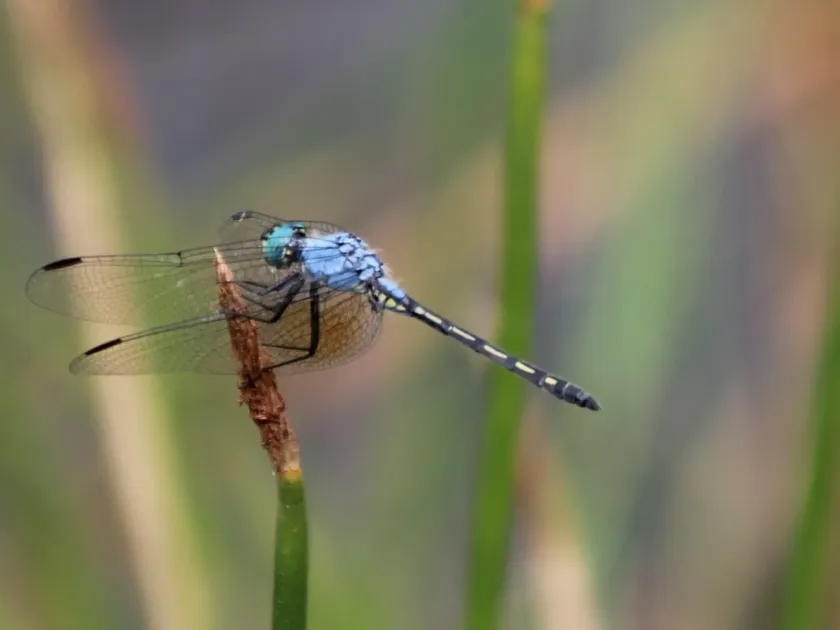
Description
How to identify
Trithemis stictica is a species of dragonfly belonging to the Libellulidae family, commonly known as skimmers.
Adults are identified by their distinct wing markings and specific abdominal patterns, which are vital for accurate field identification.
The life cycle includes an aquatic larval stage (naiads), which develop in ponds, irrigation canals, and flooded fields like rice paddies.
Morphological characteristics, including wing venation and body size, distinguish this species from other members of the Trithemis genus.
Both adults and larvae function as effective predators within their respective environments, playing a significant role in the local food chain.
What it damages
The primary concern regarding Trithemis stictica is its impact on integrated rice-fish farming systems, where the larvae act as predators.
While adult dragonflies do not feed on crops, their larvae can significantly reduce the populations of fish fry introduced into rice paddies.
By preying on beneficial aquatic insects that assist in regulating other crop pests, they can cause an indirect reduction in overall agricultural health.
In high densities, the larvae compete for resources, potentially disrupting the biological balance of the irrigation system.
Direct damage to plant tissues is negligible, but the ecological disruption caused by their predatory nature constitutes a management challenge.
When it appears
The appearance of Trithemis stictica is tied to the availability of water in irrigation systems and seasonal weather patterns.
Activity peaks during the warm months when adults emerge to mate and deposit eggs in suitable aquatic habitats.
The developmental rate of larvae is highly dependent on ambient temperatures and the abundance of food sources within the water bodies.
In tropical and subtropical agricultural regions, this species may be active throughout the entire irrigation cycle of the crops.
Migration and dispersal by adult dragonflies enable them to rapidly colonize new or refilled water sources during the farming season.
Signs of infestation
The presence of numerous adults skimming over water surfaces is a key indicator of an active population ready for reproduction.
Exuviae, the shed skins left behind after the final molting process, found on rice stalks are a definitive sign of successful larval development.
Monitoring the density of larvae in water samples from irrigation canals provides a clear picture of the potential pressure on the system.
A decline in the survival rate of fish fingerlings in mixed-culture environments serves as a practical diagnostic indicator of high larval activity.
Regular visual inspections of the canal banks and aquatic vegetation help to identify potential hotspots for dragonfly reproduction.
Control measures
Effective management strategies focus on water level manipulation, which disrupts the aquatic life cycle of the dragonfly larvae.
Periodic drying of rice fields at critical stages of the crop cycle effectively reduces the survival rate of the larval stage.
Biological control methods, such as encouraging natural predators, are preferred to maintain the health of the aquatic ecosystem.
Avoiding the use of broad-spectrum insecticides is crucial to protect beneficial insects and maintain the long-term sustainability of the farm.
- Water management through scheduled drainage of irrigation fields.
- Physical removal of excessive aquatic vegetation from canals.
- Integration of biological and cultural control practices.
Taxonomy
- Latin name
- Trithemis stictica
- Family
- Libellulidae
- EPPO code
- TRTHST
Discussion
No discussions yet — be the first.