
Whitefaces
Leucorrhinia
Description
How to identify
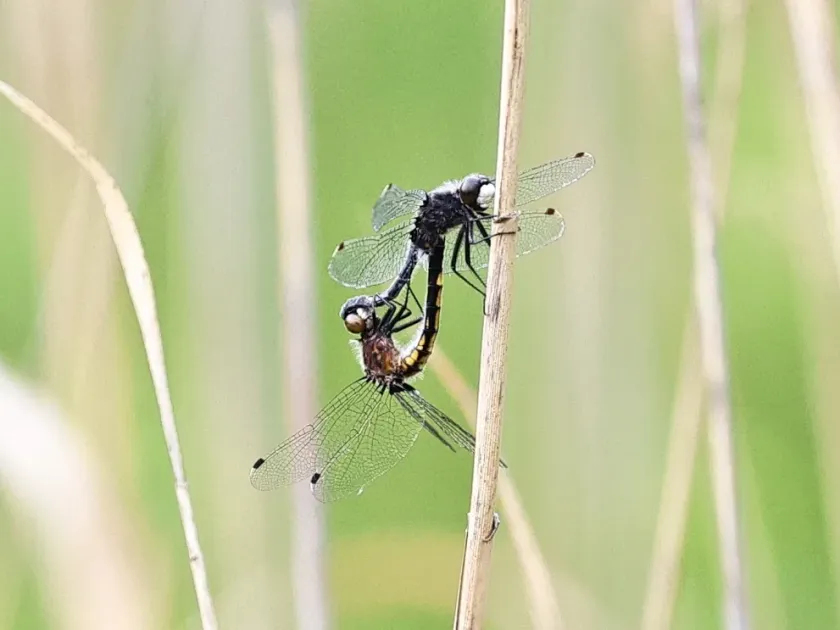
The genus Leucorrhinia, commonly known as whitefaces, belongs to the family Libellulidae. They are easily identified by their distinct black bodies marked with bright yellow or red abdominal spots.
The primary diagnostic feature is the white or pale spot on the face (clypeus), which gives the genus its name. Their wings are clear with characteristic dark basal patches.
Adult whitefaces are medium-sized with a wingspan of 50 to 70 mm. They are agile fliers frequently found in the vicinity of ponds, marshes, and standing water.
Larval stages are entirely aquatic, featuring a robust body and a specialized labial mask used to capture small prey under the water surface.
Biologically, these insects are beneficial predators and have no negative impact on cultivated agricultural crops.
What it damages
Species of the genus Leucorrhinia do not damage agricultural crops because they do not consume plant material at any stage of their life cycle.
Plants are completely safe from these insects. In fact, their presence is beneficial as they actively hunt and consume smaller flying insects that may be pests.
There is no evidence of whitefaces feeding on leaves, stems, or fruits, as their mouthparts are designed strictly for carnivorous feeding.
Any perceived damage to crops attributed to these dragonflies is misidentified and should be investigated for other potential agricultural pests.
They contribute to the agro-ecosystem by maintaining the balance of insect populations, preventing outbreaks of harmful species.
When it appears
The adult flight period typically occurs from late spring through mid-summer, depending on the geographical region and water temperature.
Peak activity is observed during sunny weather when these insects are highly mobile, patrolling their territories above vegetation and water bodies.
The life cycle involves an egg stage, an aquatic nymphal stage that may last for multiple seasons, and the winged adult stage.
Metamorphosis usually takes place at the water's edge, where the final larval stage emerges to transform into a sexually mature flying adult.
Their presence on farmland is a seasonal indicator of local ecosystem health and a consistent supply of prey insects.
Signs of infestation
There are no signs of "infestation" or damage caused by whitefaces, as they are not pests to any agricultural plant species.
The sight of these dragonflies indicates a healthy environment rather than a need for intervention or pest control measures.
Observation of Leucorrhinia serves as a biological indicator for the quality of nearby water sources and the presence of natural biodiversity.
Since they do not feed on crops, you will not find bite marks, yellowing, or structural damage associated with their activity.
If insect damage is observed, it should be attributed to other pests while recognizing the dragonfly as a beneficial predator.
Control measures
No control measures are needed for whiteface dragonflies, as they are non-pest organisms and provide ecosystem services to farmers.
Agricultural practice should prioritize the reduction of broad-spectrum pesticide use to preserve these natural entomophages.
Maintaining clean water sources and native vegetation near ponds supports the habitat required for their larval and adult life stages.
Integrating pest management strategies involves protecting these predators to leverage their efficiency in controlling insect pests naturally.
Education on the distinction between pests and beneficial insects like Leucorrhinia is vital for sustainable and eco-friendly farming.
Taxonomy
- Latin name
- Leucorrhinia
- Family
- Libellulidae
- EPPO code
- LRRHSP
Discussion
No discussions yet — be the first.