
Broad-bodied chaser
Libellula
Description
How to identify
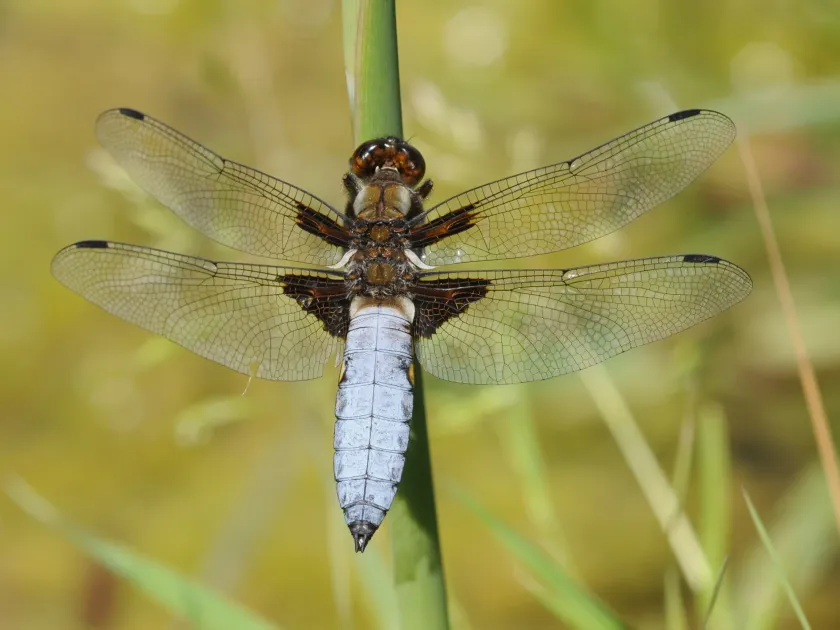
The broad-bodied chaser (Libellula depressa) is a species of dragonfly in the family Libellulidae. It is characterized by its distinctively broad, flattened abdomen, which gives the species its common name.
Adult males have a pale blue, powdery-looking abdomen, while females are more brownish-yellow with yellow spots along the sides. Both sexes reach a length of 40–50 mm.
A key identification feature is the presence of prominent dark brown patches at the base of both the forewings and hindwings, which contrasts with their otherwise translucent wings.
The larvae, known as nymphs, are aquatic predators. They have a stout, robust body that allows them to blend in with the silt and debris at the bottom of ponds and streams.
These dragonflies are agile fliers and are typically observed in sunny, warm areas, often patrolling their territory near water sources or in garden clearings.
What it damages
The broad-bodied chaser is not a pest. It does not feed on plants, crops, or any agricultural produce, and it poses no threat to garden vegetation or commercial plantations.
As obligate carnivores, they feed exclusively on other flying insects, such as midges, mosquitoes, flies, and sometimes smaller damselflies or dragonflies.
They act as natural biological control agents, helping to manage populations of potentially harmful insects. Their presence is generally considered beneficial for gardeners and farmers.
There is no evidence of this species causing mechanical damage to plant tissues or interfering with plant growth in any way.
Gardeners should view this species as a helpful companion rather than a threat, as they actively reduce the number of bothersome flying insects on the property.
When it appears
The flight period for adult broad-bodied chasers typically spans from May to August. During this time, they are most visible near suitable water habitats.
The life cycle involves an aquatic larval stage that can last between one to three years. The transformation into the adult form usually takes place in late spring or early summer.
Once emerged, adults spend their short lives hunting, patrolling, and mating. They are highly dependent on the presence of ponds with emergent vegetation.
As the season progresses toward autumn, the adults die off after completing their reproductive cycle, leaving eggs behind to develop in the aquatic environment.
For successful reproduction, the species requires shallow, still or slow-flowing water with clean conditions, which are ideal for the development of their larvae.
Control measures
No control measures are necessary for the broad-bodied chaser. Since it is not a pest, it should be protected and welcomed as a beneficial component of the local ecosystem.
The use of broad-spectrum pesticides is highly detrimental to dragonfly populations and should be avoided to maintain a balanced and healthy garden environment.
If you wish to encourage these dragonflies to visit your garden, ensure there is a small pond available and maintain a diverse range of native plants nearby.
Dragonflies are bioindicators of water quality; their presence indicates that your immediate environment is free from severe toxic pollution.
In conclusion, there is no need to manage this species as a pest, as they provide natural insect regulation and enhance the biodiversity of the garden.
Taxonomy
- Latin name
- Libellula
- Family
- Libellulidae
- EPPO code
- LIBLSP
Discussion
No discussions yet — be the first.