
Nesogonia
Nesogonia
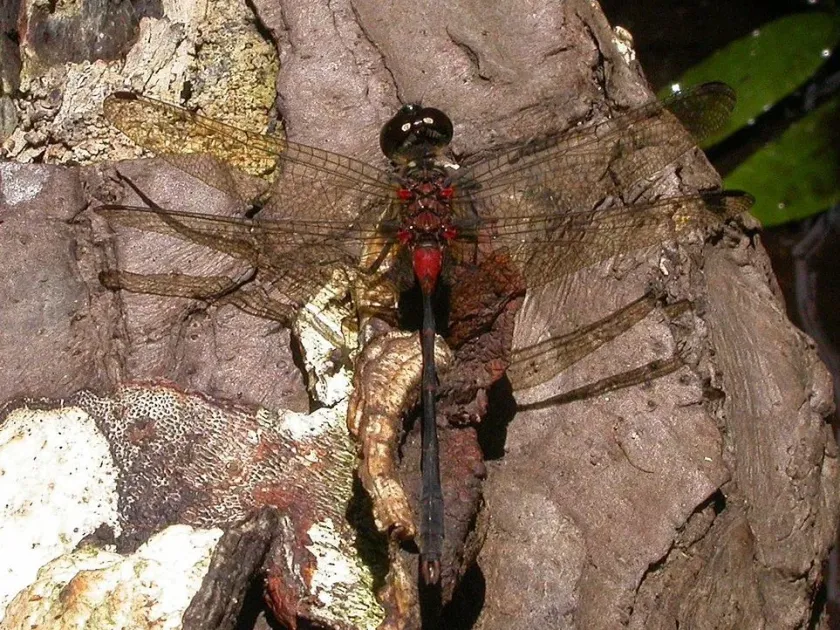
Description
How to identify
The genus Nesogonia belongs to the family Libellulidae, within the order Odonata. These insects are commonly known as dragonflies and are characterized by robust bodies and complex wing venation patterns.
Adults are highly mobile aerial predators. They possess large, multifaceted eyes and powerful wings that allow them to hover and hunt smaller insects effectively across agricultural landscapes.
The nymphal stage is entirely aquatic. These nymphs reside at the bottom of ponds, irrigation ditches, or slow-moving streams, where they function as ambush predators during their development.
Identification at the species level usually requires expert examination of genital structures or detailed wing venation analysis, as the genus has distinct morphological features.
While often regarded as beneficial predators of mosquitoes and flies, their presence in large numbers can occasionally become a concern in specific agricultural settings.
What it damages
The Nesogonia genus is not a phytophagous pest. They do not consume plant tissues, and thus, they do not cause traditional herbivorous damage like chewing or sap-sucking insects.
The primary concern arises during the egg-laying process. Females may insert eggs into the stems of aquatic or semi-aquatic plants, creating small incisions that may cause minor local tissue damage or deformations.
Their predatory nature can lead to the incidental consumption of beneficial pollinators, which may negatively affect the overall ecosystem service efficiency on a farm.
Nymphs in irrigation systems do not harm crops directly, but their presence indicates the ecological status of the water source, which is critical for agricultural management.
In conclusion, the direct economic threat posed by this genus to commercial crop production is considered negligible under normal agricultural conditions.
When it appears
The adult activity period for Nesogonia generally begins in late spring and continues throughout the summer, often persisting until early autumn depending on the climate.
The life cycle is closely linked to water temperature and availability. Development from egg to adult takes several months to a year, requiring consistent aquatic environments.
Peak emergence of adults usually occurs during warm, sunny months, coinciding with the flowering stages of many crops, which increases the likelihood of human-insect interactions.
As temperatures decline, adults reach the end of their lifecycle, while the younger stages continue to develop or overwinter in the submerged substrate of water bodies.
Monitoring the aquatic environments during these months is essential for those studying the population dynamics and ecological footprint of these dragonflies.
Signs of infestation
The most visible sign of presence is the high-frequency flight of adults over fields, irrigation channels, and reservoirs during daylight hours.
Small slits or necrotic spots on the stems of marginal aquatic plants are indicative of egg-laying activities performed by the females.
The discovery of exuviae—the empty exoskeletons left behind during the transition from nymph to adult—on reeds or leaves near water indicates that the area is a breeding ground.
A sudden decrease in pollinator activity in specific areas could be observed if dragonflies are actively hunting in the immediate vicinity of flowering crops.
Regular visual inspections of irrigation ditches and pond banks will easily reveal the presence of both nymphal and adult stages of the species.
Control measures
As Nesogonia is not a significant agricultural pest, there are no specific recommended chemical control programs targeted at this genus.
If population reduction is necessary, the most sustainable method is the physical management of irrigation channels, such as removing excessive aquatic vegetation.
Improving water drainage on fields prevents the formation of stagnant water pockets, which significantly reduces the suitable habitat for nymph development.
The use of broad-spectrum insecticides should be minimized, as these often kill beneficial predatory insects that naturally control more serious agricultural pests.
Integrated pest management strategies should focus on maintaining a healthy balance in the farm ecosystem, where dragonflies act as natural controllers of nuisance flies.
Taxonomy
- Latin name
- Nesogonia
- Family
- Libellulidae
- EPPO code
- NESGSP
Discussion
No discussions yet — be the first.