
Broad-bodied chaser
Libellula depressa
Description
How to identify
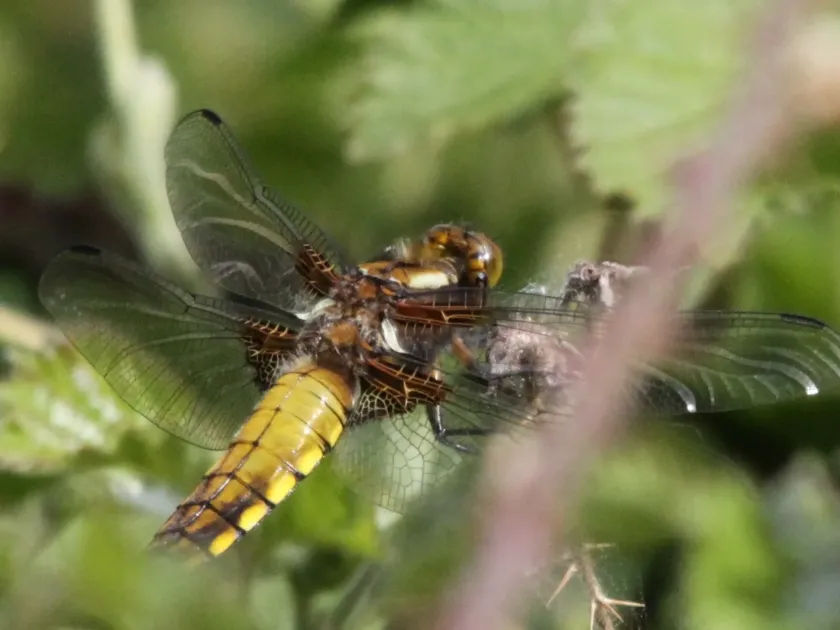
The Broad-bodied chaser (Libellula depressa) is a species of dragonfly belonging to the family Libellulidae. It is easily identified by its notably broad and flattened abdomen, which is sky-blue in mature males and brownish in females and juveniles.
Both pairs of wings feature distinct dark brown patches at the base, which serves as a key identification mark. These dragonflies have a wingspan ranging from 7 to 8 centimeters, making them prominent in their habitats.
The larvae, known as nymphs, are aquatic and inhabit the bottom of ponds and slow-moving streams. Their bodies are stout, bristly, and often covered in detritus, providing effective camouflage against the substrate.
Adults are strong fliers and are typically observed perching on vegetation or patrolling sunlit areas near water sources during the warmer months of the year.
This species is one of the first dragonflies to colonize new or temporary ponds, showcasing their significant ecological adaptability.
What it damages
In terms of agricultural science, the Broad-bodied chaser is not a plant pest. It does not consume any parts of crops, ornamental plants, or fruit-bearing trees, posing no threat to the commercial yield.
Rather than causing damage, these insects provide significant benefits. As voracious predators, adult dragonflies consume large quantities of midges, mosquitoes, and other flying insects that are often nuisances or vectors for plant diseases.
The aquatic nymphs also act as predators within the water, regulating the populations of other aquatic invertebrates and mosquito larvae that could otherwise become problematic.
There is no economic harm associated with this species. Its presence should be viewed as a sign of high environmental quality and a healthy aquatic ecosystem nearby.
Any perceived damage attributed to them is generally based on a misunderstanding of their role in the food web rather than actual negative interactions with plant cultivation.
Control measures
No control measures are necessary, as the Broad-bodied chaser is a highly beneficial insect. They are natural allies in the biological control of garden pests and should be conserved rather than eliminated.
The use of broad-spectrum insecticides should be avoided to prevent harm to these valuable predators. Maintaining a healthy balance of local wildlife helps keep pest populations under natural control.
If their presence is undesirable, simply managing the water sources around the property—by ensuring they are not stagnant or by maintaining a balanced ecosystem—is sufficient.
We advocate for the protection of such species as an essential component of integrated pest management (IPM) strategies, which prioritize natural ecological interactions over synthetic chemicals.
As an agronomist, I emphasize that the Broad-bodied chaser is a valuable resident of your farm or garden, contributing to the overall ecological health and sustainability of your land.
Taxonomy
- Latin name
- Libellula depressa
- Family
- Libellulidae
- EPPO code
- LIBLDE
Discussion
No discussions yet — be the first.