
White-faced darter
Leucorrhinia dubia
Description
How to identify
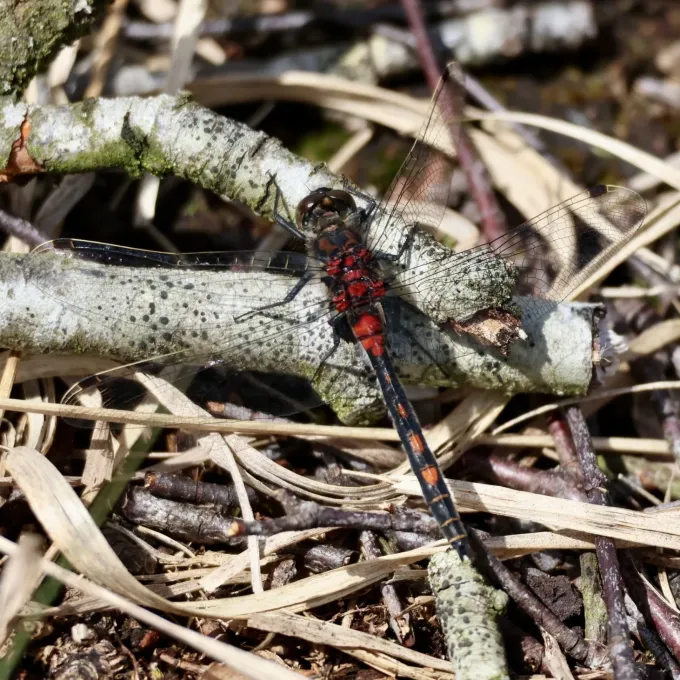
The white-faced darter (Leucorrhinia dubia) is a species of dragonfly belonging to the family Libellulidae. These insects are typically found near peat bogs and acidic ponds.
Adults are recognized by their dark bodies, often featuring red or yellow patches on the abdomen, which become darker as the insect matures.
Their larvae are aquatic, living in stagnant or slow-moving water, often hiding among submerged vegetation or in muddy substrates.
The lifecycle of this dragonfly is complex and can take up to three years to complete, depending on the climatic conditions of their habitat.
They are medium-sized insects, distinguished from other dragonflies by specific wing vein patterns and the shape of their anal appendages.
What it damages
The white-faced darter is not a plant pest and does not pose any threat to agricultural crops, gardens, or forests.
This species acts as a predator throughout its entire lifecycle, feeding on other organisms rather than plant tissue.
Adult dragonflies are highly skilled hunters that capture smaller flying insects, such as midges, mosquitoes, and small flies, while in flight.
Larvae are aquatic predators that consume small aquatic invertebrates, helping to maintain balance in the pond ecosystem.
Because they do not eat plants or damage plant organs, there is no agricultural damage associated with this species.
Control measures
There are no control measures needed for the white-faced darter, as it is a beneficial insect in the ecosystem.
The presence of these dragonflies is an indicator of high water quality and a healthy surrounding environment.
Using broad-spectrum pesticides near ponds can negatively impact these insects, so careful application of agrochemicals is encouraged.
Protecting the natural habitats of dragonflies helps maintain natural biological control over populations of pest insects like mosquitoes.
In modern integrated pest management, these insects are considered allies that contribute to the stability of the local environment.
Taxonomy
- Latin name
- Leucorrhinia dubia
- Family
- Libellulidae
- EPPO code
- LRRHDU
Discussion
No discussions yet — be the first.