
Trithemis
Trithemis
Description
How to identify
Trithemis is a genus of dragonflies in the family Libellulidae, the skimmers. In professional agronomy, these insects are considered beneficial rather than pests.
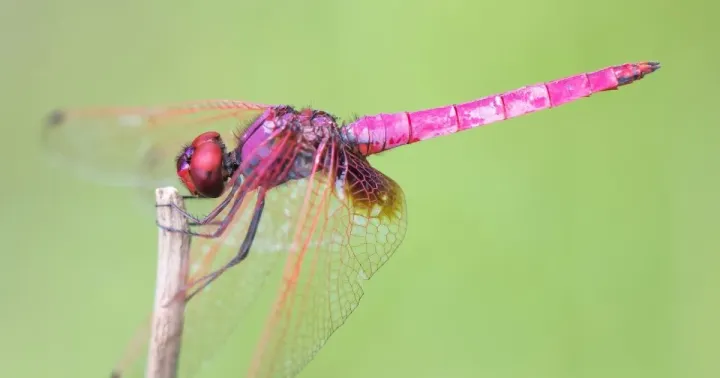
Adult specimens are recognized by their robust bodies and frequently vibrant colors, particularly in males, which often exhibit intense red or purple shades.
The wings exhibit characteristic venation patterns. The eyes are large and meet at the top of the head, providing them with excellent vision for hunting airborne prey.
Nymphs, or naiads, are aquatic predators. They feature a unique labium, a specialized mouthpart used to ambush and capture small aquatic prey with high speed.
Identification at the species level is complex and often relies on the analysis of specific anatomical structures, including wing venation and genitalia.
What it damages
Trithemis does not cause any damage to crops. They are purely predatory and do not feed on plant tissue, such as leaves, stems, or roots.
Instead, they act as active entomophagous insects, catching other flying insects. Many of their prey items can be considered potential pests, making dragonflies helpful allies.
Their role in the ecosystem is that of a top predator in their immediate environment, helping to regulate the populations of various smaller flying insects.
There is no economic harm associated with their presence; they are considered a positive indicator of biological diversity within an agricultural setting.
No agricultural practices are needed to protect crops from Trithemis, as they are not pests and pose no threat to agricultural productivity.
When it appears
The activity of adult Trithemis is most noticeable during the warm months when ambient temperatures are sufficient for their flight and mating behaviors.
Peak emergence occurs during mid-summer. Adults are highly active in sunny weather, patrolling territories near water sources and adjacent fields.
The aquatic larval stage is much more prolonged. Larvae require permanent or semi-permanent water bodies to complete their development into adults.
As the weather cools in autumn, their activity levels drop significantly. Most adult individuals die as temperatures reach unfavorable levels.
The lifecycle is strictly tied to the environmental conditions of the water bodies where the nymphs develop throughout the spring and summer seasons.
Control measures
No control measures are needed for Trithemis. As beneficial predators, they should be conserved rather than eradicated from the agricultural landscape.
Avoid the unnecessary use of non-selective broad-spectrum insecticides, as these chemicals negatively impact beneficial predator populations like dragonflies.
Sustainable pest management involves recognizing and supporting these natural enemies, which can help reduce the overall need for chemical treatments.
Maintaining healthy water margins and avoiding runoff into local ponds are effective ways to protect the habitats of these helpful insects.
Farmers should focus their protective efforts on identified crop pests, ensuring that beneficial biodiversity is maintained in the surrounding environment.
Taxonomy
- Latin name
- Trithemis
- Family
- Libellulidae
- EPPO code
- TRTHSP
Discussion
No discussions yet — be the first.