
Common sandpiper
Tringa hypoleucos
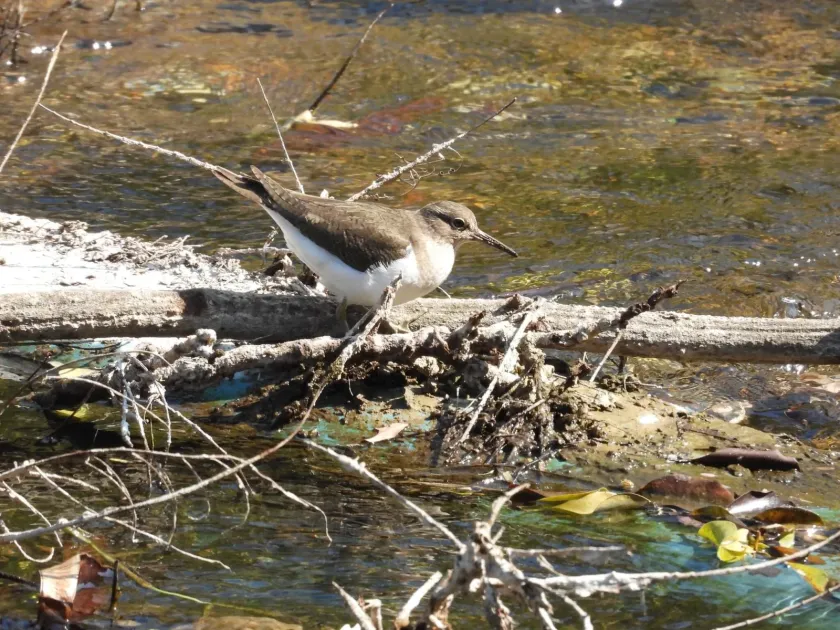
Description
How to identify
The Common sandpiper is a small wader bird belonging to the Scolopacidae family, commonly found near freshwater habitats.
It is easily identified by its distinctive bobbing motion of the tail and its low, stiff-winged flight pattern over water.
The plumage is characterized by a dark olive-brown upper body and a clean white underside, providing camouflage against the water edge.
These birds are usually solitary, rarely forming small flocks unless they are gathering at productive feeding sites during migration.
The total length of an adult bird is approximately 20 centimeters, making it a compact and agile species within its wetland environment.
What it damages
The Common sandpiper is strictly insectivorous and does not target crops, thus it is not considered a crop pest in agriculture.
Its diet consists primarily of small aquatic and terrestrial insects, larvae, and other invertebrates found near the soil surface.
While they may walk through fields adjacent to rivers, they cause no mechanical or nutritional damage to cereals, vegetables, or fruits.
There is no economic justification for treating this bird as a pest, as it plays a beneficial role in natural insect control.
Agricultural operations remain unaffected by the presence of this species, and no damage thresholds have ever been established for it.
When it appears
As a migratory species, the Common sandpiper arrives at breeding grounds in the temperate zone during the spring months.
Breeding and chick-rearing occur during the summer months, from May through late July, when the birds defend their territories.
The return migration towards wintering grounds in Africa or Southern Asia commences in August and continues through September.
Seasonal patterns are highly dependent on the availability of water and moisture, which dictates the bird's choice of foraging habitat.
They are absent from northern and temperate agricultural landscapes during the cold winter months.
Control measures
Since the Common sandpiper is not a pest, there are no control measures recommended or required for its presence on farm land.
Farmers are encouraged to preserve the health of local water bodies, as these environments support bird species that provide natural pest regulation.
No chemical pesticides or physical barriers should ever be employed against this non-harmful species to avoid ecological disruption.
If bird management is needed for other species, ensure that practices are specific and do not negatively impact the Common sandpiper population.
Sustainable agricultural practices focus on coexisting with non-pest wildlife to maintain biodiversity within the agro-ecosystem.
Taxonomy
- Latin name
- Tringa hypoleucos
- Family
- Scolopacidae
- EPPO code
- TNGAHY
Discussion
No discussions yet — be the first.