
Sanderling
Calidris alba
Description
How to identify
The Sanderling (Calidris alba) is a small wading bird belonging to the Scolopacidae family. They are well-known for their energetic foraging behavior along sandy shorelines.
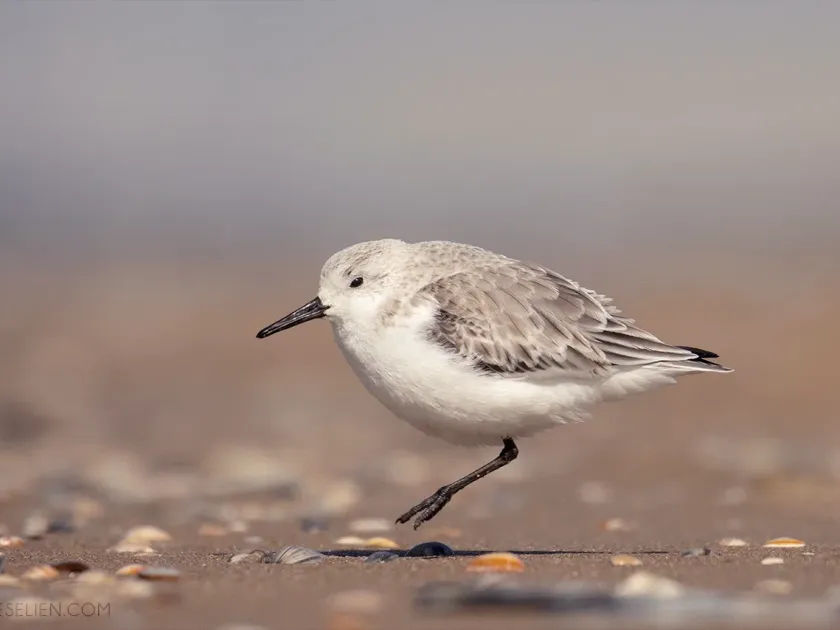
These birds are characterized by their medium-length black bill and dark legs. A key identification feature is the absence of a hind toe, which makes their tracks unique.
During the non-breeding season, they display a predominantly white and pale grey plumage, allowing them to blend perfectly with coastal environments.
They are highly social birds, often seen in large, tightly packed flocks that move rapidly in unison when searching for food.
While primarily coastal, they may occasionally visit damp agricultural fields, especially those located near migratory stopover points.
What it damages
Sanderlings are not agricultural pests in the traditional sense, as they consume small invertebrates rather than seeds or plant matter.
Potential damage is limited to mechanical impact, such as the trampling of delicate seedlings in recently sown fields near water bodies.
During intense foraging, they may create numerous small pits in the soil, which can disturb the seedbed surface in very specific conditions.
The overall impact on crop yield is generally considered negligible, as these birds rarely feed on the actual crops themselves.
Their presence is transient, and they typically do not cause long-term harm to the structural integrity of agricultural production zones.
When it appears
Sanderlings are migratory, and their presence near farmlands is dictated by their long-distance travel between Arctic breeding grounds and wintering areas.
They are most likely to be encountered in agricultural regions during the spring and autumn migration windows.
Diurnal cycles dictate their activity, with foraging usually peaking during daylight hours, especially when the tide prevents coastal feeding.
Extreme weather events can displace them from their preferred coastal habitats, forcing them to seek shelter and food in surrounding terrestrial areas.
Once the migration period concludes, the birds depart, and any potential interaction with agricultural fields ceases until the next season.
Signs of infestation
The primary sign of their presence is the distinct three-toed footprint pattern left on moist or soft soil surfaces.
Dense clusters of small, deep probe holes made by their bills are indicative of intensive foraging activity in a specific area.
Visible accumulations of droppings in concentrated spots are common in areas where flocks have rested for extended periods.
The sudden appearance of active, rapidly moving flocks is a direct visual cue of their current occupancy of the field.
The lack of plant tissue damage (e.g., shredded leaves or eaten stalks) helps distinguish their presence from genuine crop-eating pests.
Control measures
Control measures should focus on non-lethal deterrents, given the status of many shorebirds and the minimal economic damage they cause.
Visual deterrents, such as predator kites or moving reflective ribbons, are highly effective at discouraging flocks from landing.
Acoustic deterrents that broadcast predator alarm calls can be deployed if the birds persistently return to the same vulnerable field section.
Maintaining proper field drainage can reduce the attractiveness of damp patches that might otherwise lure the birds to forage.
Mechanical cultivation or harrowing of the soil after a flock has visited can effectively restore the surface and mitigate soil compaction issues.
Taxonomy
- Latin name
- Calidris alba
- Family
- Scolopacidae
- EPPO code
- CLDRAB
Discussion
No discussions yet — be the first.