
Tringa
Tringa
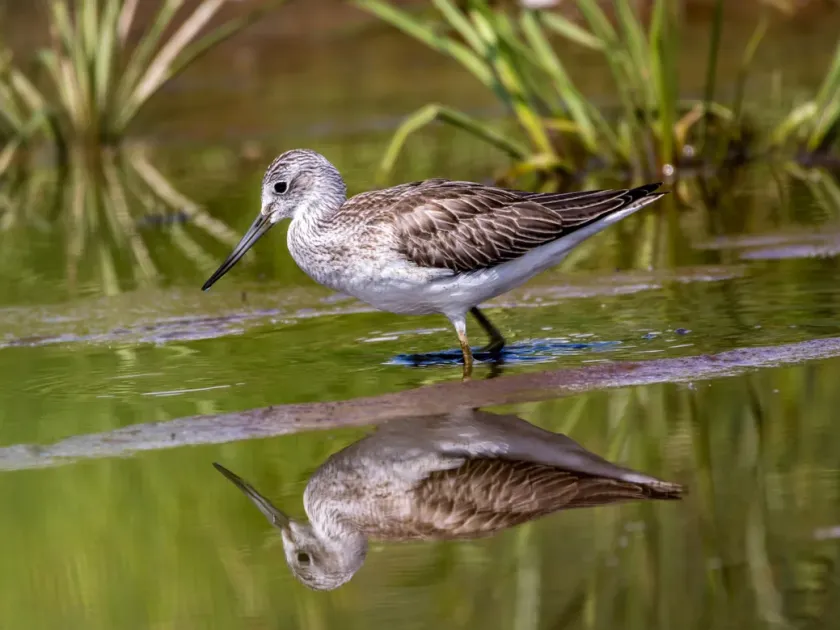
Description
How to identify
The genus Tringa, commonly known as sandpipers or shanks, belongs to the family Scolopacidae. These birds are distinctively adapted for wading in shallow water.
They are characterized by their long legs, slender bills of varying lengths, and generally mottled brown or grey plumage, which provides excellent camouflage.
These birds are migratory, often covering vast distances. During their transit, they favor coastal areas, estuaries, and inland wetlands where they can probe the mud for invertebrates.
Their behavior is social, and they are frequently found in small to medium-sized flocks. This social nature often causes them to congregate on flooded agricultural fields.
While they play an important role in the ecosystem, their presence on farmland can sometimes lead to conflicts with crop management during specific seasons.
What it damages
Damage to agricultural crops occurs primarily during the planting and germination stages. Tringa species can unintentionally crush tender seedlings as they move across the soil.
In regions where rice is grown, these birds may disrupt the irrigation beds, leading to soil compaction or uneven distribution of water, which affects crop uniformity.
While they are primarily insectivorous, under conditions of high density or food scarcity, they may peck at seeds or shoots, causing minor stand depletion.
The economic impact is generally localized rather than catastrophic, usually confined to specific fields that happen to be located near the birds' migration routes.
Secondary damage can include the displacement of topsoil or mulch in managed garden plots, which can expose root systems to environmental stressors.
When it appears
The risk of bird damage is highest during the spring migration when birds are exhausted and searching for easily accessible food sources in high-moisture agricultural zones.
During the nesting season, local populations may become more settled near permanent water bodies, increasing the potential for chronic, low-level crop interference.
The autumn migration period also sees increased activity, often coinciding with harvest times for certain crops, leading to potential nuisance in drying or recently harvested fields.
Extreme weather events, such as unseasonal floods, significantly influence the timing of bird movement into agricultural areas, as their natural foraging habitats become unavailable.
The peak period of vulnerability for the crops is the duration from sowing until the establishment of the canopy, when the soil is exposed and easily accessible.
Signs of infestation
The most reliable sign of a Tringa presence is the characteristic footprint pattern in soft mud, showing three thin, forward-facing toes and a small hind toe.
Small, vertical probe holes in the soil surface are classic indicators that these birds have been actively feeding on soil-dwelling invertebrates in that specific area.
Observation of birds exhibiting flight displays or specific vocalizations, particularly when disturbed by machinery, confirms their presence in the vicinity.
The presence of droppings on canal edges or field margins, combined with small, trampled pathways through the crop, strongly suggests regular flock activity.
The lack of insect activity in specific moist patches often hints that a flock has recently cleared the area of the available invertebrate population.
Control measures
Bioacoustic devices that broadcast predator calls are highly effective in deterring Tringa species from staying on agricultural lands for prolonged periods.
Visual deterrents, such as shiny reflective tapes, holographic scarecrows, or kite-based raptor decoys, are useful for protecting high-value crops during the germination phase.
Good field management, including timely drainage to prevent stagnant pools and keeping field margins clear, helps to decrease the attractiveness of the site to waders.
In highly intensive farming systems, physical barriers like netting can be used on small or experimental plots to completely eliminate the risk of bird damage.
- Installation of motion-activated scare devices.
- Strategic timing of field operations to avoid peak bird migration.
- Maintenance of irrigation infrastructure to prevent standing water accumulation.
Taxonomy
- Latin name
- Tringa
- Family
- Scolopacidae
- EPPO code
- TNGASP
Discussion
No discussions yet — be the first.