
Dunlin
Calidris alpina
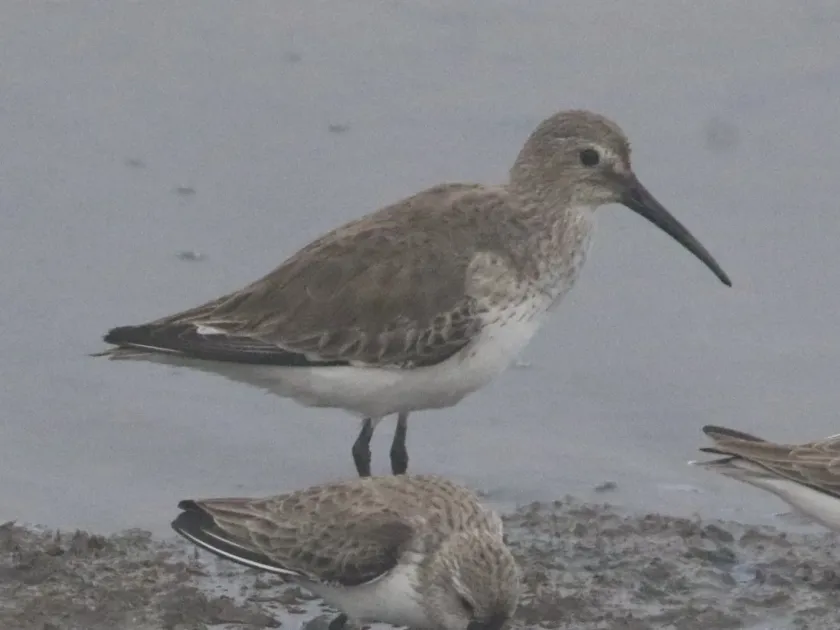
Description
How to identify
The Dunlin (Calidris alpina) is a small wader of the sandpiper family, Scolopacidae, recognizable by its distinct seasonal plumages.
During the breeding season, the adult bird features a notable black patch on its belly and a rich rufous-brown back and crown.
It possesses a medium-length, black, slightly drooping bill, which is perfectly adapted for probing into mud and soft sand to find food.
The species primarily breeds in arctic and subarctic regions, preferring tundra environments with abundant moisture and low-lying vegetation.
As a highly migratory bird, the Dunlin travels vast distances between its northern breeding grounds and its southern wintering quarters.
What it damages
The Dunlin is not classified as a crop pest; it does not consume plants, seeds, or agricultural produce as part of its regular diet.
Its diet consists almost exclusively of invertebrates, such as small mollusks, crustaceans, marine worms, and insects found in wet substrates.
Occasional presence on agricultural land is strictly linked to resting or foraging for these invertebrates in damp fields rather than damaging crops.
Any accidental disturbance to plant growth is negligible and stems from the movement of flocks across fields rather than intentional feeding habits.
Consequently, the Dunlin has no economic impact on crop yields and should be considered a non-pest species within the agricultural landscape.
When it appears
During spring and autumn migration, Dunlins frequently stop at coastal areas, wetlands, and flooded agricultural fields to replenish energy stores.
Their presence on farmland is seasonal and short-lived, determined by the availability of damp, muddy patches and the migratory timing of the species.
In winter, these birds are typically found in estuarine habitats and mudflats, rather than inland fields in temperate or colder climate zones.
The summer season is dedicated to nesting in northern tundra regions, far removed from industrial-scale agricultural production areas.
Environmental fluctuations, such as excessive rainfall or irrigation, can create temporary habitats that attract Dunlin flocks for a few days.
Signs of infestation
Evidence of Dunlin presence includes characteristic three-toed footprints found in moist, soft soil or along the edges of agricultural ponds.
Small, frequent holes in the ground are indicative of the bird's probing behavior, where it uses its bill to search for small prey.
Visual identification is often possible by observing large, coordinated flocks that perform rapid, twisting flight patterns when startled.
Their distinct alarm calls, often described as a rasping "peep" or "twee," serve as a clear auditory sign of their arrival in an area.
Dropped feathers and presence of guano near water-logged soil patches are additional markers of their stopover duration.
Control measures
Since the Dunlin does not harm crops, no control measures or pest management strategies are needed or recommended for this species.
If bird presence needs to be managed for specific safety reasons, such as near airfields, bioacoustic deterrents are the standard solution.
Chemical deterrents or pesticides are entirely unnecessary and harmful to the environment, as the Dunlin is a protected migratory species.
Maintaining proper field drainage and preventing excessive waterlogging helps minimize the attractiveness of a field for foraging shorebirds.
Overall, farmers are encouraged to welcome the presence of Dunlins, as they act as natural controllers of soil-dwelling invertebrates.
Taxonomy
- Latin name
- Calidris alpina
- Family
- Scolopacidae
- EPPO code
- CLDRAL
Discussion
No discussions yet — be the first.