
Trigonotylus ruficornis
Trigonotylus ruficornis
Description
How to identify
Trigonotylus ruficornis, commonly known as a type of grass plant bug, is a member of the Miridae family within the order Hemiptera.
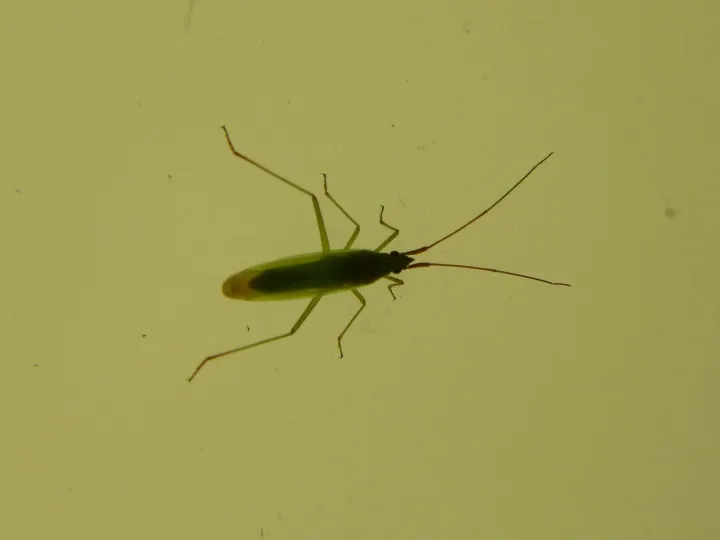
These insects are small, typically measuring between 6 to 8 mm in length, and possess an elongated, slender body structure.
Their coloration ranges from light green to yellowish-brown, providing excellent camouflage against the foliage of cereal crops.
A distinctive feature of this species is its long, reddish-orange antennae, which serve as a primary diagnostic character for identification.
The eyes are relatively large and protruding, and the legs are adapted for agility, allowing the insect to escape rapidly when disturbed.
What it damages
This pest primarily attacks cereal crops, including wheat, barley, oats, rye, and various wild grass species that grow on field margins.
Both adults and nymphs cause damage by using their piercing-sucking mouthparts to feed on plant sap from leaves and developing heads.
Feeding during the stem elongation and heading stages is particularly destructive, as it directly impacts the plant's ability to fill the grain.
The injection of salivary enzymes during feeding causes localized necrotic spots and hinders the translocation of nutrients throughout the plant.
Heavy infestations result in reduced plant vigor, stunting, whiteheads, and significant losses in grain yield and quality at harvest time.
When it appears
The life cycle of Trigonotylus ruficornis typically consists of one or two generations per year, depending on regional climatic conditions.
The species overwinters as eggs embedded within the tissues of stems of wild grasses or cereal stubble, which protects them from frost.
Nymphs emerge in the spring as temperatures rise, coinciding with the early growth stages of cereal crops when plants are most vulnerable.
Adult populations peak during the summer months, aligning with the plant reproductive phases of flowering and grain formation.
As the season nears its end, adults lay their eggs in protected locations, such as crop debris or permanent vegetation, to initiate the next cycle.
Signs of infestation
Early symptoms of infestation include the appearance of tiny, light-colored spots or streaks on leaves, which gradually coalesce into yellow blotches.
As the bug feeds on the stem, the leaves may show signs of curling, withering, and premature yellowing of the lower canopy.
- Chlorotic spots and streaks on leaf blades.
- Deformed or bleached grain heads (whiteheads).
- Presence of slender bugs on stems and leaves.
- General stunting of the affected cereal plants.
- Lightweight, shriveled grains found at harvest.
Monitoring field edges is crucial, as the pest often colonizes these areas first before spreading into the main body of the crop.
Control measures
Effective management strategies require a combination of preventative agricultural practices and timely chemical interventions.
Controlling wild grasses around field boundaries is essential, as these serve as critical refuges and host plants for the bug population.
Chemical control with registered systemic or contact insecticides should be applied only when population densities exceed economic thresholds.
Post-harvest cultivation techniques, such as deep plowing of stubble, help destroy overwintering egg sites and reduce the pest population density.
Encouraging natural biological enemies and maintaining diverse crop rotations helps keep the pest populations below levels that require intervention.
Taxonomy
- Latin name
- Trigonotylus ruficornis
- Order
- Hemiptera (bugs, aphids, leafhoppers)
- Family
- Miridae
- EPPO code
- TRIORU
Discussion
No discussions yet — be the first.