
Lorikeets
Trichoglossus
Description
How to identify
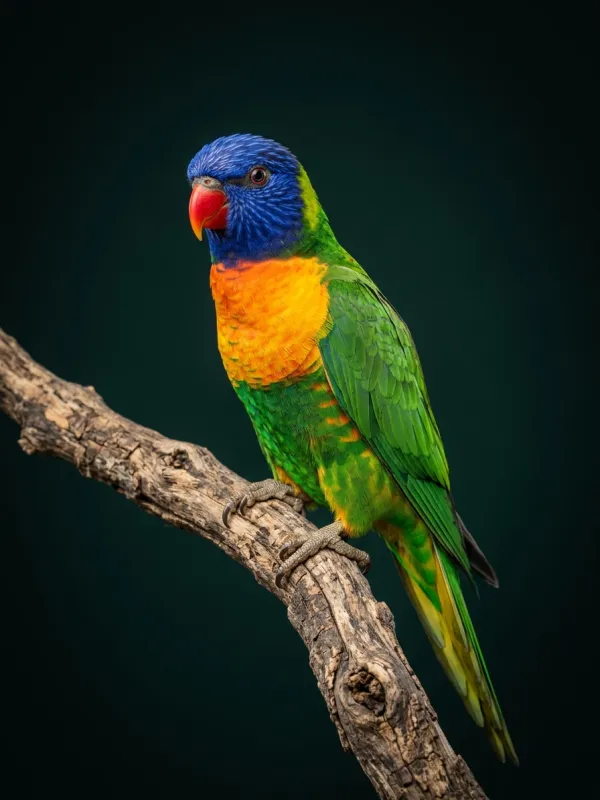
Lorikeets (Trichoglossus) are a genus of brightly colored parrots belonging to the order Psittaciformes and the family Psittacidae. These birds are medium-sized and possess distinctive, vivid plumage.
Biologically, they are nectarivorous and pollen-eating birds, but their opportunistic feeding habits make them significant pests in agricultural areas. They typically forage in large, highly mobile flocks.
Their specialized brush-tipped tongues and strong beaks allow them to easily consume nectar but also to pierce the skin of ripening fruits, leading to substantial agricultural losses.
They exhibit high intelligence and social coordination, which makes them very efficient at locating and exploiting food resources in managed plantations.
Their ability to rapidly adapt to human-altered environments allows them to thrive in proximity to human settlements and large-scale farming operations.
What it damages
Lorikeets target a wide range of fruit crops, including apples, pears, grapes, stone fruits, and various citrus species, causing direct economic damage to producers.
The damage is not limited to consumption; the birds often bite into numerous fruits without eating them entirely, which ruins the marketability of the entire crop.
During the flowering stage, they can damage blossoms and nectar-producing organs, effectively reducing potential yields before the fruit even develops.
Vineyards are particularly vulnerable, as lorikeets destroy grape clusters, leading to juice loss and encouraging the development of fungal infections through open wounds.
Additionally, they can cause mechanical injury to young branches and shoots by chewing on the bark during periods when alternative food sources are scarce.
When it appears
The peak of lorikeet damage usually coincides with the ripening periods of commercial fruit crops, typically during the warmer months of the year.
Migration patterns of these birds are nomadic, often driven by the availability of natural food sources, leading to sudden and unexpected mass arrivals in orchards.
Periods of drought are known to increase the intensity of orchard attacks, as birds seek reliable sources of water and high-sugar food provided by cultivated crops.
Activity is most pronounced during the early morning and late afternoon hours, when the flocks engage in the most intensive feeding behavior.
In regions with multiple harvest cycles, lorikeets can pose a threat throughout the entire growing season, starting from bud burst to final harvest.
Signs of infestation
The presence of lorikeets is almost always preceded by loud, shrill screeching calls, which serve as a clear warning sign of an approaching flock.
Visual inspection of the orchard will reveal fruit with irregular holes, deep beak marks, and signs of partial feeding that lead to rapid rot.
Significant amounts of fruit debris and dropped branches underneath the tree canopy are indicators of high bird activity in the area.
Damage to grapes often appears as clusters with multiple broken berries, which can quickly attract insects and cause further crop contamination.
- Scattered pieces of fruit on the orchard floor.
- Fresh bite marks on developing fruit.
- Loss of foliage in areas where the birds roost.
- Destruction of flower buds in the early spring.
Control measures
Physical exclusion through the use of bird-proof netting remains the most effective method for protecting high-value crops from lorikeet damage.
Visual scarecrows, reflective materials, and gas cannons can provide temporary relief, but their effectiveness diminishes quickly as birds habituate to these deterrents.
Bioacoustic deterrents, which play distress calls of the species or predatory sounds, are used to create an environment perceived as unsafe by the flock.
Cultural practices, such as pruning trees to reduce nesting and perching sites, can make the orchard less attractive to opportunistic parrot flocks.
An integrated approach, rotating different types of deterrents and ensuring the physical integrity of protective nets, is crucial for sustained crop protection.
Taxonomy
- Latin name
- Trichoglossus
- Family
- Psittacidae
- EPPO code
- TRGSSP
Discussion
No discussions yet — be the first.