
Slender-billed parakeet
Enicognathus
Description
How to identify
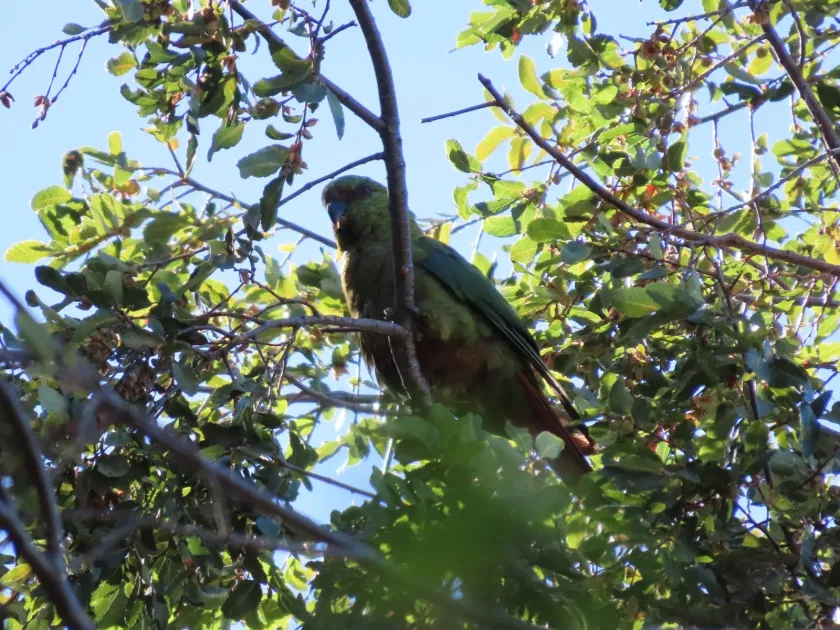
The Slender-billed parakeet (Enicognathus leptorhynchus) is a species of parrot known for its distinctive elongated upper mandible, which is adapted for digging and feeding.
These birds possess a primarily green plumage with subtle reddish-brown markings on the belly and tail feathers, providing excellent camouflage in vegetation.
They live in large, highly social flocks, which facilitates their ability to discover food sources quickly and exploit large areas of farmland efficiently.
Endemic to Chile, this species has successfully adapted its foraging habits to include various agricultural crops, moving between forest habitats and farms.
As intelligent and mobile birds, they represent a significant challenge for farmers who need to protect their yields from opportunistic feeding behavior.
What it damages
Slender-billed parakeets cause substantial economic damage to grain crops such as wheat and oats by consuming grains during the milk and dough stages.
In orchards, these birds are known for damaging fruit crops like apples and pears, which results in significant losses and reduces the marketability of the fruits.
The physical presence of large flocks on branches and stalks often leads to mechanical damage, causing stems to break and fruit to drop prematurely.
Feeding activities leave open wounds on fruits and stalks, which can become entry points for secondary bacterial or fungal pathogens, spoiling the remaining crop.
In years when natural food sources are scarce, the pressure from these parakeet flocks on agricultural lands significantly increases, leading to widespread loss.
When it appears
The presence of these pests on agricultural lands is primarily determined by the phenology of crops, specifically when they are in the maturation stage.
For cereal crops, the most critical period is from the grain-filling phase until harvest, when the nutritional quality and water content are optimal for the birds.
In fruit production, the activity levels peak during the ripening of early to mid-season varieties, typically throughout the summer and early autumn months.
The seasonal movement of flocks is influenced by both the crop availability in the agricultural sector and the fluctuations of resources in their native forests.
Climatic factors such as prolonged droughts often force these flocks to concentrate on irrigated farmland, increasing the severity of crop damage during those periods.
Signs of infestation
A primary indicator of their presence is the discovery of partially consumed fruits or scattered plant fragments underneath the trees or on the field edges.
The birds are notoriously noisy, and their constant vocalizations during feeding activities are the first signal that a flock has arrived at a crop location.
- Characteristic beak marks on the surface of fruit or grain husks.
- Broken stalks or branches caused by the weight of the flock.
- Noticeable waste and debris on leaves and the ground.
- Large numbers of birds seen congregating on fence lines or nearby trees before attacking.
Damaged sections of the field, where crops appear trampled or stripped of grain, are clear signs that a large flock has been feeding on the site.
Control measures
Acoustic deterrents that broadcast predator sounds or bird distress calls can be effective at deterring parakeets from entering sensitive areas.
Physical exclusion methods, such as netting over fruit trees, are the most reliable way to protect crops from parakeet damage in small-to-medium orchards.
Visual deterrents, including reflective materials and decoys, can work temporarily if they are rotated frequently to prevent the birds from habituating to them.
Optimizing the timing of harvest to remove crops from the field as soon as they reach maturity is a key strategy for limiting exposure to bird damage.
Integrated management plans, often involving monitoring the arrival of flocks at field boundaries, are essential for responding quickly to potential outbreaks.
Taxonomy
- Latin name
- Enicognathus
- Family
- Psittacidae
- EPPO code
- ENICSP
Discussion
No discussions yet — be the first.