
Budgerigar
Melopsittacus undulatus
Description
How to identify
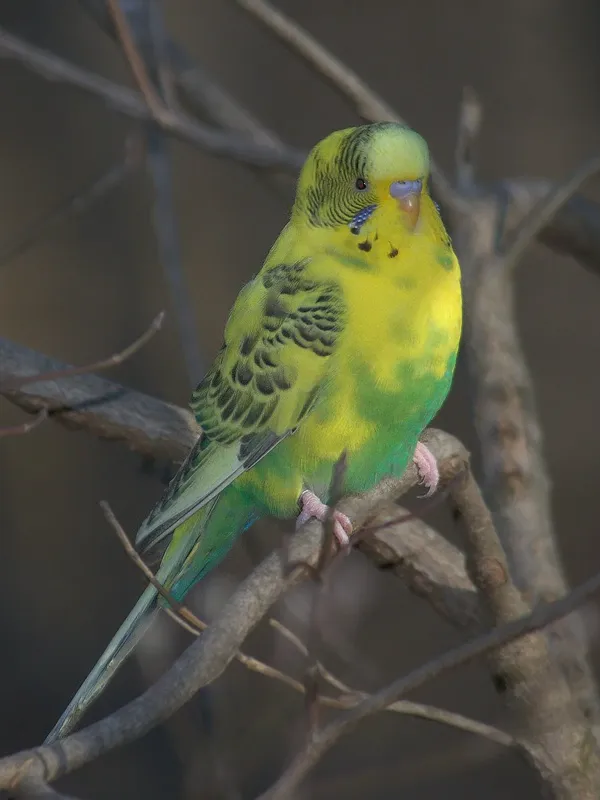
The Budgerigar (Melopsittacus undulatus) is a member of the Psittaculidae family in the order Psittaciformes. Naturally native to Australia, these birds are known for their nomadic behavior and ability to travel long distances.
When introduced to non-native regions, these birds can establish feral populations that pose significant risks to agriculture. They are recognizable by their distinct wavy patterns and long, pointed tails.
Their biological profile features high reproductive rates, allowing them to rapidly increase their population density in favorable environments. This causes immense pressure on local food supplies, including cultivated fields.
As highly social birds, they move in massive flocks, which increases their potential as a pest. Acting in concert, these flocks can devastate large areas of farmland in a matter of hours.
Adaptability is their core trait, enabling them to exploit various crop types depending on seasonal availability. Understanding their behavior is essential for developing effective mitigation strategies.
What it damages
Cereal crops like wheat, millet, and sorghum are among their primary targets. They extract grain during the milk-dough stage, causing severe yield losses by stripping the heads of the stalks.
Vegetable crops are also frequently damaged, particularly when the birds feed on emerging seeds or young seedlings. This often necessitates replanting if the damage is severe enough to thin the stand.
Fruit orchards face significant issues when these birds chew on buds and tender shoots in the spring. This consumption of reproductive parts reduces the tree's overall productivity for the entire season.
The physical weight of a large flock settling on crops can lead to lodging and stem breakage. This physical damage compromises the structural integrity of the plants and hinders mechanical harvesting.
Damage is characterized by intense, concentrated feeding, often leaving little behind in affected patches. The rapid nature of these attacks makes it difficult for farmers to prevent significant losses once a flock has arrived.
Signs of infestation
The most prominent sign is the auditory disturbance caused by large flocks above the fields. Their vocalizations are highly characteristic and audible from a long distance before the birds even land.
In the field, one can observe stripped grain heads, scattered hulls, and chewed foliage. The presence of partially eaten seeds and debris on the soil surface is a clear indicator of avian feeding activity.
Fruit damage manifests as deep, ragged holes or chunks missing from the skin and flesh. These wounds often lead to secondary infections by bacteria and fungi, causing the fruits to rot prematurely.
Droppings left by the birds are highly visible on leaf surfaces and near the feeding sites. In addition to physical damage, this waste can contaminate crops, making them unsuitable for certain quality standards.
Attacks are most common during early morning and late afternoon. Observing these patterns helps identify the timing of potential pest incursions and allows for targeted monitoring of vulnerable crop areas.
Control measures
Acoustic deterrents that play recordings of predatory bird calls are standard for initial defense. However, rotation of sounds is critical because these intelligent birds can quickly habituate to static systems.
Netting remains the most reliable protective measure for high-value crops and orchards. Providing a physical barrier effectively excludes the birds and secures the investment of the grower.
Agronomic management includes optimizing harvest schedules to reduce the window of exposure. Harvesting as early as the crop reaches maturity minimizes the time it remains vulnerable to avian pressure.
Chemical repellents that make crops distasteful are used in some jurisdictions, though their efficacy depends on weather conditions and coverage. These are generally applied as a supplementary method.
Integrated pest management strategies involve monitoring flock migration routes and using mobile protection units. Coordinated efforts across multiple farms can prevent the pests from establishing a foothold in a specific area.
Taxonomy
- Latin name
- Melopsittacus undulatus
- Family
- Psittacidae
- EPPO code
- MPSIUN
Discussion
No discussions yet — be the first.