
Trichocellus placidus
Trichocellus placidus
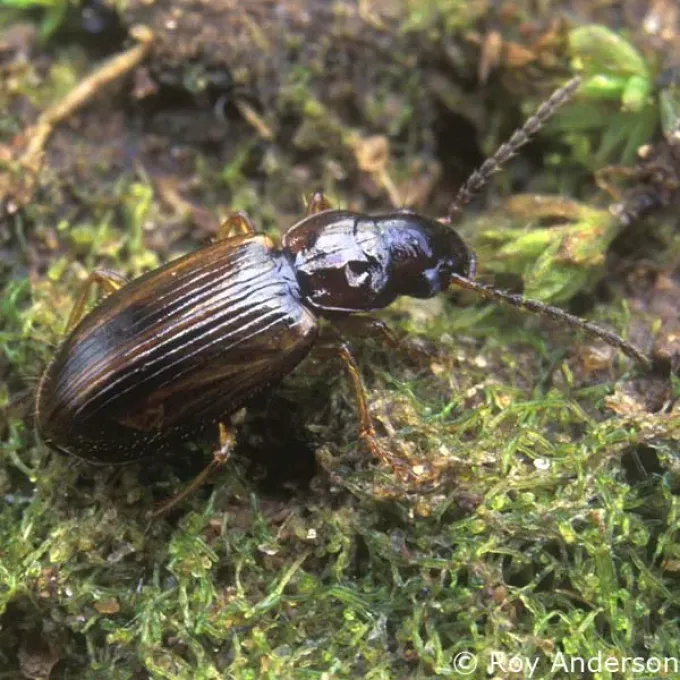
Description
How to identify
Trichocellus placidus belongs to the ground beetle family (Carabidae), order Coleoptera. These insects are often found in agricultural fields and damp habitats across various regions.
The adult beetles are relatively small, typically measuring 5–7 mm in length. Their bodies are dark-colored and feature fine hairs on the elytra, which is a key identification mark.
The larvae are soil-dwelling and generally nocturnal, making them difficult to spot during routine field inspections unless specific sampling methods are used.
The life cycle involves complete metamorphosis, where the adult stage often overwinters in protected environments such as field margins or deep within the soil.
As members of the Carabidae family, they are ecologically adaptable, but under certain conditions, they transition from predatory behavior to feeding on plant tissues.
What it damages
While often viewed as predators of smaller insects, Trichocellus placidus can cause damage to crops when their primary food source is scarce or when populations are dense.
They specifically threaten germinating seeds and young seedlings of cereal crops, leading to gaps in the field stand and reduced yields.
Feeding occurs by gnawing on the stem base or roots, which disrupts the plant's ability to absorb nutrients and water during the crucial early stages of growth.
Severe infestations can lead to substantial economic loss, especially when weather conditions delay plant growth and extend the vulnerable seedling phase.
Monitoring the damage is essential, as the symptoms are often confused with other soil-borne pests or environmental stress factors like frost or drought.
When it appears
The activity of Trichocellus placidus typically peaks during the spring season as temperatures begin to rise and soil conditions become favorable.
The most dangerous period for cereal crops coincides with the emergence of seedlings in the spring, when the beetles are most active in the topsoil layers.
During the summer months, beetles remain in moist microhabitats within the field, continuing their life cycle and maintaining a steady population density.
As temperatures drop in the autumn, the adults seek out hibernation sites, effectively disappearing from the open field until the following spring season.
Understanding these seasonal patterns allows farmers to implement timely interventions before the population reaches an uncontrollable threshold.
Control measures
Effective control starts with proper tillage practices, which disrupt the beetle's habitat and significantly reduce the number of overwintering larvae in the soil.
Crop rotation is a vital strategy, as it helps break the pest cycle and prevents the buildup of large populations in monoculture systems.
Chemical control options include applying systemic insecticide seed treatments, which provide a protective barrier for the seeds and seedlings during germination.
Weed management in fields and adjacent non-crop areas is necessary to remove alternative hosts and moisture-rich environments that favor the beetle's survival.
- Utilize insecticide-treated seeds for better seedling protection.
- Incorporate deep plowing to disturb soil habitats.
- Perform regular scouting to detect initial signs of plant injury.
Taxonomy
- Latin name
- Trichocellus placidus
- Order
- Coleoptera (beetles)
- Family
- Carabidae
- EPPO code
- TCLLPL
Discussion
No discussions yet — be the first.