
Four-spotted ground beetle
Trechus quadristriatus
Description
How to identify
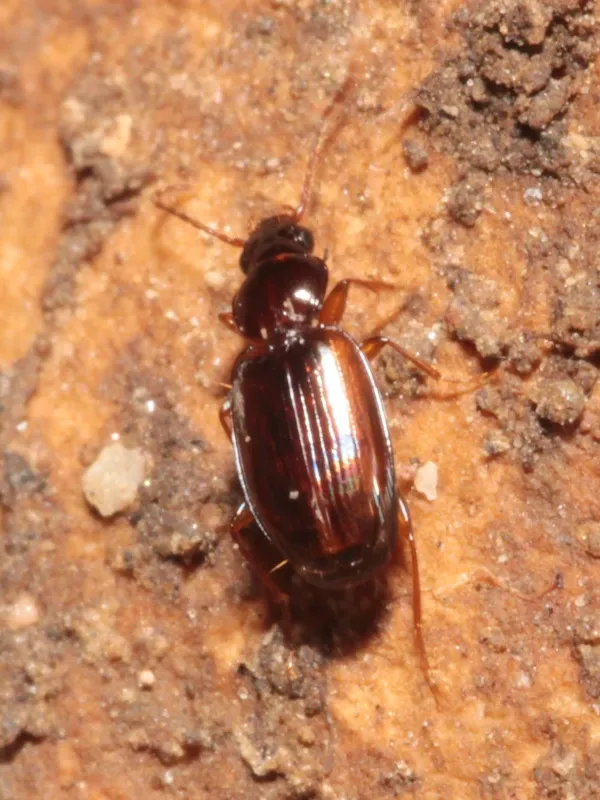
The four-spotted ground beetle (Trechus quadristriatus) is a small predatory beetle belonging to the Carabidae family within the order Coleoptera.
Adult beetles typically reach a body length of 3.5 to 4.5 mm and exhibit a coloration ranging from yellowish-brown to dark brown.
The most distinctive feature of this species is the presence of four clear punctures or "spots" on the elytra, which are arranged in defined longitudinal rows.
Their body shape is slightly flattened, an evolutionary adaptation that facilitates movement through narrow soil crevices and dense organic matter.
Larvae are characterized by a campodeiform structure, displaying high mobility and a well-developed cuticle required for survival in subterranean environments.
What it damages
While often considered beneficial as predators, in high densities, this species can act as a pest for cereals, sugar beets, and various vegetable crops.
The primary damage occurs during the early stages of plant growth, as they may feed on sprouting seeds, fragile root systems, and young seedling stems.
Physical injuries caused by the beetle's mouthparts can create entry points for soil-borne fungal and bacterial pathogens, leading to plant decay.
Massive infestations can result in significant thinning of crop stands, necessitating agricultural intervention to preserve the density of the sowing.
Economic damage is most often observed in wet spring seasons, which favor the proliferation and activity of the beetle populations in agricultural fields.
When it appears
The life cycle of Trechus quadristriatus is univoltine, meaning there is one generation per year, with adult beetles typically overwintering in the soil.
Spring activity commences as soil temperatures rise, triggering the emergence of adults and the subsequent mating and oviposition phase.
Larval development takes place throughout the spring and early summer, occurring in tandem with the primary vegetative growth of cultivated crops.
Pupation occurs within the soil, and the emergence of the new generation of adults usually takes place towards the end of the summer season.
During the autumn, the new adult generation prepares for winter by seeking sheltered overwintering sites, often deep within the soil profile.
Signs of infestation
The most noticeable sign of an infestation is the patchy emergence of crops, characterized by bare spots in the field where seedlings have failed to thrive.
Inspecting the soil around stunted or dying plants may reveal the presence of adult beetles or larvae, particularly after periods of recent rainfall.
Seeds recovered from the soil may exhibit irregular gnaw marks on the outer coat or endosperm, which are indicative of beetle feeding activity.
Wilting of seedlings despite adequate soil moisture often suggests that the root system has been severely compromised by soil-dwelling insect pests.
The presence of adults on the soil surface at dusk or during early morning hours can serve as an indicator of local population density.
Control measures
Cultural control strategies, such as timely and proper soil cultivation, are effective in disrupting the beetle’s habitat and reducing their population numbers.
Aggressive weed management is crucial, as uncultivated field margins and weeds provide essential shelter and food sources for the beetle throughout the year.
Seed treatment with systemic insecticides can provide a critical window of protection for vulnerable germinating seeds and young sprouts in infested areas.
Crop rotation should be implemented as a standard practice to break the life cycle of the beetle, preventing it from establishing a persistent colony.
Maintaining optimal soil moisture and fertility levels helps plants grow vigorously, thereby reducing their susceptibility to damage by opportunistic insect feeders.
Taxonomy
- Latin name
- Trechus quadristriatus
- Order
- Coleoptera (beetles)
- Family
- Carabidae
- EPPO code
- TRECQU
Discussion
No discussions yet — be the first.