

Meal moth
Tinea murariella
Description
How to identify
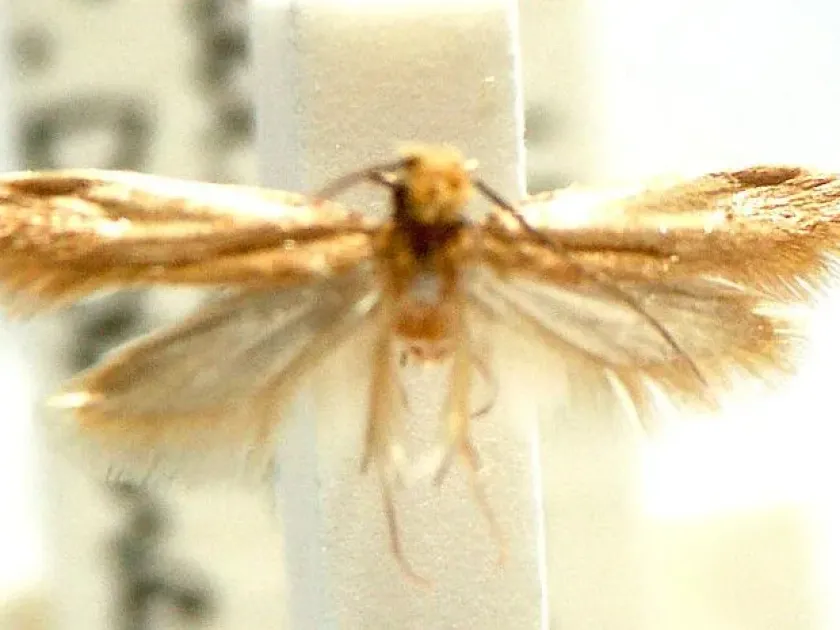
The meal moth, Tinea murariella, is a small insect belonging to the order Lepidoptera and the family Tineidae. Adult moths are characterized by a subtle appearance, which helps them effectively camouflage against storage surfaces and walls.
The wingspan of the imago is relatively small; the forewings exhibit a grayish-brown hue with a distinctive pattern that assists experts in morphological identification. The insect's body is slender, covered with fine scales, and equipped with thread-like, highly mobile antennae.
Meal moth larvae (caterpillars) possess a whitish or yellowish body with a dark head capsule. They lead a cryptic lifestyle, preferring dark and dry environments within grain bulks or inside crevices of warehouse equipment, where they construct silken cocoons.
The insect undergoes complete metamorphosis: egg, larva, pupa, and adult. The duration of each developmental stage is directly dependent on the temperature and humidity levels within the storage facility.
While found in various shelters in the wild, the meal moth poses the greatest threat in anthropogenic settings, where it finds a stable food supply essential for its rapid reproduction and population growth.
What it damages
The primary food source for the larvae of this species consists of cereal crops and their processed derivatives. Most frequently, the pest infests wheat, rye, barley, as well as flour, cereals, and bran left in long-term storage.
Damage is inflicted when larvae bore through the grain hulls and consume the inner starchy endosperm. This results in significant weight loss of the grain bulk and a major decline in the quality and marketability of the product.
Larval waste products, including excrement and webbing, contaminate the stored goods. Consequently, mold fungi and pathogenic microorganisms may flourish in the affected grain, rendering the raw material unsuitable for food production.
During mass outbreaks, the meal moth can induce self-heating of the grain due to the disruption of the grain bulk's structure by larval tunnels. This creates an environment conducive to secondary infestation by other warehouse pests.
The pest attacks both loose grain and packaged products, infiltrating sacks through tiny holes in the fabric or through packaging seams, which complicates the process of infestation control in warehouses.
Signs of infestation
The first visual sign of meal moth presence is the appearance of thin silken threads on the surface of grain piles or inside sacks of flour. This indicates active larval development and the construction of protective cocoons.
The presence of specific clumps of grain or flour particles bound together by silk webbing is another clear indicator of infestation. Such clumps are often discovered during the pouring or cleaning of grain stocks.
The presence of imago (flying moths) in storage areas, especially during the evening or night, signals an ongoing reproduction cycle and the urgent need for a phytosanitary inspection of the facility.
A reduction in the flowability of grain during handling can also point to the existence of silk tunnels within the bulk. This serves as a serious warning signal for immediate laboratory analysis of samples for hidden infestation.
During laboratory screening, empty grain husks with characteristic exit holes are often found, left by the larvae after completing their feeding cycle, which confirms the occurrence of product damage.
Control measures
The foundation of effective protection is strict adherence to temperature and humidity controls within storage facilities. Maintaining low grain temperatures and moisture content slows down or completely halts the development of meal moth generations.
Regular mechanical cleaning of warehouses to remove dust, grain residues, and other debris is a critical measure, as these materials serve as refuges for the pest during off-seasons and between loading cycles.
Disinfestation of facilities via wet or aerosol treatments should be conducted prior to filling the storage bins. The use of approved insecticides effectively eliminates overwintering life stages of the pest.
Fumigation of grain bulk is a radical control method used in cases of severe infestation. This process must be carried out exclusively by specialized personnel using certified agents capable of penetrating deep into the grain mass.
- Sealing warehouses to prevent the entry of flying adults from outside.
- Regular monitoring using pheromone traps.
- Ensuring conditions for rapid cooling of grain after the drying process.
- Thorough inspection of incoming batches for early signs of infestation.
Content graph
Connections · Meal moth
Most often together:
Marketplace
Products · 1
Biology
Taxonomy
- Latin name
- Tinea murariella
- Order
- Lepidoptera (butterflies)
- Family
- Tineidae
- EPPO code
- TINEMU
Community
Discussion
No discussions yet — be the first.