
Ceratophaga
Ceratophaga
Description
How to identify
The genus Ceratophaga belongs to the order Lepidoptera and the family Tineidae. These moths are uniquely adapted to feed on keratin-rich substances, which are usually indigestible to most other insects.
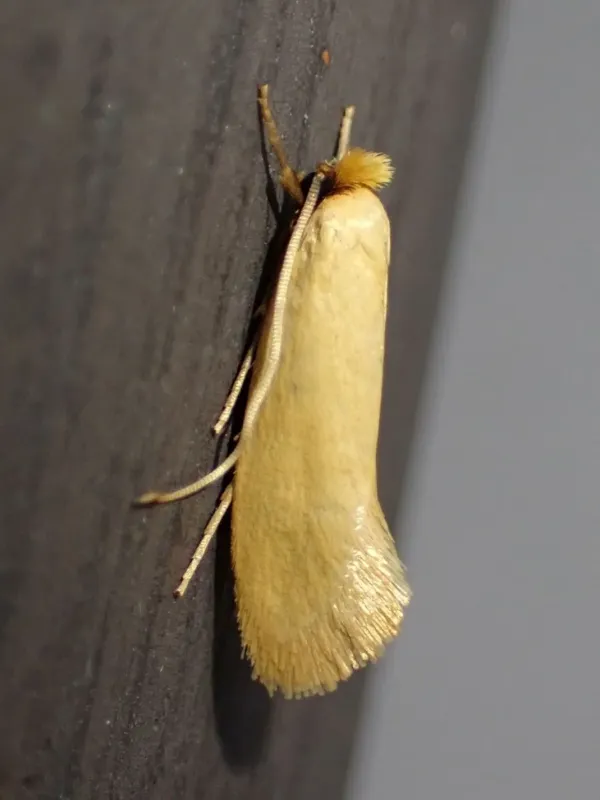
Adult moths are typically small, with narrow wings and a coloration that provides excellent camouflage on their preferred substrates, such as horns or hoofs.
The larvae are the active feeding stage, possessing specialized mandibles capable of breaking down the tough, fibrous structure of keratin.
The life cycle follows complete metamorphosis, passing through the stages of egg, larva, pupa, and adult, with the larval stage being critical for survival.
These insects are highly specialized, often living in habitats that are chemically harsh or nutrient-poor in terms of standard plant-based resources.
What it damages
Ceratophaga species damage objects containing keratin, including animal horns, hooves, hair, and various types of fur and leather products.
While they are not traditional agricultural plant pests, their economic impact is felt in industries that process or store animal-derived raw materials.
In nature, they act as primary decomposers, playing a vital role in recycling keratinaceous materials in animal nests or carcasses.
In stored conditions, their presence can lead to significant material degradation, ruining the commercial value of hides, wool, and other animal products.
The intensity of the damage is often cumulative, as larvae continue to tunnel through the material throughout their developmental period.
Signs of infestation
The most visible sign of an infestation is the presence of irregular tunnels, grooves, or surface grazing on the damaged animal material.
Frass, which appears as fine, dust-like particles of chewed keratin, is commonly found accumulating around the infested items.
Pupation chambers are often constructed within the tunnels or on the surface of the material, covered by a fine silken layer.
Heavy infestations may lead to the total destruction of the structural integrity of hair or horn-based items, leaving behind a brittle or powdery residue.
Observation of the adult moths near infested storage areas, particularly during dim light, is a strong indicator of an active population.
Control measures
Effective control of Ceratophaga relies heavily on maintaining rigorous sanitation and hygiene in storage facilities housing animal products.
Chemical control using registered insecticides can be employed to treat storage areas and prevent larval establishment.
Modifying environmental conditions, specifically reducing humidity and temperature, can inhibit larval growth and development cycles.
Ferreous traps and pheromone-based monitoring tools help in the early detection and management of moth populations before damage becomes severe.
- Regular removal of organic debris from storage floors
- Sealing vulnerable materials in airtight containers
- Applying approved residual insecticides
- Consistent temperature and moisture monitoring
Taxonomy
- Latin name
- Ceratophaga
- Order
- Lepidoptera (butterflies)
- Family
- Tineidae
- EPPO code
- CERGSP
Discussion
No discussions yet — be the first.