
Peach Blossom moth
Thyatira batis
Description
How to identify
The Peach Blossom moth (Thyatira batis) is a visually striking noctuid moth from the Drepanidae family, known for its unique and beautiful wing pattern.
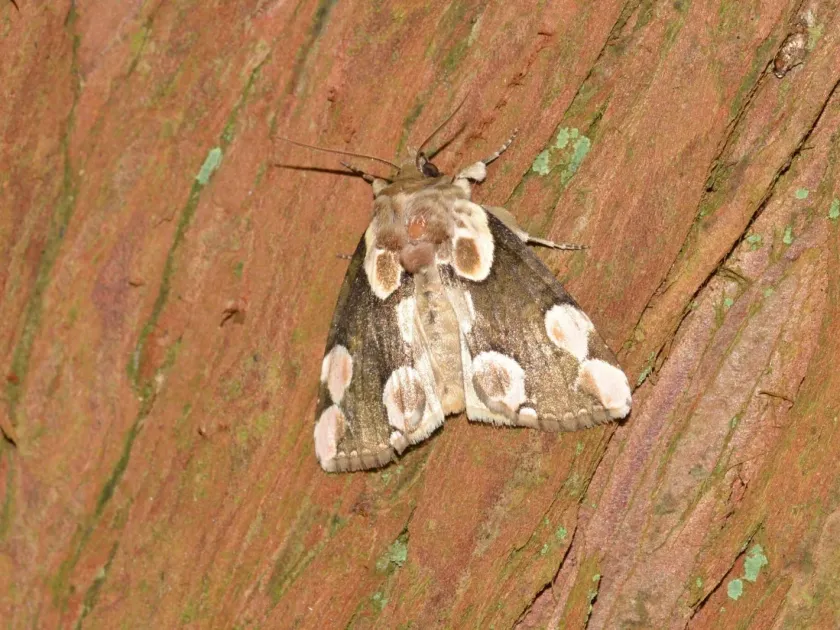
The adult moth has a wingspan ranging from 35 to 45 millimeters, featuring distinctive large pinkish-white patches on a dark brown background, resembling flower petals.
The larvae are typically brown or grey, growing up to 40 millimeters in length and often displaying noticeable humps on the back, which helps them blend in with twigs.
Pupation occurs within a tough, silk-lined cocoon spun between leaves or in the soil surface debris, protecting the developing insect during the winter months.
Adults are primarily nocturnal, spending daylight hours resting on vegetation where their camouflage makes them appear like damaged or withered leaves.
What it damages
The larvae of the Peach Blossom moth feed primarily on plants within the Rosaceae family, making them a recurring pest in home gardens and fruit plantations.
Raspberries and blackberries are the most common hosts, where caterpillars consume the leaf tissue, which can lead to significant defoliation if left unmanaged.
While often found on wild brambles and forest shrubs, the species can easily migrate to cultivated crops, causing economic damage to commercial berry production.
Heavy feeding by large populations of larvae can result in skeletonized leaves, leaving behind only the veins, which hampers the plant's photosynthesis process.
Weakened plants often show reduced vigor, which negatively impacts fruit size, quality, and the overall yield of the berry bushes at the end of the season.
When it appears
The lifecycle of the Peach Blossom moth typically consists of one or two generations per year, largely dependent on the local climate and seasonal temperatures.
Adult moths are usually on the wing from May through June, during which time they mate and deposit eggs on the undersides of the host plant leaves.
Caterpillars emerge during mid-summer, reaching peak activity levels throughout July and August as they feed voraciously to prepare for pupation.
By late summer, the larvae build their cocoons and pupate, remaining in this state throughout the winter to emerge as adults the following spring.
Gardeners should keep an eye on their raspberry and blackberry patches from late spring, as this is when the adult population begins the cycle anew.
Signs of infestation
Typical signs of infestation include irregular holes eaten into the edges of the leaves, which can expand into complete leaf skeletonization over time.
Small, pale eggs can be spotted on the undersides of leaves if the gardener performs a careful inspection during the egg-laying period in early summer.
Caterpillars often use silk to tie leaves together, creating shelters where they hide during the day, making them difficult to spot without manual searching.
The presence of frass (caterpillar droppings) on the leaves or the ground beneath the host plant is a strong indicator of an active infestation in the area.
Premature leaf yellowing or stunted growth on specific shoots are common symptoms that suggest feeding activity is occurring on the plant's foliage.
Control measures
Cultural control methods involve keeping the garden clean of weeds and debris, which reduces the potential hiding and overwintering spots for the larvae.
Late autumn soil cultivation and the removal of fallen leaves under bushes can help destroy pupae, significantly reducing the population for the next season.
Manual collection and destruction of caterpillars are recommended for smaller infestations, as this is the safest method for home garden environments.
Biological control using bacteria-based insecticides (such as Bacillus thuringiensis) is highly effective against young larvae without disrupting the local ecosystem.
Chemical intervention should be reserved as a last resort, always following label guidelines to ensure that pre-harvest intervals are respected to keep berries safe.
Taxonomy
- Latin name
- Thyatira batis
- Order
- Lepidoptera (butterflies)
- Family
- Thyatiridae
- EPPO code
- THYTBA
Discussion
No discussions yet — be the first.