
Achlya
Achlya
Description
How to identify
Achlya is a genus of oomycetes within the family Saprolegniaceae. Often referred to as "water molds," these organisms thrive in aquatic environments and moisture-saturated soils, functioning as serious opportunistic pathogens.
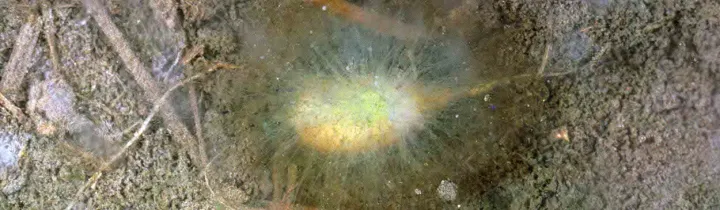
The organism develops a filamentous, coenocytic mycelium that lacks cross-walls (septa). Under moist conditions, these filaments produce reproductive structures that appear as a fuzzy, white, or grayish cotton-like growth.
Achlya reproduces via motile zoospores, which utilize flagella to move through thin films of water in the soil. This mobility allows the pathogen to spread rapidly throughout seedbeds and hydroponic systems.
Biochemically, Achlya is distinct from true fungi because its cell walls consist primarily of cellulose rather than chitin. This fundamental difference is crucial, as many traditional antifungal agents are ineffective against these organisms.
The pathogen prefers cool, damp environments with low soil aeration. Greenhouse conditions, particularly in early spring, provide an ideal habitat for Achlya to establish itself and initiate infections on sensitive crops.
What it damages
Achlya primarily attacks seeds, germinating seedlings, and young transplants. It is a major causal agent of damping-off, a condition that results in the collapse and death of young plant tissues.
Crops most frequently affected include vegetables like tomatoes, cucumbers, and cabbage, as well as various flower varieties started in nurseries. The most critical period of susceptibility is during germination.
Beyond seedlings, Achlya can invade the root systems of more mature plants if the growing medium remains waterlogged for extended periods, leading to severe root rot and nutrient deficiency.
The organism acts as a facultative parasite, meaning it can survive on decaying organic matter in the soil when living hosts are unavailable. This ensures the pathogen persists from one season to the next.
Economically, Achlya represents a major threat to commercial nurseries. High infection rates lead to extensive seedling loss, necessitating costly re-seeding and disrupting production schedules.
Signs of infestation
The earliest symptom is the emergence of a fluffy, white mass on the surface of seeds or the root-stem junction of a seedling. This indicates that the organism is actively colonizing the tissue.
Affected seedlings exhibit a sudden loss of vigor and turgor. The stem tissue near the soil line becomes dark, water-soaked, and soft, leading to the plant toppling over as if cut by a knife.
When examining the root system of an infected plant, the roots will often appear brown, slimy, and fragile. In advanced stages, the entire root ball may disintegrate upon removal from the soil.
Symptoms often appear in patches within a tray or bed, reflecting the localized spread of zoospores through water droplets during irrigation. A healthy-looking tray can show significant damage within just 48 hours.
- Darkening and softening of the stem base.
- White, cottony mycelial growth on the soil surface.
- Sudden wilting and collapse of seedlings.
- Rotting of seeds before they can emerge.
Control measures
Effective management begins with strict irrigation control. Avoiding water saturation and ensuring the growing medium has excellent drainage are the most effective ways to prevent outbreaks.
Cultural practices should focus on soil hygiene. Sterilizing potting mixes through heat treatment or steam helps eliminate dormant oospores that might be present in the substrate.
Increasing air circulation in the greenhouse and reducing relative humidity helps to dry the soil surface, creating an environment that is hostile to the development of Achlya spores.
In cases where chemical intervention is required, use fungicides labeled for oomycete control. These products often contain copper or specific active ingredients designed to inhibit the cellulose-based walls of water molds.
If an infection is detected, isolate and remove the affected plants immediately, including a buffer zone of the surrounding soil. Sanitize all tools and trays using proper disinfectant solutions to stop the pathogen's spread.
Taxonomy
- Latin name
- Achlya
- Order
- Lepidoptera (butterflies)
- Family
- Thyatiridae
- EPPO code
- ACHYSP
Discussion
No discussions yet — be the first.