
Habrosyne
Habrosyne
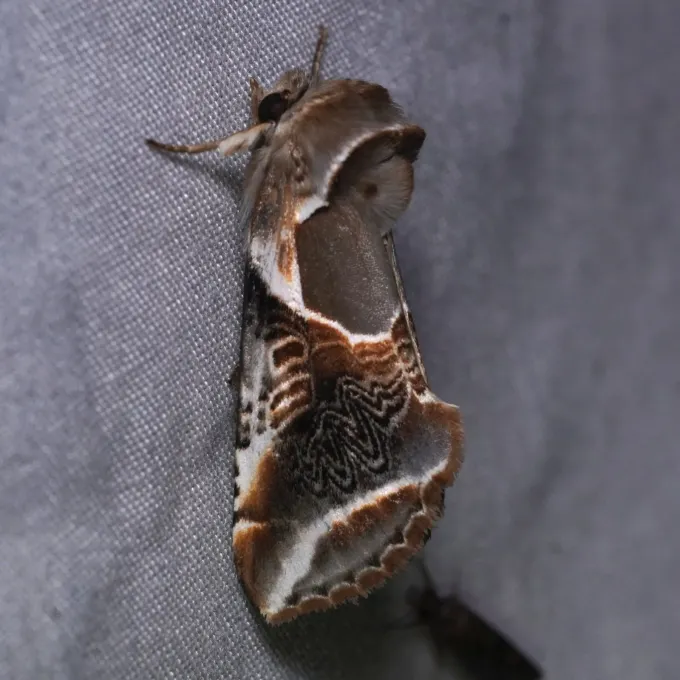
Description
How to identify
Habrosyne is a genus of moths belonging to the family Drepanidae, commonly known as hooktip moths. These moths are recognized by their intricate wing patterns, which provide excellent camouflage against tree bark and leaf litter.
The life cycle of Habrosyne follows a complete metamorphosis, including egg, larval, pupal, and adult stages. The larvae are often cryptically colored, allowing them to remain hidden while feeding on host plant foliage.
What it damages
The primary damage is caused by larvae that feed on the leaves of various broad-leaved trees and shrubs. They show a preference for plants in the Rosaceae family, making them a potential threat to raspberries and blackberries in gardens.
Severe infestations lead to significant defoliation, which impairs the plant's ability to photosynthesize. This reduction in vigor can negatively affect fruit production and the overall health of the affected plant.
When it appears
Adult moths are typically active during the summer months, from June through August. The species usually undergoes one generation per year, though warmer climates may support partial second generations.
The pupal stage is the overwintering phase, usually occurring in the soil or within cocoons made of leaf debris. Adult emergence occurs once spring temperatures reach a threshold suitable for mating and egg-laying.
Signs of infestation
The most visible sign of infestation is irregular chewing along the margins of leaves. In heavy feeding cases, the larvae may consume the entire leaf blade, leaving only the primary veins behind.
The presence of larval frass on the leaves is a reliable indicator of activity. Scouting should involve checking the undersides of leaves, especially during the early stages of larval development before they cause major damage.
Control measures
Integrated pest management (IPM) strategies are recommended to keep populations below economic thresholds. This includes the use of selective insecticides targeting larvae while minimizing the impact on beneficial predators and pollinators.
Cultural practices, such as clearing leaf litter and tilling the soil around plants in the autumn, are highly effective in destroying pupae. These simple measures reduce the carry-over population for the following growing season.
Taxonomy
- Latin name
- Habrosyne
- Order
- Lepidoptera (butterflies)
- Family
- Thyatiridae
- EPPO code
- HABOSP
Discussion
No discussions yet — be the first.