
Great green bush-cricket
Tettigonia viridissima
Description
How to identify
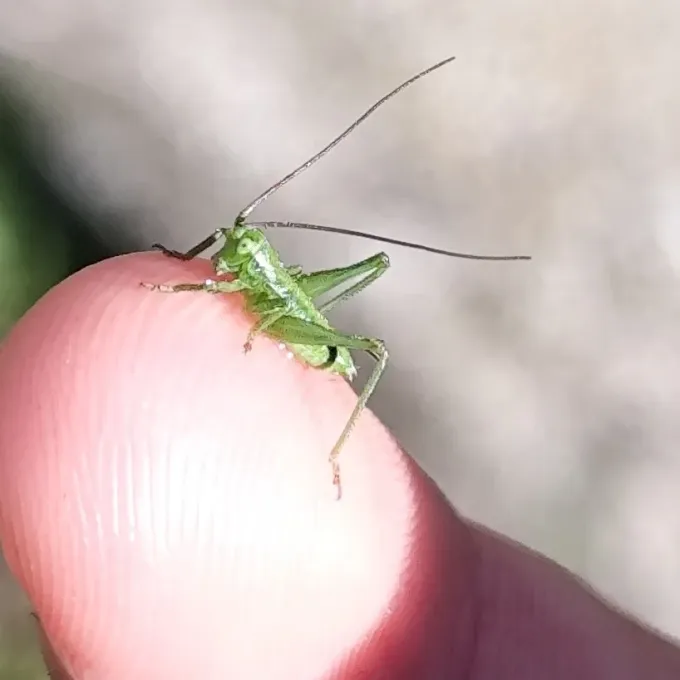
The Great green bush-cricket (Tettigonia viridissima) is a large insect belonging to the family Tettigoniidae. Adults typically grow to a length of 6 to 8 centimeters.
They are characterized by their vibrant green coloration, which provides excellent camouflage among foliage. Their antennae are remarkably long, often exceeding the body length.
Females possess a distinct, sword-like ovipositor used for depositing eggs into the soil or plant stems. Their hind legs are robust and specialized for jumping long distances.
These insects are primarily predatory, but they are also omnivorous. When insect prey is scarce, they readily switch to feeding on plant matter, including leaves and fruits.
The life cycle involves incomplete metamorphosis. Nymphs resemble miniature versions of adults but lack fully developed wings until their final molts.
What it damages
Great green bush-crickets can cause significant damage to various crops, including vineyards, fruit trees, vegetables, and cereals.
The insects feed by chewing holes in leaves and consuming the edges of leaf blades, often leaving only the main veins intact in severe cases.
Young buds, soft shoots, and flower blossoms are particularly susceptible to damage, which can lead to deformed growth and poor fruit set.
Although they rarely cause catastrophic damage like locusts, high populations can significantly reduce the marketable quality and yield of sensitive garden crops.
Secondary infections often follow their feeding, as wounded plant tissues become entry points for various bacterial and fungal pathogens.
When it appears
The bush-cricket has a single annual life cycle. They overwinter in the egg stage, which is deposited in the soil or decaying plant debris.
Nymphs emerge in late spring, typically during May, when temperatures become sufficiently warm for their development.
They pass through five nymphal stages before reaching adulthood. Adult crickets appear mid-summer, with peak activity observed during July and August.
Mating and egg-laying continue throughout the late summer and early autumn until the first frosts of the season cause the death of the adults.
Warm and dry summers provide optimal conditions for the survival and rapid development of the nymphs, leading to higher population numbers.
Signs of infestation
The most prominent sign of their presence is the loud, rhythmic stridulation of males, which is typically heard during late afternoons and throughout the night.
Visual inspection of the garden often reveals irregular, ragged holes in leaves, which are tell-tale signs of their chewing mouthparts.
On plants with dense foliage, one can often spot the insects resting on the undersides of leaves as they attempt to hide from potential predators.
Damage to young fruit ovaries and flower buds is another critical indicator that bush-crickets are actively feeding in the vicinity.
- Ragged leaves with missing sections.
- Visible damage to fruit buds and developing ovaries.
- Loud chirping sounds in the garden after dark.
Control measures
Cultural control is highly effective; regular mowing of grass and weeds around cultivated areas significantly reduces habitat suitable for breeding.
Autumn tillage and deep digging of soil can expose eggs to winter weather and predators, effectively reducing the overwintering population.
Biological control methods, such as the use of entomopathogenic fungi, are recommended for sustainable management of the population.
Promoting a healthy ecosystem by encouraging birds and hedgehogs to visit the garden will naturally keep the bush-cricket population in check.
Chemical intervention should be considered only as a last resort, using targeted insecticides to minimize the impact on beneficial pollinators and predators.
Taxonomy
- Latin name
- Tettigonia viridissima
- Order
- Orthoptera (locusts)
- Family
- Tettigoniidae
- EPPO code
- LOCUVI
Discussion
No discussions yet — be the first.