
Pale-tufted prominent
Tetheella fluctuosa
Description
How to identify
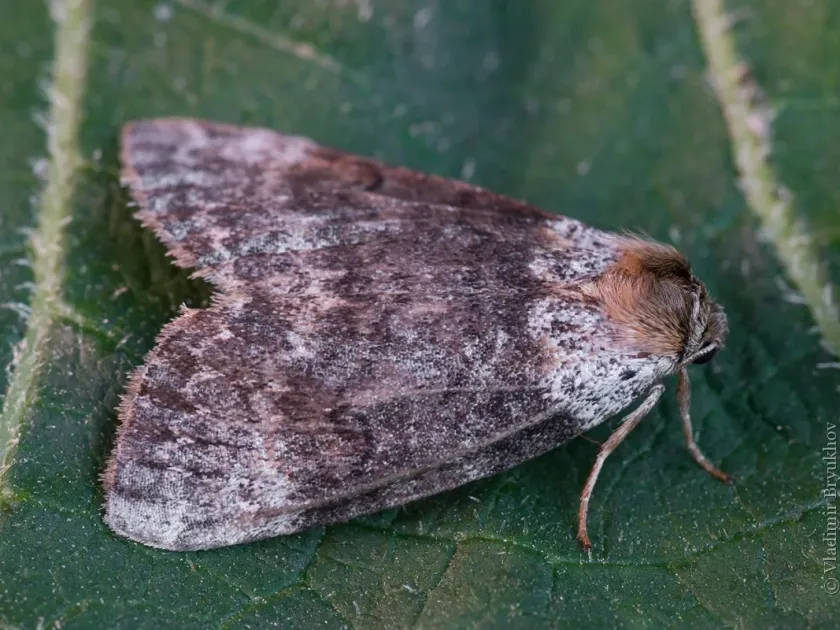
The Pale-tufted prominent (Tetheella fluctuosa) is a moth belonging to the Drepanidae family. It has a wingspan of approximately 35–40 mm and is characterized by distinct wavy dark lines across its forewings.
Adult moths have a grey-brown cryptic coloration, allowing them to blend seamlessly with tree bark during the day. The body is covered with dense hairs, giving it a tufted appearance.
The larvae, or caterpillars, progress through several instars, varying in color from light green to a darker brownish shade, often with small tubercles on their dorsal side.
Pupation occurs within a silken cocoon, which the larva constructs between two folded leaves. This silk-lined chamber provides protection against environmental stress and predators.
This species is widely distributed in forest ecosystems where its primary host plants, birch and alder, are abundant.
What it damages
The Pale-tufted prominent primarily feeds on birch trees (Betula). During outbreaks, the caterpillars can cause significant defoliation of the canopy.
By consuming leaf tissue, the larvae disrupt the tree's photosynthetic capability, leading to stunted growth and reduced vigor in young saplings.
Severe infestations often result in weakened trees, making them susceptible to secondary attacks by wood-boring insects or fungal pathogens.
In ornamental landscapes and forest nurseries, the damage caused by this pest lowers the aesthetic value and economic quality of the trees.
The impact is most pronounced in dense monoculture stands where natural predator populations may not be sufficient to suppress the moth outbreak.
When it appears
The moth typically completes two generations per year, with adult flight periods occurring in May–June and again in July–August.
Larval activity is synchronized with the flush of new growth on host trees, ensuring that caterpillars have a ready food supply from spring through late summer.
The species overwinters in the pupal stage, hidden in protective cocoons within the leaf litter or crevices of the host tree's bark.
Temperature fluctuations significantly influence the timing of emergence, with warmer springs leading to earlier and more intense outbreaks.
By late autumn, the pupae enter diapause, preparing them for the winter months while awaiting the return of favorable temperatures.
Signs of infestation
One of the earliest signs of infestation is the presence of folded or rolled leaves secured with silk, which serve as daytime shelters for the larvae.
Irregular feeding patterns, such as skeletonization or large holes in the foliage, indicate active grazing by the caterpillars.
Presence of frass (larval excrement) on leaves beneath feeding sites is a clear indicator of the pest's presence in the upper canopy.
Premature leaf drop during mid-summer can signal a heavy infestation that has caused significant damage to the leaf structure.
Searching for small, silken cocoons between leaves in late summer can help confirm the species' presence in the area.
Control measures
The most effective cultural practice involves the removal and destruction of fallen leaves in autumn, which helps eliminate overwintering pupae.
Biological control using Bacillus thuringiensis sprays is highly effective during the early larval stages and is considered environmentally friendly.
In cases of severe infestation, systemic insecticides may be applied to the canopy, though these should be used sparingly to avoid harming beneficial pollinators.
Promoting a diverse ecosystem with native shrubs and trees can encourage natural predators like birds and parasitic wasps to help regulate the moth population.
- Regular monitoring of tree health and canopy density.
- Manual removal of rolled leaves from young trees.
- Using light traps to track the population density of adult moths.
Taxonomy
- Latin name
- Tetheella fluctuosa
- Order
- Lepidoptera (butterflies)
- Family
- Thyatiridae
- EPPO code
- THLLFL
Discussion
No discussions yet — be the first.