
Tetheella
Tetheella
Description
How to identify
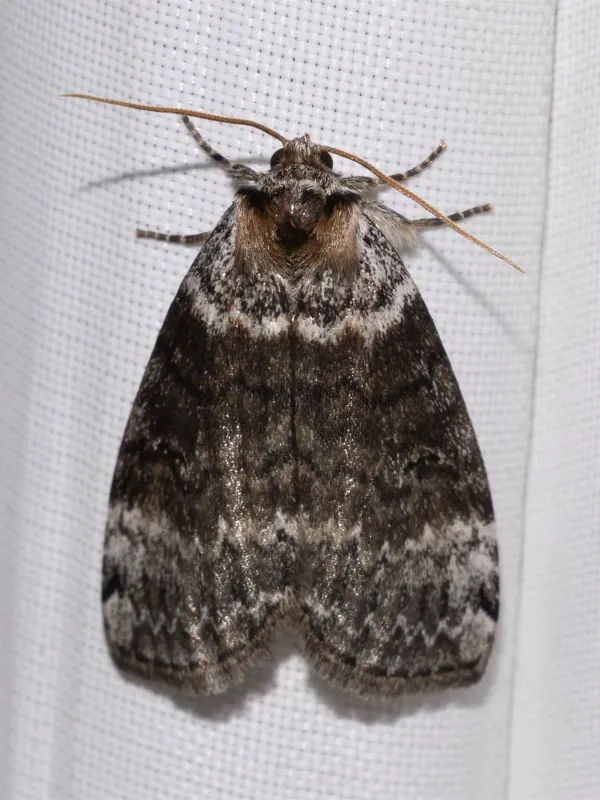
Tetheella is a genus of moths belonging to the family Drepanidae (hook-tip moths). These insects are recognized by their distinct wing shape and cryptic coloration, which provide excellent camouflage against tree bark.
The adult moths have a wingspan typically ranging from 30 to 40 mm. Their wings often feature complex patterns of gray, brown, and ochre, allowing them to blend seamlessly into their natural environment.
The larval stage consists of caterpillars with well-developed chewing mouthparts. They are adapted to feed on the leaves of their host plants and often possess body patterns that mimic leaf veins.
Like other members of the Drepanidae family, Tetheella undergoes a complete metamorphosis. Understanding the specific biology of this genus is essential for distinguishing it from other leaf-feeding lepidopterans.
Taxonomically, they are closely related to other forest moths, and their presence is often indicative of specific environmental conditions within deciduous forest ecosystems.
What it damages
The caterpillars of Tetheella primarily feed on the foliage of broad-leaved trees. They consume leaf tissues, often leaving behind the tougher vascular structures of the leaves.
Moderate infestations may lead to localized leaf loss, while high-density populations can cause significant defoliation of the tree canopy, reducing the tree's photosynthetic capability.
Persistent feeding damage weakens the host tree, making it more susceptible to secondary stressors such as fungal infections, wood-boring insects, and environmental drought.
In silviculture and nursery settings, Tetheella damage can retard the growth rates of young trees, impacting the overall health and economic value of the plantation.
The accumulation of frass (larval waste) beneath the canopy is a secondary impact that can alter the soil nutrient composition locally if infestations are particularly severe.
When it appears
The life cycle of Tetheella is tightly synchronized with the growth cycle of its host trees. Adult moths typically emerge during the spring as buds begin to open.
Eggs are laid individually or in small clusters on the underside of young leaves, ensuring that the emerging larvae have immediate access to a food source.
The larval phase is most active from late spring to early summer, coinciding with the peak period of leaf development in deciduous species.
Pupation usually occurs within a silk-lined cocoon attached to a leaf or hidden in the leaf litter on the forest floor, where the insect remains until the next season.
Environmental factors such as temperature and humidity significantly influence the timing of emergence and the number of generations produced annually.
Signs of infestation
Visual evidence of an infestation begins with irregular edges on leaves, indicating where caterpillars have been feeding.
Small, dark, pellet-like frass particles found on the ground or on foliage beneath the canopy are a definitive sign of active caterpillar presence.
Caterpillars may construct small leaf rolls or webs, which serve as protective shelters during the day or during molting periods.
A noticeable thinning of the tree canopy, often accompanied by patches of yellowish or damaged leaves, indicates a higher level of infestation.
At night, adult moths can be observed through the use of light traps, which effectively attract the insects due to their natural nocturnal behavior.
Control measures
Integrated Pest Management (IPM) is the most effective approach to controlling Tetheella, focusing on monitoring and biological interventions before resorting to chemical treatments.
Encouraging natural predators, such as parasitic wasps and insectivorous birds, can help keep population levels below the economic injury threshold.
In cases where damage is extensive, application of biological insecticides such as B. thuringiensis can provide effective control while minimizing harm to beneficial non-target species.
Cultural practices, such as maintaining healthy tree vigor and removing severely infested debris during the off-season, can disrupt the life cycle of the pest.
- Deploy pheromone traps to monitor adult population levels.
- Apply selective insecticides during the early larval development stage.
- Promote biodiversity to support natural predator populations.
Taxonomy
- Latin name
- Tetheella
- Order
- Lepidoptera (butterflies)
- Family
- Thyatiridae
- EPPO code
- THLLSP
Discussion
No discussions yet — be the first.