
Poplar Lutestring
Tethea or
Description
How to identify
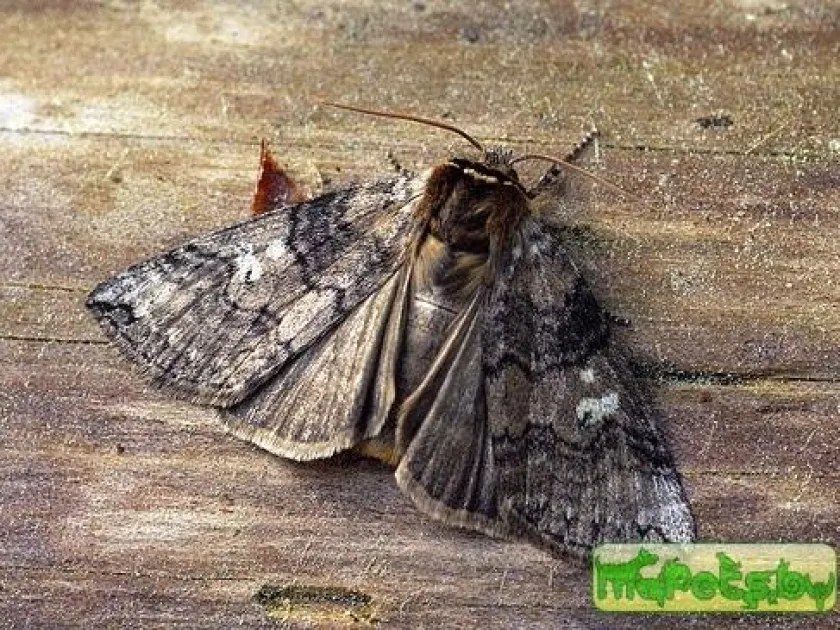
The Poplar Lutestring (Tethea or) is a moth species belonging to the family Drepanidae. The adult moth has a wingspan ranging from 35 to 45 mm, characterized by greyish or brown forewings with complex, dark transverse lines.
The common name refers to the hairy appearance of the adult insect's body. When resting, the moth keeps its wings folded closely against its body, providing excellent camouflage against tree bark.
The larvae are typically greenish with a dark dorsal line, allowing them to blend perfectly with the foliage of their host trees during the feeding stage.
The life cycle consists of complete metamorphosis: egg, five larval instars, pupa, and adult moth. Overwintering occurs primarily in the pupal stage within a cocoon.
Adult moths are nocturnal and are typically observed during late spring and early summer, when they emerge to mate and lay eggs on host plants.
What it damages
The primary hosts for the Poplar Lutestring are trees of the genus Populus, specifically aspen and various poplar hybrids commonly found in forests and urban areas.
In addition to poplars, the larvae are frequently observed feeding on birch leaves, which can lead to significant damage in mixed woodland or ornamental garden settings.
Caterpillars cause primary damage by skeletonizing or consuming large portions of the leaves, leading to reduced photosynthetic capacity of the affected trees.
Severe infestations can result in complete defoliation, causing stress to the tree, which subsequently increases its susceptibility to diseases and secondary pests.
Repeated yearly defoliation significantly impairs the growth rate of trees and can ultimately lead to the death of younger, more vulnerable specimens.
Signs of infestation
Signs of infestation include irregular holes or notches on the leaves, usually starting from the edges, which is a clear indicator of larval feeding activity.
Accumulation of caterpillar droppings (frass) under the canopy is a prominent sign that a population is actively feeding in the branches above.
Look for leaves that have been folded or tied together with silk, which the caterpillars create to provide protection during their development and pupation phases.
Small eggs laid along the veins of the leaves during the early season serve as an early warning for potential outbreaks later in the year.
The presence of adult moths can be detected by monitoring light sources at night, as they are strongly attracted to artificial illumination.
Control measures
Sanitation is a primary control measure; collecting and destroying leaf litter in late autumn helps remove the overwintering pupae from the environment.
Biological control using Bacillus thuringiensis sprays is highly effective against larvae and is recommended for its safety toward non-target beneficial insects.
In cases of high infestation, contact or systemic insecticides can be applied, provided that they are timed with the peak hatching period of the larvae.
Encouraging biodiversity in the area, such as providing nesting sites for birds, can help keep the caterpillar population in check through natural predation.
- Regular monitoring of the canopy during the spring and early summer months.
- Manual removal of infested branches if the infestation is localized.
- Strategic application of biological pesticides during the early larval stages.
Taxonomy
- Latin name
- Tethea or
- Order
- Lepidoptera (butterflies)
- Family
- Thyatiridae
- EPPO code
- TTHAOR
Discussion
No discussions yet — be the first.