
Figure of Eighty
Tethea ocularis
Description
How to identify
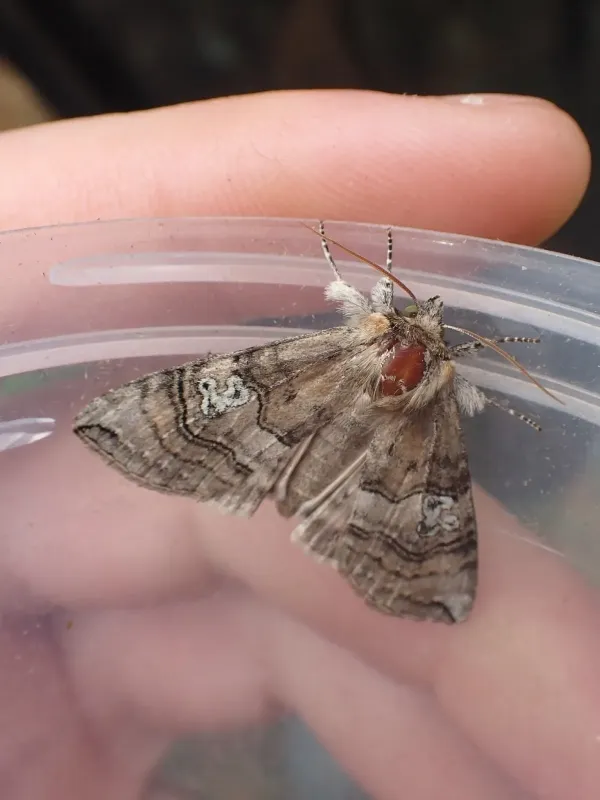
The Figure of Eighty (Tethea ocularis) is a moth belonging to the family Drepanidae. Adult moths have a wingspan of approximately 40–45 mm. Their forewings feature a distinctive pattern with dark, eye-like markings, which is the source of their common English name.
The larvae, or caterpillars, undergo several developmental stages. Initially, they are light green, becoming darker and more patterned as they grow. They possess a robust body shape adapted for feeding on foliage.
The life cycle is tightly synchronized with the phenology of its host plants. As a nocturnal species, the adult moth spends its daylight hours resting on tree bark, utilizing its cryptic coloration to blend in with the environment.
Pupation occurs in sturdy, silk-spun cocoons. These are often hidden within folded leaves or deep crevices in the tree bark, providing essential protection against both weather fluctuations and natural predators.
This species is found across diverse temperate forest habitats, typically thriving in regions where poplar and aspen trees are abundant, as these serve as the primary host plants for their development.
What it damages
The primary hosts for the Figure of Eighty larvae are various species of the genus Populus, including aspen. In cases of high population density, they may also occasionally feed on other broad-leaved trees located nearby.
Caterpillars consume leaf tissue voraciously, often leaving only the skeleton of veins behind. This intense defoliation significantly impairs the tree's ability to undergo photosynthesis, directly impacting its overall health and vigor.
Weakened trees become susceptible to secondary infections, including fungal pathogens and wood-boring insects. Persistent defoliation over several years can result in stunted growth and a decline in the tree's defensive capabilities.
In forest nurseries and young plantations, the economic impact is most severe. Massive infestations can lead to the death of saplings or severe retardation in growth, requiring costly remedial intervention.
Urban trees suffer significant aesthetic damage, reducing the value of public landscapes and parks. The presence of these insects necessitates regular health monitoring to ensure the longevity of the urban canopy.
When it appears
Adult moths typically emerge in late spring, with the flight period extending through July. This duration represents the peak time for mating and oviposition, where eggs are carefully placed on the underside of host leaves.
The larval stage occupies the majority of the summer months. Peak feeding activity usually occurs in mid-to-late summer, coinciding with the period of rapid larval growth and energy accumulation.
The species overwinter in the pupal stage. By entering dormancy within their cocoons, they are able to withstand the harsh winter temperatures, ensuring the survival of the population until the next favorable season.
Temperature patterns drive the timing of each developmental stage. An unseasonably warm spring can trigger an early emergence of adults, which may subsequently shift the entire seasonal cycle of the moth.
Professional monitoring during the flight season is essential for predicting the scale of the upcoming larval generation, allowing for timely decision-making regarding pest control interventions.
Signs of infestation
The most visible indicator of an infestation is the presence of skeletonized leaves on poplar trees. Often, you will notice ragged leaf edges first, followed by a total loss of leaf surface area in severe cases.
Observation of frass (caterpillar droppings) accumulating on lower leaves or on the ground beneath the tree canopy is a clear indicator of active feeding occurring in the upper branches.
Examining the bark for remnants of cocoons or larval exuviae can help determine if the population is well-established in a particular area. These remains are most easily found after the pupal emergence.
Premature leaf drop during the height of the summer is another tell-tale sign of foliage-damaging pests. This behavior is a stress response by the tree to heavy herbivore pressure.
- Defoliation of upper branches
- Skeletonized leaves left by larvae
- Accumulation of larval excrement
- Presence of silk cocoons in bark cracks
Control measures
Effective management of the Figure of Eighty involves targeted insecticide applications during the early larval stages. Using systemic or contact-based treatments ensures better control before the larvae reach maturity.
Cultural control is highly recommended, particularly the removal and destruction of fallen leaves in autumn. Since pupae often overwinter in leaf litter, this simple step can drastically reduce the emergence rate in spring.
Fostering a healthy environment for natural predators, such as insectivorous birds and parasitic wasps, provides sustainable, long-term control. These natural enemies are often sufficient to keep populations below threshold levels in diverse forest ecosystems.
In large-scale plantings, opting for a mix of tree species rather than monocultures helps prevent rapid population outbreaks. Diverse landscapes are less attractive and more resistant to specialized insect herbivores.
Consistent monitoring and threshold-based decisions are the hallmarks of a professional approach. Avoid unnecessary blanket treatments; focus intervention efforts only when damage levels threaten the economic or ecological vitality of the trees.
Taxonomy
- Latin name
- Tethea ocularis
- Order
- Lepidoptera (butterflies)
- Family
- Thyatiridae
- EPPO code
- TTHAOC
Discussion
No discussions yet — be the first.