
Phalaenopsis flat mite
Tenuipalpus pacificus
Description
How to identify
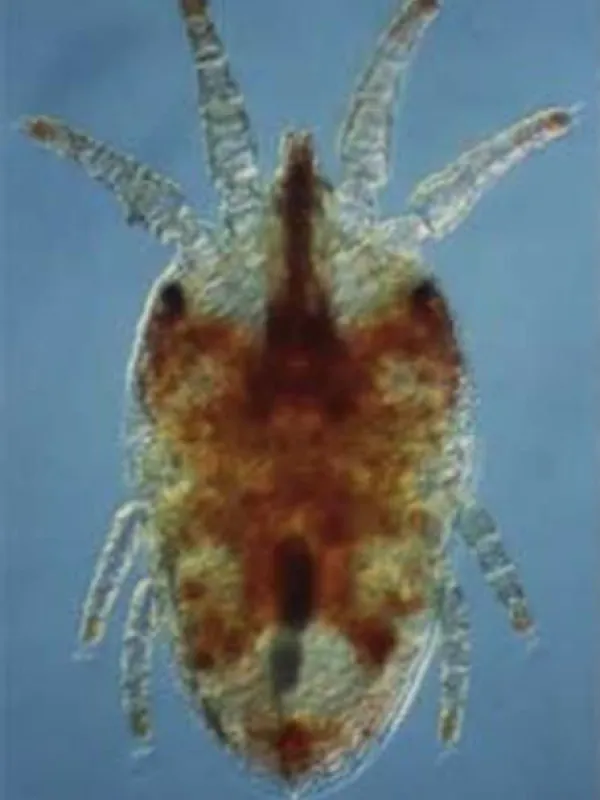
The Phalaenopsis flat mite (Tenuipalpus pacificus) belongs to the Tenuipalpidae family. These tiny arthropods are characterized by their flattened, reddish or brownish bodies that blend perfectly with the plant tissue.
Adult mites are approximately 0.2–0.3 mm long. Because they do not spin webs, they are often overlooked by growers until the population density becomes critically high and damage is visible.
The life cycle consists of the egg, larva, protonymph, deutonymph, and adult stages. The speed of their development is heavily influenced by the microclimate, especially in warm and dry conditions.
They prefer to hide in the axils of leaves, underneath the leaves, and within the crevices of the orchid crown, making them difficult to target with contact-only treatments.
Tenuipalpus pacificus is a specialized pest that specifically targets members of the Orchidaceae family, causing long-term physiological stress to the host plants.
What it damages
Orchids, particularly the Phalaenopsis genus, are the primary hosts for these mites. They feed by piercing the plant epidermis and sucking the cellular sap.
In addition to Phalaenopsis, these mites can spread to other ornamental plants housed in the same collection, turning a localized problem into a widespread infestation.
The continuous loss of nutrients leads to the weakening of the orchid's immune system, making it more susceptible to various environmental stresses.
Physical damage caused by the mite's feeding punctures facilitates the entry of pathogenic fungi and bacteria, which can lead to further tissue decay and rot.
Severe infestations result in stunted growth, loss of leaf turgor, yellowing of leaves, and in advanced stages, the total death of the affected plant or the main growth point.
Signs of infestation
The first indicator of an infestation is the appearance of silvery or brownish patches on the undersides of the leaves, which gradually increase in size and turn into necrotic zones.
Leaves lose their natural luster and waxiness, appearing dull, withered, or slightly sunken. This is often mistaken for simple dehydration or root issues by inexperienced growers.
Using a magnifying lens (at least 10x magnification), one can detect the mites themselves, which appear as tiny, stationary red dots, often congregated along the central leaf vein.
Small, irregular marks or streaks caused by the mite’s mouthparts become prominent on the leaf surface, which eventually coalesce into larger, brownish or purplish dead patches.
Failure of the orchid to produce new roots, yellowing of older leaves, and the sudden cessation of flower production are clear indicators that the plant is under mite pressure.
Control measures
Control requires the use of specialized acaricides, as conventional insecticides are generally ineffective against flat mites. Focus on active ingredients that are specific to mites.
Rotate products with different modes of action to prevent the development of resistance. Apply treatments at least 2–3 times with a 7–10 day interval to catch subsequent generations as they hatch from eggs.
Maintain strict quarantine measures for any new plants entering your collection to prevent the introduction of Tenuipalpus pacificus.
Increase the frequency of inspections and improve the surrounding airflow. Proper hygiene, such as cleaning shelves and isolation of infested plants, is essential for eradication.
- Isolate all infested plants immediately.
- Use acaricides specifically formulated for mites.
- Perform treatments during the cooler parts of the day.
- Sanitize all tools used on the plants.
Taxonomy
- Latin name
- Tenuipalpus pacificus
- Order
- Mites
- Family
- Tenuipalpidae
- EPPO code
- TENUPA
Discussion
No discussions yet — be the first.