
Browning false spider mite
Brevipalpus browningi
Description
How to identify
The Browning false spider mite (Brevipalpus browningi) belongs to the Tenuipalpidae family within the Trombidiformes order. These are microscopic pests that are difficult to identify without specialized equipment due to their tiny size.
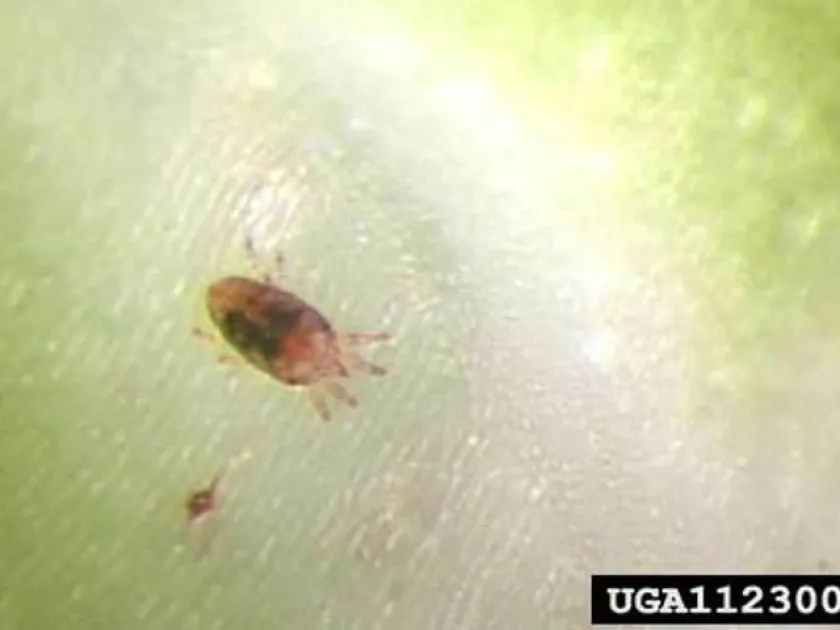
The adult mite has a flattened body shape, which is a characteristic feature of the Brevipalpus genus. Its coloration is typically reddish-brown to translucent, allowing it to blend perfectly into the leaf tissue.
The life cycle progresses through several stages: egg, larva, protonymph, deutonymph, and adult. The rate of development is strictly correlated with ambient temperature and humidity levels.
Unlike common spider mites, this species does not produce dense webbing. This lack of visible nets makes early diagnosis of the infestation extremely challenging for garden owners.
These mites primarily colonize the abaxial surface (underside) of leaves, often concentrating along the main veins to access the nutrient-rich plant sap.
What it damages
This mite is a polyphagous pest, capable of damaging a wide variety of plants including fruit trees and ornamentals. Its feeding style disrupts the structural integrity of the leaf epidermis.
As the mite pierces the plant cells to extract sap, it injects toxins that interfere with photosynthesis. This leads to the chlorosis of leaves and a significant reduction in plant vigor.
Severe infestations often result in the premature drop of leaves, which inhibits the plant's ability to store energy for the following season. This leads to long-term decline in productivity.
Fruit quality is also severely compromised. Mites feeding on fruits often cause necrotic spots, surface scarring, and physical deformations, rendering the produce unmarketable.
By creating multiple micro-wounds on the plant surface, the mite facilitates the entry of secondary pathogens, including various fungal and bacterial infections.
Signs of infestation
The first signs of infestation include a dull, bronzed appearance of the leaves. As the damage progresses, leaves may turn yellow or white and eventually become necrotic.
Closer observation with a hand lens often reveals the presence of tiny, bright red or orange eggs scattered along the leaf veins and small, slow-moving adults.
Plants affected by the Browning false spider mite often show stunted shoot growth and reduced leaf size. In advanced stages, one might observe premature fruit drop and flower abortion.
- Bronze-colored or discolored foliage.
- Visible necrotic or scorched patches on leaves.
- Reduced vigor and delayed plant development.
- Deformed fruit surfaces with corky spots.
Regular scouting using magnification tools is highly recommended, especially during hot and dry weather conditions which favor the rapid multiplication of this pest.
Control measures
Chemical control involves the application of specific acaricides. It is critical to target both the adults and the eggs to break the mite's reproductive cycle effectively.
Implementing a resistance management program by rotating acaricides with different modes of action is essential to ensure long-term efficacy and prevent population tolerance.
Cultural practices, such as maintaining adequate plant hydration, play a significant role in mite suppression. Plants under drought stress are significantly more susceptible to attacks.
Biological control agents, such as predatory mites (e.g., Phytoseiidae), are highly effective in both greenhouse and field conditions to keep mite numbers below economic injury levels.
Sanitation practices, including the removal and destruction of infested plant debris at the end of the season, significantly reduce the number of mites surviving to the next year.
Taxonomy
- Latin name
- Brevipalpus browningi
- Order
- Mites
- Family
- Tenuipalpidae
- EPPO code
- BRVPBR
Discussion
No discussions yet — be the first.