
False spider mite
Tenuipalpus
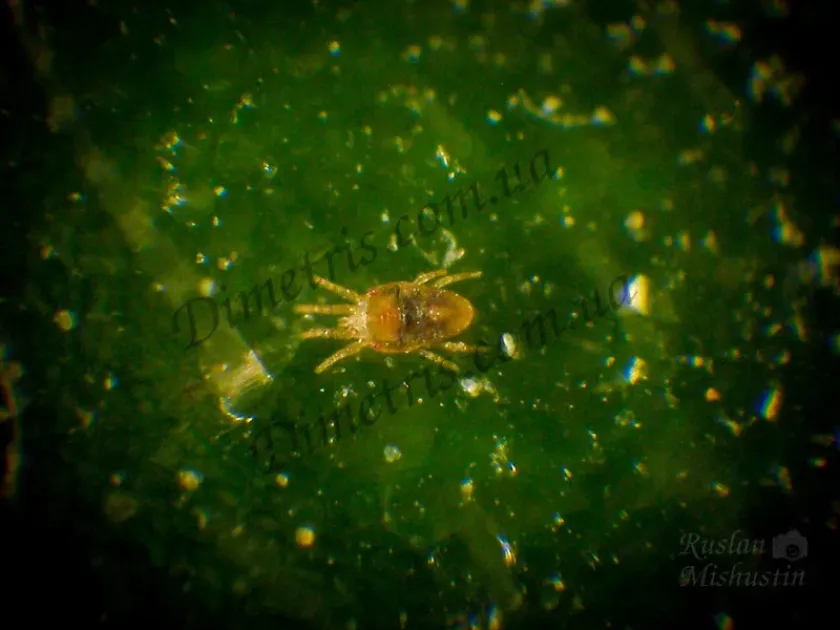
Description
How to identify
The false spider mite (genus Tenuipalpus) belongs to the family Tenuipalpidae. These are tiny arthropods, often measuring less than 0.3 mm in length.
Unlike common spider mites, they possess a flattened body shape and lack the ability to spin silk webs, making them difficult to detect without a hand lens.
Their coloration is typically reddish or yellowish-brown, allowing them to blend perfectly with plant tissues, such as stems, leaf veins, or bark crevices.
The life cycle includes an egg stage, larva, two nymphal stages, and adults, with development being heavily dependent on ambient temperature conditions.
Overwintering occurs as mated females, which hide in sheltered areas like under bud scales or in bark fissures, emerging when temperatures rise in spring.
What it damages
False spider mites are significant polyphagous pests that attack a wide variety of crops, including citrus, grapes, orchids, and various ornamental plants.
They are particularly problematic in greenhouse environments, where stable temperatures allow them to maintain continuous breeding cycles throughout the year.
The mites feed by piercing the epidermal cells, primarily on the undersides of leaves, and extracting cellular contents and chlorophyll.
This persistent feeding results in a significant reduction of photosynthetic capacity, which stunts plant growth and limits the development of new shoots.
Heavy infestations frequently cause leaf yellowing, tissue necrosis, and premature defoliation, significantly impacting overall plant health and yield quality.
Signs of infestation
The earliest signs of infestation are small, chlorotic stippling marks on the leaf surface, which correspond to the areas where mites have fed.
As the infestation progresses, leaves become discolored, often turning pale or bronze, and may curl or lose their structural integrity.
Fruit damage may appear as scarring, silvering, or patchy necrosis on the skin, which significantly lowers the marketability of the produce.
Severe infestations lead to a general lack of vigor, stunted buds, and reduced flower production, potentially resulting in complete crop loss.
- Stippling and chlorosis on leaf surfaces.
- Bronzing or silvering of foliage.
- Scarring on the surface of developing fruits.
- Premature leaf drop and stunted plant growth.
Control measures
Effective management begins with rigorous monitoring using a magnifier to identify initial outbreaks before they reach epidemic levels.
Cultural controls involve pruning and removing heavily infested plant material and maintaining optimal plant vigor through appropriate irrigation and nutrition.
Chemical control using acaricides is effective, but it is crucial to use targeted products that minimize impact on beneficial predatory insects.
Rotating different chemical classes is essential to manage resistance, as these mites can rapidly adapt to frequently used active ingredients.
In greenhouses, biological control using predatory mites (such as Phytoseiidae species) is highly recommended for long-term suppression of the pest population.
Taxonomy
- Latin name
- Tenuipalpus
- Order
- Mites
- Family
- Tenuipalpidae
- EPPO code
- TENUSP
Discussion
No discussions yet — be the first.