
Yucca moth
Tegeticula yuccasella
Description
How to identify
The Yucca moth (Tegeticula yuccasella) is a member of the Prodoxidae family within the order Lepidoptera.
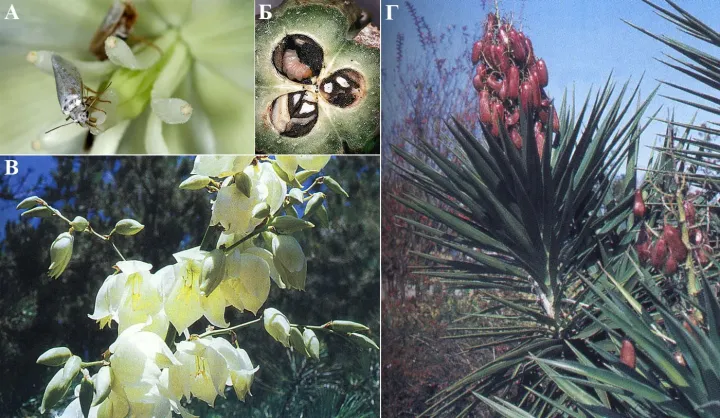
This insect is famously known for its obligate mutualism with yucca plants, acting as their primary and often sole pollinator.
Adult moths possess specialized tentacles used to gather and transport pollen between flowers, which is a unique evolutionary adaptation.
The larvae are typically pale or white, living inside the seed pods of the host plant to feed on developing seeds.
Identification is easiest during the flowering season when the moths can be observed gathering pollen on the yucca inflorescences.
What it damages
The damage caused by the Yucca moth is primarily limited to the consumption of yucca seeds by the developing larvae.
In ornamental garden settings, this rarely constitutes a significant pest problem as the plant remains healthy and aesthetic.
For nurseries specializing in yucca seed production, high populations of the moth can lead to a notable reduction in seed yield.
The presence of larvae inside the pods does not typically affect the ornamental value or growth rate of the yucca plant itself.
Overall, the insect is viewed as a beneficial pollinator that occasionally consumes a fraction of its host's reproductive output.
When it appears
The life cycle of the Yucca moth is strictly synchronized with the flowering period of the host yucca species, typically occurring in early to mid-summer.
Adults emerge from the soil exactly when the yucca flowers are ready for pollination, ensuring their survival and that of the host.
Larval development takes place throughout the duration of the pod formation, spanning several weeks as the seeds mature.
By late summer or autumn, mature larvae exit the pods and burrow into the soil to prepare for their overwintering stage.
The timing is critical, as any misalignment between the moth's emergence and flower availability would threaten the population's survival.
Signs of infestation
The most common sign of the Yucca moth is the presence of small exit holes in dried, matured seed pods during the autumn months.
Inside the seed pods, one may find frass and evidence of partially consumed or damaged seeds, indicating larval feeding.
A reduction in the total number of viable, intact seeds harvested from a pod often points to the moth's past activity.
Observation of small white moths resting on or near the yucca flowers at night is a definitive sign of their current activity.
Successful pollination, evidenced by the development of large, heavy pods, is actually a sign of the moth’s helpful presence in the ecosystem.
Control measures
Control measures are rarely required unless the objective is to protect the entirety of the seed harvest for commercial propagation.
In nursery environments, insecticides applied during the flowering stage can reduce the frequency of moth egg-laying.
Pruning and removing the flower stalks immediately after the bloom cycle ends is a highly effective way to eliminate the next generation of larvae.
Cultivating or tilling the soil around the base of yucca plants in the fall can disrupt the overwintering pupae and lower the local population.
Manual monitoring during the evening hours can help assess population density without the need for chemical intervention.
Taxonomy
- Latin name
- Tegeticula yuccasella
- Order
- Lepidoptera (butterflies)
- Family
- Prodoxidae
- EPPO code
- TEGTYU
Discussion
No discussions yet — be the first.