
Currant bud moth
Lampronia redimitella
Description
How to identify
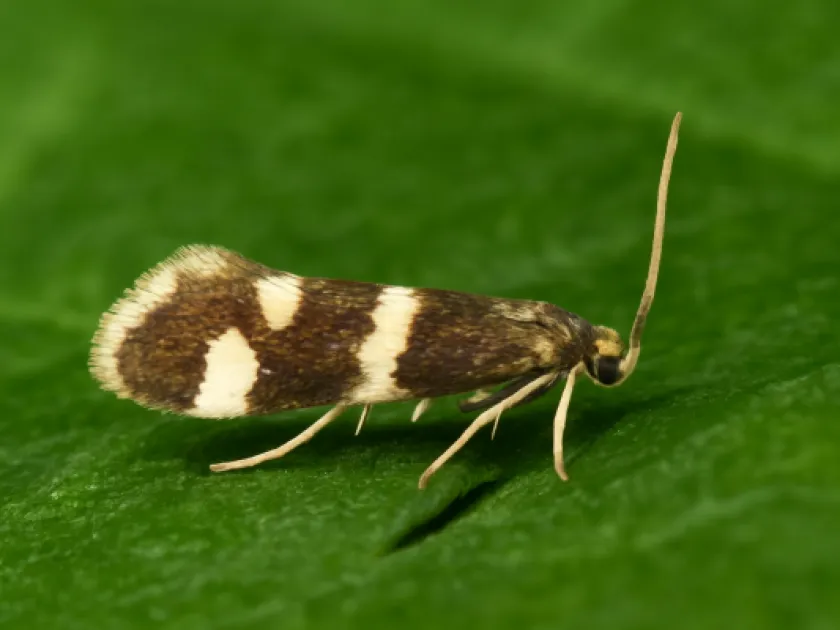
The currant bud moth (Lampronia redimitella) is a member of the Prodoxidae family within the order Lepidoptera. The adult moth has a wingspan of approximately 12–15 mm and features dark brown wings with pale spots.
The larva (caterpillar) grows up to 10 mm in length and displays a distinctive reddish or orange color with a dark head capsule. Their appearance makes them relatively easy to spot if a damaged bud is opened.
Larvae overwinter in the second or third instar stages, protected by small, dense silk cocoons hidden under the loose bark of currant bushes or in wood crevices.
The lifecycle follows a standard pattern: egg, larva, pupa, and adult. There is only one generation per year, which is a key factor in managing its population growth in small garden environments.
Pupation typically occurs inside the damaged buds or near the base of the bushes. Adults emerge in spring, synchronizing their activity with the flowering period of the host plants.
What it damages
Black currants are the primary host, though red currants, white currants, and gooseberries are also frequently attacked. The damage is focused on the reproductive buds.
Larvae consume the internal contents of the buds, preventing them from opening in the spring. This directly leads to a significant loss of flowers and, consequently, the fruit harvest.
Once buds are destroyed, larvae may move to young stems, boring into them to continue feeding, which causes the stems to wilt and eventually die off completely.
Heavily infested bushes appear sparse, with many "blind" or dead buds that look as if they were killed by a late frost, complicating early visual diagnosis.
Economic damage can be severe in years of high population density, with potential yield losses of over 50% if no pest control measures are implemented early in the season.
When it appears
Larval activity begins in early spring as temperatures rise, usually when the buds start to swell. This is the period when they become active after overwintering.
The feeding phase lasts about four weeks. After feeding, the larvae transition to the pupal stage, which lasts roughly two to three weeks before the adult moth emerges.
Mating and egg-laying occur during the flowering stage of the currants. Eggs are laid directly into the developing ovaries of the berries.
Newly hatched larvae feed on the developing seeds inside the berries during early summer. This stage often goes unnoticed because the outer fruit appears intact.
By late summer, the larvae migrate from the berries to the bark of the main stems, where they construct overwintering cocoons to survive the winter dormancy.
Signs of infestation
The most prominent sign is the presence of dried, unopened buds in early spring that often look scorched or hollow when examined closely.
Silken webbing can often be found on or around the damaged buds, serving as a protective covering for the larvae during their feeding and transition periods.
Frass (larval excrement) appearing as tiny black specks at the base of the buds is a clear indication that a larva has been actively feeding inside.
In early summer, if the berries are opened, small larvae or hollowed-out seeds can be found, confirming the presence of the moth within the current season's crop.
Weakened plant growth and chlorosis on specific branches in May are often indirect indicators that the buds on those particular shoots were destroyed by the moth.
Control measures
- Prune and burn all infested or dry branches during the winter or early spring to remove overwintering larvae.
- Clean old, loose bark from the stems to destroy the larvae's preferred overwintering sites.
- Apply appropriate insecticides during the "green cone" stage when buds start to swell and larvae are emerging.
- Encourage natural predators such as parasitic wasps and predatory bugs to keep populations under control.
- Monitor bushes during the flowering period to assess infestation levels and determine if supplemental chemical control is necessary.
Taxonomy
- Latin name
- Lampronia redimitella
- Order
- Lepidoptera (butterflies)
- Family
- Prodoxidae
- EPPO code
- INCURE
Discussion
No discussions yet — be the first.