
Raspberry bud moth
Lampronia corticella
Description
How to identify
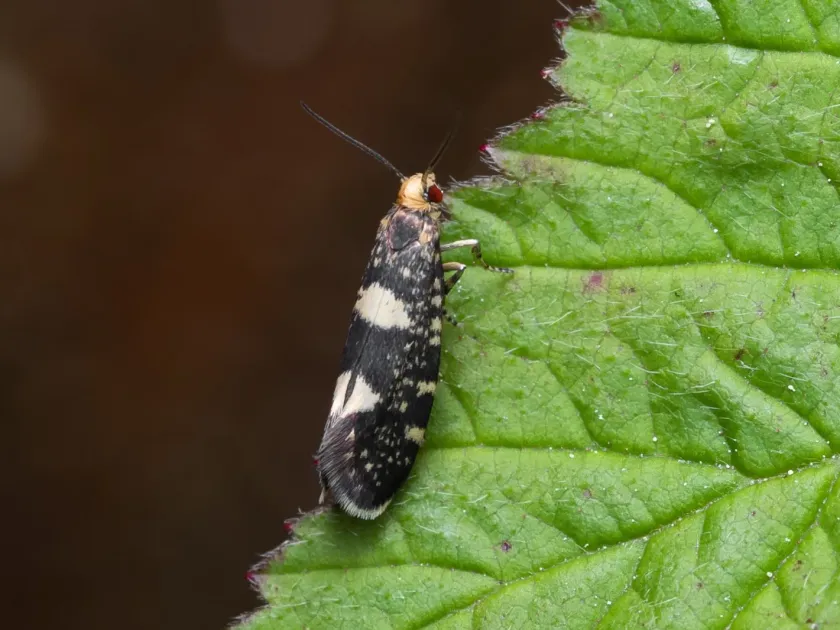
The raspberry bud moth (Lampronia corticella) is a member of the Prodoxidae family. The adult moth is a small insect with a wingspan of 10–15 mm, featuring dark-brown to black wings marked with distinct white spots.
The primary damage is caused by the larval stage — small caterpillars reaching up to 8 mm in length. These larvae are easily identified by their striking reddish-orange color and a dark, shiny head capsule.
The moth completes its life cycle in one year. It overwinters as a second-instar larva, hibernating in tough silken cocoons tucked away under the bark of old raspberry canes or in pruning stubble near the soil surface.
Their biological development is perfectly synced with the raspberry growth cycle. Larvae emerge from their winter shelters just as the buds begin to swell, making this the most critical timing for intervention.
After a pupation period in late spring, the adult moths emerge, feed on floral nectar, and lay their eggs inside the raspberry blossoms, starting the cycle anew.
What it damages
The primary hosts are raspberry and blackberry plants. The damage affects both the vegetative growth early in the season and the reproductive parts during the flowering stage.
Early-season larval feeding destroys the primary and lateral buds, causing them to wither and fail to open. This results in stunted growth and a significant loss of potential fruit-bearing spurs.
During the flowering period, larvae emerging from eggs laid in the buds feed on the internal structures of the flowers. This leads to flower death or the development of malformed, dry, and poor-quality fruit.
In cases of severe infestation, the raspberry bud moth can destroy 60% or more of the entire yield. The plants become severely weakened, making them susceptible to further stress and disease.
Injured canes are often prone to secondary infections from fungi and bacteria, which enter through the feeding wounds and can cause localized dieback.
When it appears
The activity begins in early spring, usually when temperatures reach 10–12°C. This is when the overwintered larvae migrate to the swelling buds to feed.
The reproductive phase occurs in June, coinciding with the flowering of the raspberries. During this time, the moths are active, and the next generation of larvae begins to develop within the buds.
The larvae continue feeding until late summer, after which they seek out protected locations such as cracks in the bark or base of the canes to build their overwintering cocoons.
Seasonal weather patterns strongly influence the population density; warmer, humid springs generally allow for a more successful emergence and survival rate for the larvae.
The entire seasonal development is strictly tied to the phenology of the raspberry host, ensuring that food availability is at its peak when the larvae are most active.
Signs of infestation
The most prominent early-season sign is the presence of «weeping» buds or buds that remain dry and dormant while others are actively bursting. Close inspection reveals small boreholes and frass near the base of the bud.
During the bloom period, the wilting and drying of entire flower clusters are indicative of larval presence. These clusters often hang limply from the canes, appearing as if scorched.
Internal examination of the buds or malformed fruit will often reveal the presence of the small red larvae feeding inside the floral tissue.
Stunted growth of the canes and general lack of vigor in the plantation are secondary indicators that the moth population has reached a damaging level.
The appearance of fine webbing around the buds or at the junction of the leaf stalks is another tell-tale sign of the larvae’s presence during their active feeding stages.
Control measures
Cultural control is paramount: growers should prune out and destroy old, infested canes immediately after harvest to remove overwintering sites for the larvae.
Regular cultivation of the soil around the base of the plants can help disturb pupae and prevent successful adult emergence, reducing the pressure for the following year.
Biological control, using Bacillus thuringiensis based products, is highly effective if applied during the period when larvae are emerging from their winter shelters.
Chemical intervention should be reserved for the pre-bloom stage when larvae are actively feeding on buds. Systemic insecticides are preferred to ensure that the internal feeders are targeted.
- Monitor populations using pheromone traps.
- Maintain proper spacing for better plant health and airflow.
- Avoid over-fertilization with nitrogen, which can lead to succulent growth favored by larvae.
Taxonomy
- Latin name
- Lampronia corticella
- Order
- Lepidoptera (butterflies)
- Family
- Prodoxidae
- EPPO code
- INCURU
Discussion
No discussions yet — be the first.