
Currant bud moth
Lampronia capitella
Description
How to identify
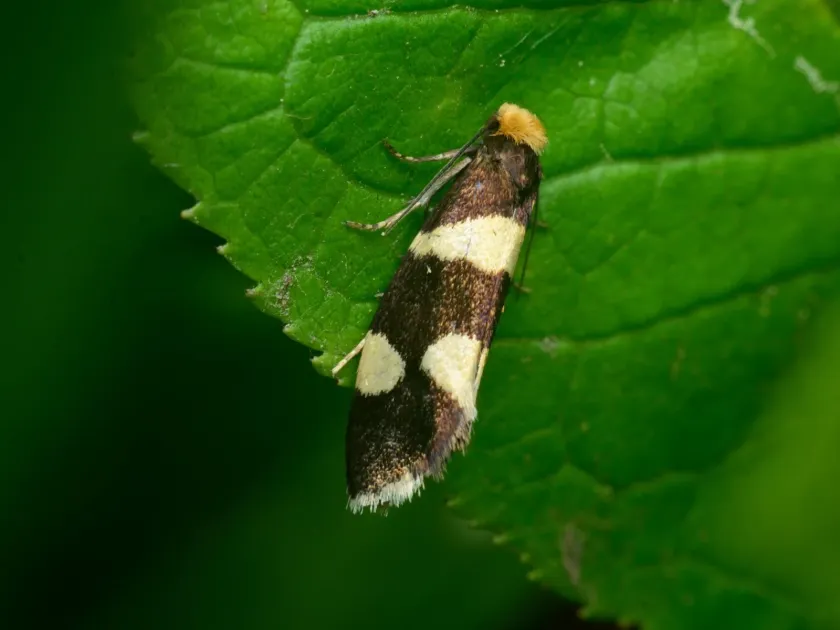
The currant bud moth (Lampronia capitella) is a member of the order Lepidoptera and the family Prodoxidae. The adult moth is small, with a wingspan of approximately 14–15 mm, featuring dark brown forewings adorned with yellowish-white spots.
The larvae, or caterpillars, are the primary damaging stage. They transition from a bright orange-red color in their early stages to a browner hue as they grow. A mature caterpillar is roughly 10 mm long, featuring a distinct black head and a body sparsely covered in fine hairs.
What it damages
This pest specifically targets Ribes species, including black currants, red currants, white currants, and gooseberries. The most critical damage occurs during the early spring when larvae emerge from hibernation and immediately attack swelling buds.
The destruction of buds often leads to complete crop failure on individual branches. In severe infestations, the entire vitality of the shrub is compromised, resulting in significant yield reduction and stunted development of the foliage throughout the growing season.
When it appears
The moth follows a univoltine life cycle, meaning it produces one generation per year. Larvae overwinter in small white cocoons hidden in bark crevices, moss, or under plant debris near the base of the host plant.
In spring, as temperatures rise and buds begin to swell, larvae become active and bore into the buds. After pupation in the soil or under debris in late spring, adults emerge in early summer to lay eggs on the newly developing green berries.
Signs of infestation
The most visible sign of infestation in spring is the presence of dried or hollowed-out buds that fail to open. Small entry holes can often be found at the base of these buds, accompanied by fine frass (larval waste).
During the fruiting stage, larvae bore into the developing berries, causing them to ripen prematurely, turn red, and eventually drop off the shrub. Inspecting the fallen berries often reveals the presence of a small larva feeding on the developing seeds inside.
Control measures
Cultural control is essential; this involves pruning and destroying infested branches in early spring before the larvae move to healthy buds. Maintaining clean orchard floors by removing weeds and leaves helps eliminate primary overwintering sites.
Chemical control should be timed to coincide with the period when larvae are migrating from hibernation to the buds. Applying effective insecticides at the bud-burst stage significantly reduces the population and prevents the majority of potential crop damage.
Taxonomy
- Latin name
- Lampronia capitella
- Order
- Lepidoptera (butterflies)
- Family
- Prodoxidae
- EPPO code
- INCUCA
Discussion
No discussions yet — be the first.